A Daughter's First ₹250: Why Women's Financial Empowerment Must Begin at Home?


 43 minutes ago
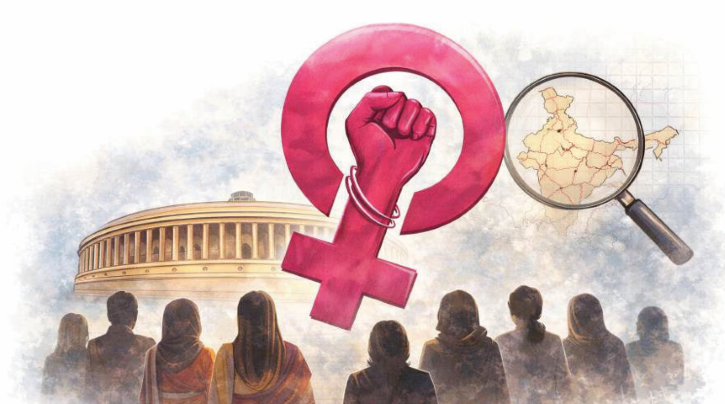
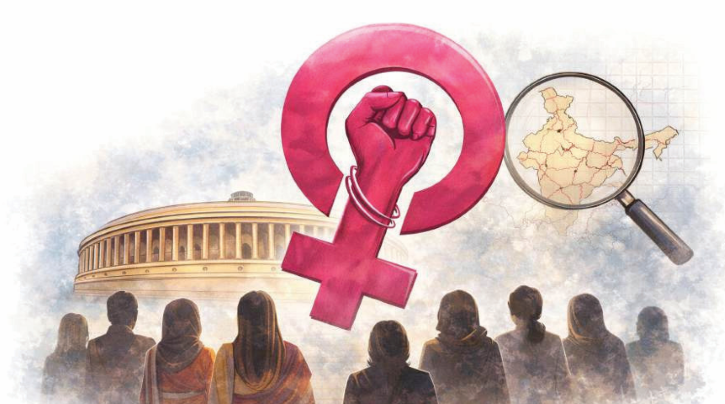
India's journey towards gender equality must begin with a fundamental change in how families plan for their daughters. The Sukanya Samriddhi Account offers an accessible starting point, but genuine empowerment requires much more than savings.
When a daughter is born, Indian families celebrate in different ways. Yet an important financial decision often receives little attention: setting aside money in the child's own name. We speak extensively about women's empowerment in classrooms, boardrooms and public policy discussions, but rarely ask whether financial empowerment should begin much earlier, within the household itself. The Sukanya Samriddhi Account offers an opportunity to change that conversation. With an initial deposit of just ₹250, parents can begin a long-term savings journey for their daughter. The amount may appear insignificant, but the decision behind it carries considerable economic and social meaning.
From a Savings Account to Financial Empowerment
Introduced in January 2015 under the Beti Bachao, Beti Padhao initiative, the Sukanya Samriddhi Scheme encourages families to build financial resources for their daughters. Under the scheme, a parent or eligible guardian can open an account before the girl attains ten years of age. The minimum annual contribution is ₹250, while the maximum is ₹1.5 lakh. Deposits are permitted for fifteen years from account opening, although the account ordinarily matures after twenty-one years. The interest rate for October–December 2026 is 8.2 per cent annually, compounded yearly, and remains subject to periodic government revision.
Consider an illustrative household where the mother works as a domestic employee and the father is employed in a small commercial establishment. Their income may not permit substantial investments, but depositing ₹500 monthly, whenever affordable, would amount to ₹6,000 annually before interest. Contributions can vary according to the family's financial position, provided the prescribed annual minimum is maintained. This flexibility is relevant to informal-sector households whose earnings fluctuate. Nevertheless, families should not compromise essential expenditure on food, healthcare or schooling merely to maintain a savings target. Financial empowerment must remain compatible with household financial realities.
Why Education Should Come Before Marriage Expenditure?
An important social question arises when families discuss savings for daughters. Are they saving primarily for education, or are they preparing for marriage expenditure? Traditionally, gold, wedding ceremonies and associated social expectations have influenced financial decisions in many Indian households. The real advantage of an account in her name is the possibility of supporting higher education, professional qualifications, entrepreneurship or other opportunities that strengthen her independence.
The scheme permits eligible withdrawals of up to 50 per cent of the balance at the end of the preceding financial year for educational purposes once the account holder turns eighteen or passes Class X, whichever occurs earlier. Documentary evidence of educational expenses is necessary. Imagine a student from a modest family in a small town who secures admission to an engineering college or nursing programme in another city. The accumulated savings may not finance the entire course, but could reduce dependence on costly borrowing or prevent the family from postponing her education.
India has already demonstrated considerable participation in the scheme. According to the Press Information Bureau, more than 4.53 crore Sukanya Samriddhi accounts had been opened since inception, with deposits exceeding ₹3.33 lakh crore as of December 2025. However, the real measure of success should extend beyond the number of accounts opened. We must also examine how these resources eventually contribute to education, financial literacy and women's ability to exercise independent economic choices.
Financial Inclusion Must Reach the Last Household
Despite the scheme's accessibility, financial inclusion is not merely about opening an account. Families must understand the consequences of long-term commitments, the limitations on withdrawals and the importance of safeguarding account records. Sukanya Samriddhi is not an emergency savings instrument. Its relatively long maturity period makes it unsuitable for money that a family may require immediately. Furthermore, an attractive interest rate today should not create the impression that the same rate will remain unchanged for the next two decades.
Greater participation will require financial-literacy programmes at the grassroots. Anganwadi workers, schoolteachers, post offices, banking correspondents and women's self-help groups can help families understand the scheme. Financial institutions could organise dedicated awareness initiatives for parents of newborn daughters, while employers may encourage eligible employees to consider systematic savings. Such programmes should explain eligibility, documentation, contributions and withdrawal restrictions in regional languages rather than presenting the scheme merely as another attractive investment product.
There is also scope for meaningful policy improvement. Governments and financial institutions could examine targeted incentives for economically vulnerable families, simplified account servicing and better financial education for adolescent account holders. Research could assess whether accumulated savings are improving educational participation and reducing financial barriers.
Perhaps the most overlooked aspect is the daughter's own financial literacy. Once she attains eighteen, she is entitled to operate the account in accordance with the scheme's rules. Parents should use this transition to teach her about interest, inflation, savings and financial decision-making. An account opened for her during childhood should eventually become an instrument through which she understands and exercises financial responsibility.
The Real Dividend Is Independence
Women's empowerment cannot be reduced to a passbook, a government scheme or a favourable interest rate. It requires access to education, employment, property, financial services and freedom from discrimination. A savings account can contribute to this larger objective, but cannot substitute for these essential conditions. Equally, families should remember that Sukanya Samriddhi is one component of financial planning, not the only investment necessary for a daughter's future.
The message for Indian households is simple. When a daughter is born, celebrate her arrival, but also consider making a financial commitment to her future. If she is already eligible and no account has been opened, there is little reason to postpone the decision unnecessarily. The contribution need not be substantial; consistency and purpose matter far more than the initial amount.
A daughter's first ₹250 will not, by itself, transform her future. But it can mark the beginning of a change in how her family values her aspirations. The greatest return on this investment will not be the interest credited to her account. It will be the freedom she gains to pursue an education, build a career and make financial decisions on her own terms. That is where meaningful women's empowerment should begin.
(About the authors: 1– Dr. Krishnan is an Associate Professor at CHRIST University, Delhi NCR Campus, holds with over 24 years of experience in higher education, research, academic leadership, and sustainability. 2–Dr. Sangal has been serving as an Assistant Professor at CHRIST University, Delhi NCR Campus, since January 2024. She holds a PhD in Finance and an LLB, is a qualified Company Secretary.)







[[comment.comment_text]]