Shenzhen’s Technological Showcase: China’s Bid to Shape the Future

 42 minutes ago
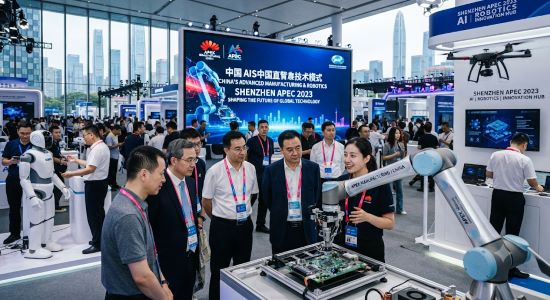
China is using the Asia-Pacific Economic Cooperation (APEC) summit in Shenzhen to send a message that extends well beyond diplomatic engagement. Through guided tours of smart factories, corporate headquarters and a specially developed district showcasing humanoid robots, Beijing is seeking to establish its technological credentials before an international audience. The summit slogan, “Gather in Shenzhen, Witness the Wonders”, captures this ambition. From robots serving coffee and delivering ice creams to androids performing dances, playing musical instruments and demonstrating industrial applications, China wants the world to see a country that is not merely manufacturing the future but increasingly shaping it. The spectacle is carefully choreographed, but the technological transformation it represents is unmistakably significant.
Shenzhen itself provides a compelling backdrop to this narrative. Once a modest collection of fishing villages and rural settlements bordering Hong Kong, the city emerged as one of China’s first Special Economic Zones in 1980. In little more than four decades, it has transformed into a global technology and manufacturing centre with a population of approximately 18 million. It is home to corporate giants such as Huawei, Tencent, BYD, DJI and Xiaomi, alongside a growing ecosystem of robotics, artificial intelligence and computing enterprises. This transformation reflects the success of China’s long-term industrial strategy, which has combined infrastructure development, manufacturing capabilities, research investment and state-supported innovation. Shenzhen is therefore more than a prosperous metropolis; it is an illustration of how determined economic planning can turn an ambitious development vision into industrial reality.
The growing prominence of artificial intelligence and robotics at the summit also reflects a fundamental shift in global economic competition. The 21 APEC member economies collectively account for around 60 per cent of global economic output. Their deliberations consequently carry considerable significance for international trade, investment, supply chains and technological cooperation. As AI becomes central to industrial productivity, national security and economic competitiveness, the contest is no longer confined to traditional manufacturing or market access. It increasingly concerns control over advanced semiconductors, computing infrastructure, robotics and the standards governing emerging technologies. China’s decision to place these achievements at the centre of its APEC presentation is a strategic attempt to influence this debate and position itself as an indispensable source of technological innovation. Its companies are already experimenting with AI-enabled robots in factories, while service and delivery robots demonstrate how automation could reshape everyday economic activity.
Yet China’s technological rise cannot be separated from the geopolitical tensions surrounding it. Huawei and DJI, among other Chinese companies, have faced restrictions from the United States over concerns relating to technology security and possible military applications. Washington and Beijing increasingly regard technological capabilities as strategic assets, making semiconductor access, supply-chain resilience and AI governance contentious subjects. Against this backdrop, Shenzhen’s spectacular demonstrations serve a dual purpose: they showcase genuine industrial achievements while reinforcing China’s claim to technological self-reliance. However, technological leadership cannot be established through exhibitions and impressive demonstrations alone. It must also be measured through reliability, commercial viability, intellectual property protection, transparency, responsible AI practices and the ability to establish internationally accepted standards. The challenge for China will be to translate its impressive engineering capabilities into sustained global confidence and cooperation.
For the international community, the Shenzhen spectacle should be viewed neither with uncritical admiration nor with apprehension. It offers an important opportunity to recognise the speed at which the technological centre of gravity is shifting towards Asia. China’s achievements in electric vehicles, robotics, digital infrastructure and advanced manufacturing deserve serious attention. At the same time, the future of technology must not become another arena for geopolitical confrontation, exclusionary trade policies or competing technological blocs. APEC should encourage dialogue on fair competition, responsible AI, accessible innovation and resilient supply chains rather than allow strategic rivalries to undermine collective progress. For India and other emerging economies, Shenzhen offers both a lesson and a challenge: technological ambition must be matched by investment in research, skilled human capital, indigenous manufacturing and innovation ecosystems. Ultimately, the real wonder of Shenzhen should not be the dancing humanoid or the robot delivering an ice cream, but the transformation of scientific knowledge into economic opportunity. The future will belong to nations that can make technology productive, inclusive and beneficial to humanity.









[[comment.comment_text]]