Thousands of Miles from Kolkata, Britain’s Bengalis Find Home Through Durga Puja

 3 weeks ago
From Camden’s historic celebrations to Birmingham’s community-led Sharadotsav and London’s growing diaspora Pujas, Bengalis across Britain are using Durga Puja to preserve culture, strengthen community ties and pass traditions to a new generation.
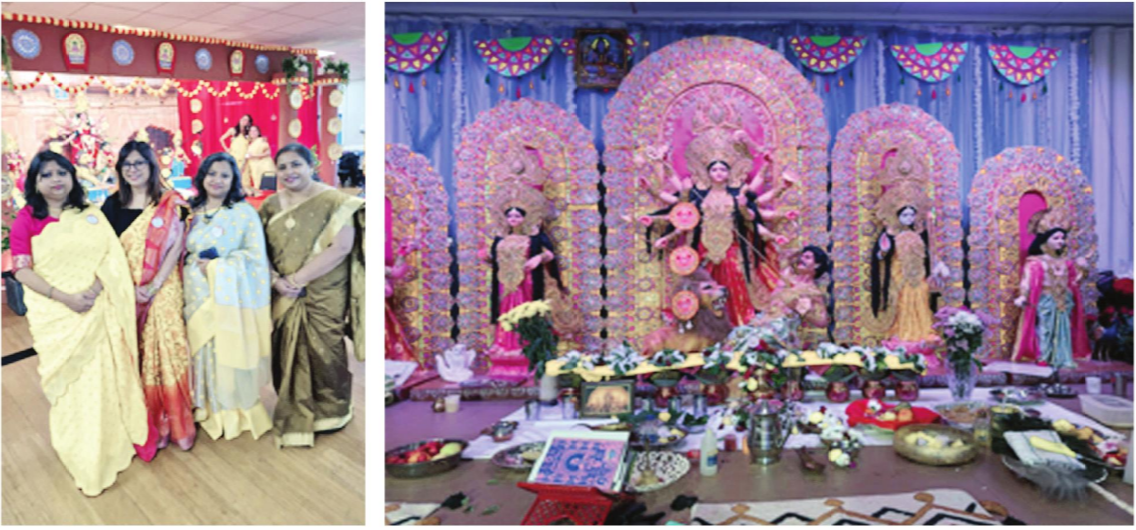
Durga Puja may be Bengal’s biggest festival, but thousands of miles from Kolkata, it has become something more for Britain’s Bengali diaspora: an annual reaffirmation of identity, community and belonging. Across the UK, from London and Birmingham to Leeds, Puja organisers and volunteers are transforming libraries, community halls and cultural centres into temporary pieces of Bengal. While the scale differs from Kolkata’s extensive pandals and crowded streets, the emotional pull remains strikingly familiar.
This year, London’s Adi Shakti Durga Puja marks a decade of celebrations, reflecting the growing confidence and cohesion of Britain’s Bengali community. What began as a small gathering of families has evolved into a well-established cultural fixture, built through volunteer effort and community participation.
That story is repeated across the country. Unlike Kolkata, where the festival ecosystem already exists, Puja celebrations in Britain must be created from scratch. Volunteers spend months arranging venues, organising rituals, securing sponsorship, preparing food and curating cultural programmes. Their efforts have turned Durga Puja into one of the most visible expressions of Bengali heritage in Britain.
Several organisations have developed distinctive identities along the way.
Adi Shakti is known for its strong community focus, while it has gained recognition for larger artistic and cultural presentations. The Bengali Cultural and Social Club, often known as the "doctors' Puja", has built a loyal following, while Leeds Durga Puja has quietly established a tradition centred on participation and togetherness. Despite different styles and scales, their mission is similar: to recreate the experience of home while adapting it to life in modern Britain.
That objective is especially evident at the Birmingham Social and Cultural Organisation’s Sharadotsav, where around 40 families come together each year at B12 Village Hall. Widely described as a "home Puja", the festival places equal emphasis on worship, community participation and cultural preservation. The Birmingham celebration maintains a direct connection with Kolkata through its Durga idol, donated by Banke Bihari Ananta Ghosh. For many devotees, the idol represents more than religious symbolism. It embodies memories of home and a continuing connection to Bengal.
Organisers have deliberately preserved the traditional character of the festival. Rituals are performed according to the Bengali Panjika calendar, from Bodhan on Shashthi to Sindoor Khela on Dashami. In an era when many festivals are becoming increasingly commercial, Birmingham’s Puja remains rooted in custom and collective effort. For organisers including Alok Chandra, Sinku Das and Dr Amitbikram Deb, the festival also serves another purpose: connecting younger generations with their cultural heritage. For many British-born children, Bengali traditions are often encountered through family stories. Durga Puja provides a rare opportunity to experience those traditions directly through rituals, music, dance, food and community gatherings. It transforms heritage from memory into lived experience.
A similar philosophy underpins Camden Durga Puja, one of the oldest Bengali cultural institutions in the United Kingdom. Founded in 1963, the organisation is celebrating its 61st year in 2026 and remains a cornerstone of Bengali cultural life in London. Hosted at Swiss Cottage Library, Camden Durga Puja combines traditional observance with contemporary cultural expression.
This year’s theme, Durgeshnandini, inspired by Bankim Chandra Chattopadhyay’s classic novel, explores women’s empowerment, resilience and self-discovery through performance and visual art. Visitors can expect the familiar atmosphere associated with Durga Puja: the rhythmic beat of the dhak, the fragrance of incense, colourful decoration, cultural performances and festive food. For a few days each year, a corner of north London takes on the look and feel of Bengal.
The continued growth of these celebrations highlights how Durga Puja has evolved within the diaspora. It is no longer simply a religious festival observed abroad. It has become a cultural institution, bringing together multiple generations while helping preserve language, customs and collective memory. For Britain’s Bengalis, Durga Puja remains an annual act of return. Not necessarily to a geographical place, but to a shared heritage and identity. Outside, the streets belong to London, Birmingham and Leeds. Inside, for a few autumn days, they belong to Bengal. And that may be the measure of Durga Puja’s success in the diaspora: not how closely it replicates Kolkata, but how powerfully it makes people feel at home.
(The author, a Special Correspondent for TEW covering Scotland, London, and Birmingham, is an active researcher and social activist. She works to deepen UK–India ties through cultural and cross-tradition exchange.)








[[comment.comment_text]]