Good Voter Turnout in Khunti, Lohardaga, Palamu, and Singhbhum Constituencies

 2 years, 4 months ago

 | |||
| Rural Women Boost Voter Turnout | |||
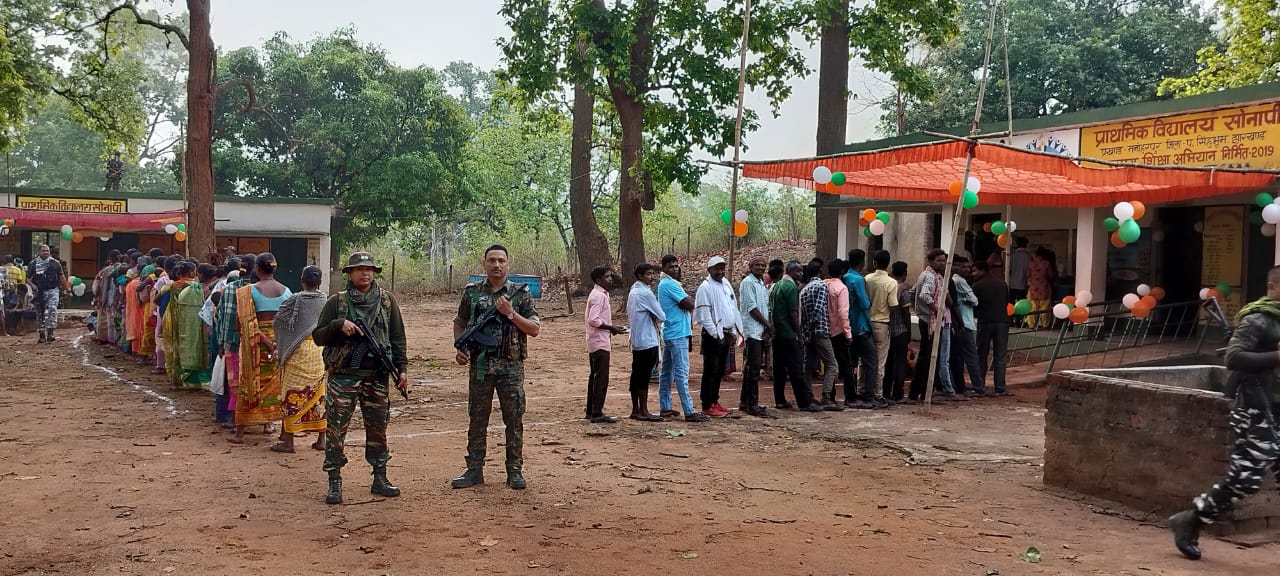
Ranchi EW News: In the fourth phase of elections, there has been a significant turnout in the Khunti, Lohardaga, Palamu, and Singhbhum Lok Sabha constituencies. According to information received from the Election Commission, Khunti witnessed 65.82 percent, Lohardaga 62.60 percent, Palamu 59.99 percent, and Singhbhum 66.11 percent voter turnout. The voting process in all four constituencies was peaceful, and people showed enthusiasm for participating in the democratic process.
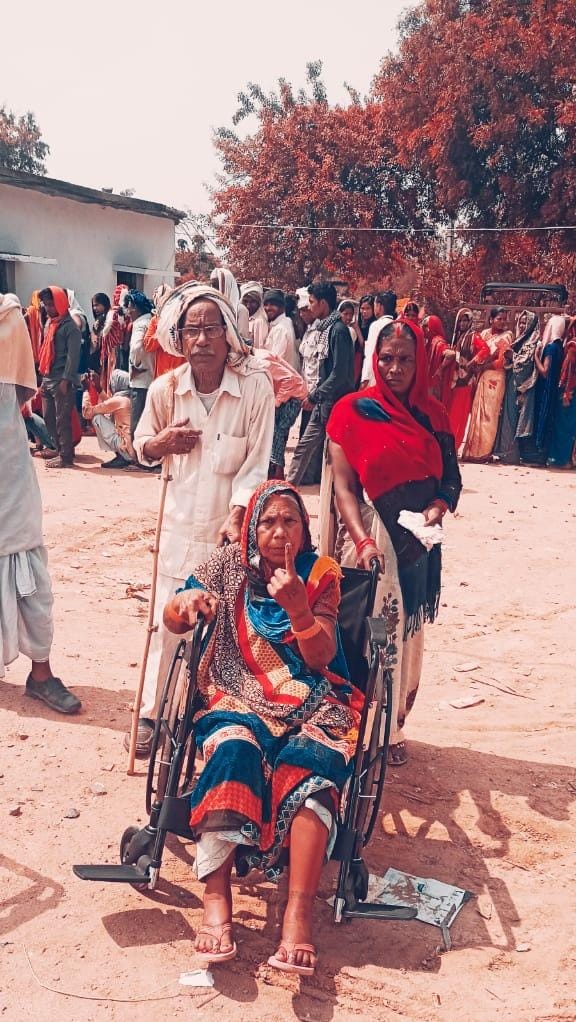
On May 13, several prominent figures, including Central Minister Arjun Munda, Sukhdev Bhagat, Chamra Linda, Geeta Koda, Joba Manjhi, B.D. Ram, and Mamata Bhuiya, have their fates sealed in the EVMs. The scorching sun in the state provided some relief to the voters, who were seen casting their votes from early in the morning in Palamu, Lohardaga, Singhbhum, and Khunti parliamentary seats.
In Palamu, Lohardaga, Singhbhum, and Khunti, voters were observed leaving their homes early in the morning to reach their polling booths and cast their votes. Meanwhile, according to Deputy Chief Electoral Officer Dr. Neha Aroda, 14 ballot units, 14 control units, and 42 VVPATs have been replaced during the voting process. By 3 p.m., Khunti recorded 59.97 percent, Lohardaga 56.72 percent, Palamu 53.35 percent, and Singhbhum 57.62 percent voting.
However, technical glitches were reported in several places during mock polls, resulting in EVM replacements. Dr. Neha Aroda mentioned that Singhbhum witnessed the highest number of ballot unit replacements. She affirmed that the elections are being conducted peacefully and impartially.
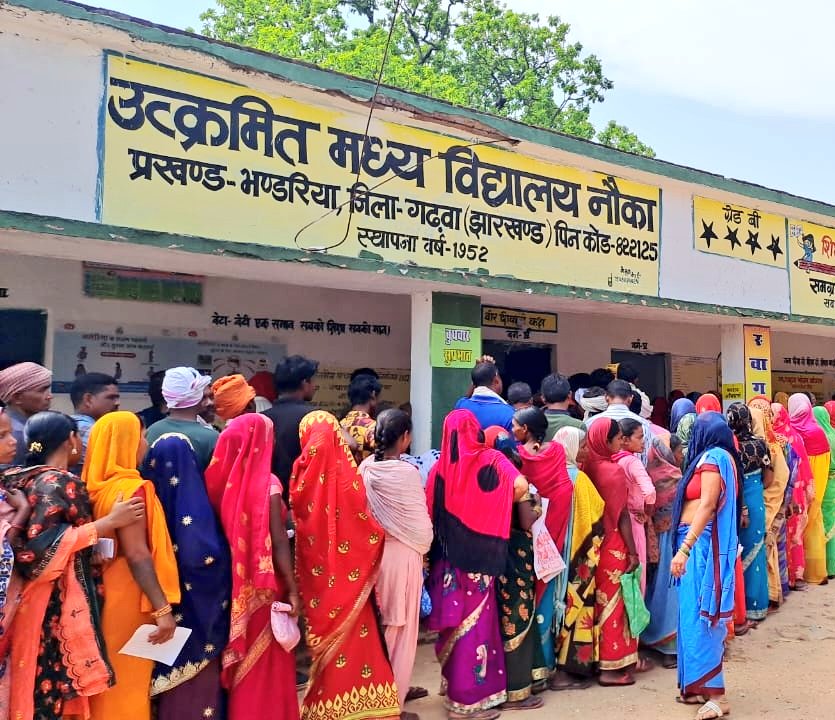
Moving on to the Palamu constituency, traditionally known for low voter turnout due to Naxal influence, saw long queues of people waiting to cast their votes despite Naxal orders against voting. Overall, good voter turnout was reported in areas affected by Naxalism, with people queuing up from morning till evening to exercise their franchise. In previous elections of 2004, 2009, and 2014, Naxal attacks were prevalent, but this time, voters showed courage and cast their votes without fear.
Similarly, in the Lohardaga constituency, various polling centers reported high voter turnout, with voters queuing up even before the start of polling. Lohardaga has a total of 1,748 polling centers with 1,441,302 eligible voters. Among them, Lohardaga district alone has 428 polling centers, including 324 in the Lohardaga Assembly constituency and 104 in the Bishunpur (Partial) Assembly constituency. The total number of voters in Lohardaga district is 370,519, with 186,597 female voters and 183,920 male voters, while there are 02 third gender voters.
In the Palamu Lok Sabha constituency, voting percentages were as follows: 60.62% in Daltonganj Assembly, 58.60% in Vishrampur Assembly, 59.20% in Chattarpur Assembly, 55.03% in Hussainabad Assembly, 62.74% in Garhwa Assembly, and 62.11% in Bhawanathpur Assembly. Meanwhile, Khunti and Singhbhum recorded the highest voter turnout.


[[comment.comment_text]]