Can Modi Break the Dravidian Fortress?

 2 years, 7 months ago
Amit Pandey
The Bharatiya Janata Party (BJP) has long eyed Tamil Nadu as a crucial battleground in its quest for expanding political dominance beyond its traditional strongholds. Recent events, including the alliance with the All India Anna Dravida Munnetra Kazhagam (AIADMK) and its subsequent dissolution, underscore the party's determination to make inroads into this Dravidian heartland.
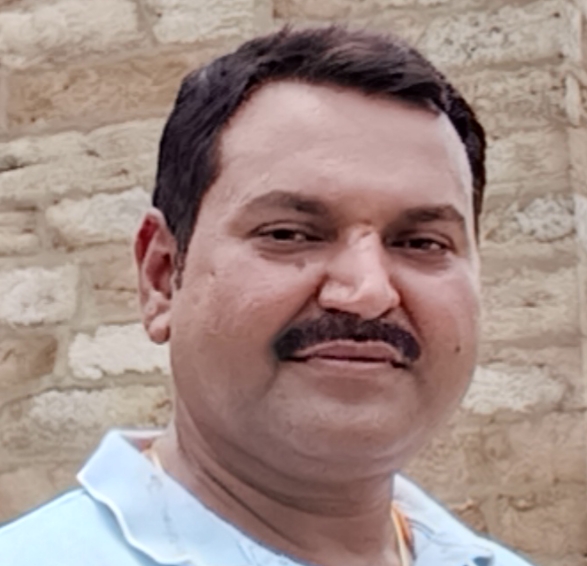
The BJP has intensified its efforts to court Tamil Nadu voters by unveiling several development projects and emphasizing its pro-Tamil stance. Prime Minister Narendra Modi's frequent visits to the state and his speeches highlighting Tamil culture and heritage have been pivotal in this charm offensive. Projects like the Chennai Metro Rail and initiatives promoting Tamil language and culture exemplify the BJP's attempts to resonate with the local populace.
Despite its concerted efforts, the BJP faces an uphill battle in Tamil Nadu. A deep-seated anti-BJP sentiment prevails among the masses, fueled by perceived ideological clashes with the Dravidian movement and apprehensions regarding cultural imposition. The towering presence of the Dravida Munnetra Kazhagam (DMK) and its formidable allies, along with the absence of a charismatic local leader, further complicates the BJP's prospects in the state.
Nonetheless, the BJP has avenues to explore in Tamil Nadu. These include forging alliances with smaller parties, tapping into disgruntled factions within the AIADMK, strengthening grassroots networks, and leveraging the leadership vacuum in the state. By recalibrating its approach and aligning with regional sentiments, the BJP could potentially broaden its appeal and carve out a niche in Tamil Nadu's political landscape.
The Tamils of South India have a long and proud history of fighting for their rights, identity, and autonomy. They have resisted the domination of the Delhi-based parties, which they perceive as alien and oppressive. The Tamils have challenged the imposition of Hindi as the national language, the discrimination against their culture and religion, and the neglect of their development and welfare. They have also demanded a separate state or country for themselves, based on the concept of Dravidian nationalism. The Tamils have been led by charismatic and visionary leaders, such as Annadurai, Karunanidhi, MGR, and Jayalalithaa, who have founded and strengthened regional parties, such as the DMK and the AIADMK. These parties have ruled Tamil Nadu for more than five decades, defeating the national parties, such as the Congress and the BJP, in every election. The Tamils have shown that they are not willing to compromise their identity and interests and that they can govern themselves better than the outsiders.
Tamil Nadu has been a stronghold of the Dravidian parties since 1967 when the DMK defeated the Congress and ended its rule in the state. The DMK and its offshoot, the AIADMK, have alternately governed the state ever since, with the support of the influential film stars who joined or founded these parties. Some of the prominent film personalities who became political leaders in Tamil Nadu are Annadurai, Karunanidhi, MGR, Jayalalithaa, Vijayakanth, and Rajinikanth. The film industry has been a powerful medium for propagating the Dravidian ideology and mobilizing the masses against the perceived domination of the north and the Hindi language.
The Congress, which was once the dominant party in the state, has been reduced to a marginal player, often aligning with one of the Dravidian parties to survive. The BJP, which emerged as a national force in the 1990s, has also failed to make any significant inroads in Tamil Nadu, despite its attempts to woo the voters with development schemes and cultural appeals. The BJP faces the challenge of overcoming the anti-Hindi and anti-Brahmin sentiments that are prevalent among the Tamil people, as well as the lack of a strong local leadership and a credible alliance partner.
The BJP, which has been struggling to make a dent in Tamil Nadu’s politics, has recently allied with the TMC, a regional party headed by former Union Minister G.K. Vasan. Vasan, who was once a Congress leader, had merged his party with the Congress during the UPA regime, but later broke away and relaunched his party in 2014. He joined the NDA in 2019 and was nominated to the Rajya Sabha by the BJP. The BJP hopes that by aligning with the TMC, it can gain some foothold in the state, where it has been facing stiff resistance from the Dravidian parties, the DMK and the AIADMK, as well as the anti-Hindi and anti-Brahmin sentiments of the people.
However, the TMC is not a major force in Tamil Nadu’s politics, as it has lost much of its relevance and support after the death of its founder, G.K. Moopanar, in 2001. The TMC has a limited presence and influence in some pockets of the state, but it is unlikely to make a significant difference to the BJP’s fortunes. The BJP cannot rely on the TMC alone to win over the voters of Tamil Nadu, as it has to face the challenge of projecting a credible local leadership, addressing regional aspirations and issues, and overcoming the negative perception of its policies and ideology. The BJP has to prove that it can deliver on its promises and ensure the development and welfare of the state if it wants to break the Dravidian fortress.
The BJP's foray into Tamil Nadu presents both promise and peril. While its efforts to penetrate the Dravidian fortress are commendable, formidable challenges loom large. The party's ability to navigate these hurdles while capitalizing on available opportunities will ultimately determine its fate in the state. As the political dynamics continue to evolve, only time will reveal whether Modi can indeed break the entrenched Dravidian stronghold, reshaping Tamil Nadu's political landscape in the process.


[[comment.comment_text]]