When Non-Violence Fights Back: From Chambal to Jan Satyagraha

 53 minutes ago
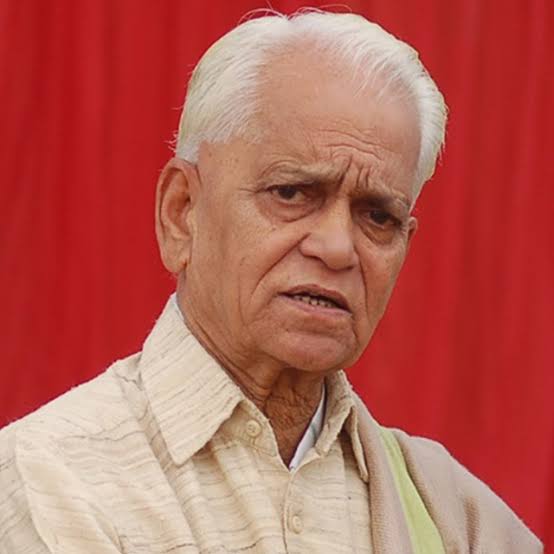
Remembering S. N. Subba Rao on His Fifth Death Anniversary, 27 October
When violence silences the weak, hatred divides communities and injustice denies the poor their dignity, non-violence must do more than preach peace. It must confront oppression and create conditions for change. Dr S. N. Subba Rao, affectionately known as Bhaiji, demonstrated this through his work with dacoits in Chambal and his efforts to unite young people across India’s social and religious divisions. P. V. Rajagopal carried the same Gandhian conviction into struggles for land, livelihood and the rights of marginalised communities. Their lives show that non-violence is not passive acceptance but the courage to resist injustice without surrendering to hatred.
My first meeting with Subba Rao took place in Bhagalpur, following the communal violence that began on 24 October 1989. Fear had entered ordinary lives, neighbourhoods were divided by suspicion, and social bonds were under severe strain. His presence offered a reminder that peace requires more than the cessation of violence; it demands the difficult work of rebuilding trust.
For Subba Rao, communal harmony was not a slogan. It required dialogue, participation and sustained engagement. He believed young people could become agents of reconciliation rather than instruments of division. Through youth camps, national integration programmes and constructive activities, he encouraged young Indians to cross barriers of religion, caste, language and region. National unity, in his understanding, was not merely a political idea but a continuing social responsibility.
His commitment was tested in the ravines of Chambal, long associated with armed gangs, abductions and fear. Subba Rao helped create opportunities for dialogue and encouraged dacoits to abandon their weapons and return to society. Such transformation could not be achieved through force alone. It required patience, moral courage and faith in the possibility of change.
His approach neither excused crime nor romanticised its perpetrators. Rather, it recognised that punishment and coercion alone might not prevent further violence. Lasting change also requires opportunities for repentance, reintegration and a constructive future. Dialogue cannot replace justice or erase the suffering of victims, but it can help create conditions in which violence loses its hold.
The wider significance of Subba Rao’s work lies in challenging the assumption that violence can be defeated only through greater violence. The state must uphold the law and protect citizens, while society must address the circumstances that perpetuate conflict. His work drew strength from Gandhi’s conviction that people should not be denied the possibility of transformation.
Subba Rao extended this philosophy to national integration. A nation cannot be held together by declarations alone. Its unity depends on how people treat one another, whether prejudice is challenged and whether young citizens learn to work across social divisions. Peace remains incomplete when open violence stops but suspicion and hostility continue.
These concerns remain relevant today. Communal polarisation, misinformation and identity-based hostility threaten social cohesion. Harmony cannot be restored by asking the injured to forget their suffering or by treating conflict as a temporary disturbance. It requires listening, accountability and the patient reconstruction of trust. Non-violence must confront hatred without reproducing its methods.
P. V. Rajagopal represents another important dimension of the Gandhian tradition. While Subba Rao concentrated on youth mobilisation, national integration and the transformation of violence, Rajagopal placed land, livelihood and rural dignity at the centre of his work. Through Ekta Parishad and movements inspired by Gandhian principles, he brought the concerns of landless people and marginalised communities into national debate.
For a landless family, land is much more than a commodity or an entry in a government register. It provides the foundation for shelter, livelihood, food security and social dignity. Without access to productive resources, rural communities can remain trapped in poverty and dependence despite their labour. Land reform, therefore, concerns not only ownership but also opportunity and the ability to live with dignity.
The Jan Satyagraha movement, associated with Rajagopal and Ekta Parishad, mobilised marginalised communities through disciplined, non-violent collective action. The march brought their demands into public view and pressed authorities to address the concerns of those excluded from decisions about land and development. Its message was clear: people deprived of their rights should not have to choose between silent suffering and violent resistance.
Such movements connect individual hardship with structural injustice. The insecurity of a single landless labourer may be dismissed as a private misfortune. When thousands experience similar conditions, the issue becomes one of public policy and democratic accountability. Non-violent mobilisation transforms scattered suffering into a collective demand for change, enabling people to challenge power without abandoning the moral strength of their cause.
Subba Rao and Rajagopal represent distinct but complementary expressions of Gandhi’s legacy. One worked to bring people away from armed violence and unite young Indians across social divisions. The other mobilised rural communities around land, livelihood and dignity. Both understood that non-violence must engage with the conditions that generate conflict and exclusion. It cannot remain a ceremonial ideal detached from people’s everyday struggles.
Their lives also challenge the misconception that non-violence means avoiding confrontation. Gandhi’s satyagraha was active resistance, demanding discipline, sacrifice and courage. Its purpose was not to protect the comfort of the powerful but to awaken public conscience and change unjust conditions. Non-violence is not the absence of struggle; it is the refusal to turn struggle into another instrument of dehumanisation.
This distinction matters in contemporary India. Gandhi’s name and image remain prominent in public life, but commemoration alone cannot preserve his ideals. Their real test lies in whether truth, non-violence and respect for the weakest influence public decisions. Development remains incomplete when people lack secure livelihoods and basic dignity, while peace remains fragile when injustice is ignored.
Remembering Subba Rao on 27 October should prompt us to examine our own responses to conflict. Do we encourage dialogue before differences become hostility? Do we help young people build relationships across religious and regional boundaries? Do we listen when marginalised communities demand land, livelihood and dignity? And do we persist with constructive work when results are neither immediate nor spectacular?
Social transformation does not always begin in legislatures or government offices. It may begin with a conversation, a youth camp, a march or the decision to recognise an adversary’s humanity. Such acts may appear modest beside the scale of national problems, but they can lay the foundations for lasting change.
On his fifth death anniversary, Subba Rao’s life leaves us with a demanding message: hatred cannot be defeated by hatred, and injustice cannot be corrected by silence. Rajagopal’s work reinforces the same conviction by showing how disciplined collective action can bring the demands of the marginalised into public debate.
From the ravines of Chambal to the marches for land and dignity, Gandhi’s unfinished mission endures. Peace must be joined to justice, and both demand courage, persistence and faith in humanity’s capacity to change. Non-violence can fight back—not by destroying human beings, but by confronting injustice and transforming the conditions that allow violence to flourish.
(The author, a senior journalist of Bihar, is a known commentator on governance, development, and diversity issues.)








[[comment.comment_text]]