Indira Gandhi’s Resolve and the Challenges Facing India Today
 an hour ago
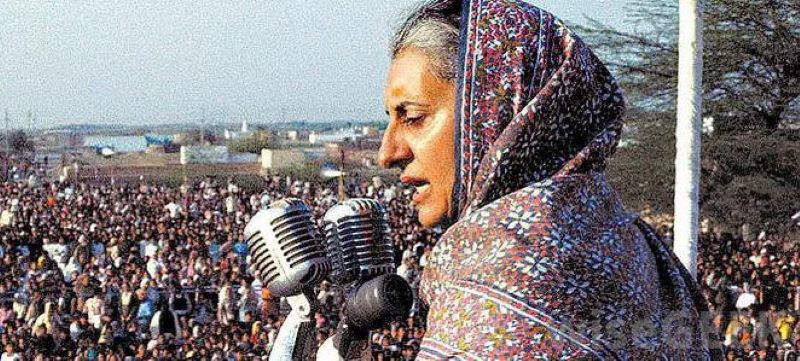
On October 30, 1984, addressing a public gathering at the Parade Ground in Bhubaneswar, Odisha, Prime Minister Indira Gandhi made a statement that would acquire a poignant significance the very next day. “I am here today; I may not be here tomorrow. But the responsibility of safeguarding the national interest rests on the shoulders of every Indian citizen.” On October 31, she was assassinated. Her words, uttered on the eve of her death, continue to pose a fundamental question to Indian democracy: is the destiny of a nation the sole responsibility of its political leadership, or must every citizen share the burden of preserving its ideals?
In that final address, Indira Gandhi spoke of her lifelong commitment to public service and declared that she had no fear of death. She expressed the conviction that every drop of her blood would strengthen India. Such words must not be reduced to the rhetoric of remembrance. Their enduring significance lies in the challenge they place before us: what are we doing today to safeguard India’s unity, democratic freedoms and social justice?
Indira Gandhi’s political legacy is marked by both consequential achievements and profound controversies. The 1971 war and the emergence of Bangladesh transformed India’s regional standing. Bank nationalisation brought questions of economic access and public welfare to the forefront, while the abolition of privy purses challenged the privileges enjoyed by former princely rulers. India’s first nuclear test at Pokhran in 1974 demonstrated its scientific capabilities and strategic aspirations. These developments left an enduring imprint on the country’s domestic and foreign policies.
Yet an honest assessment of history cannot rest upon achievements alone. The Emergency, imposed in June 1975, remains the most troubling chapter of her premiership. Civil liberties were curtailed, opposition leaders imprisoned and the press subjected to censorship. The concentration of power weakened democratic institutions and undermined constitutional freedoms. In the general election of 1977, the electorate voted her government out of office, demonstrating that the Indian people could use the ballot to resist the excesses of authority.
To acknowledge this dark chapter is not to diminish Indira Gandhi’s historical significance. It is to recognise a fundamental democratic principle: no leader stands above the Constitution, and the national interest cannot be invoked indefinitely to curtail citizens’ rights. Dissent is not synonymous with disloyalty. It is an indispensable means of holding those in power accountable.
The challenge before India today is to ensure that democracy does not become synonymous with elections and numerical majorities alone. Independent institutions, parliamentary deliberation, access to justice, freedom of expression and a fearless press are equally essential to its vitality. India’s media continues to scrutinise those in authority, but concerns over journalists’ safety, concentrated media ownership and pressures on critical voices deserve serious attention. The 2026 World Press Freedom Index published by Reporters Without Borders ranked India 157th among 180 countries. Such rankings cannot, by themselves, define the character of a democracy, but they invite scrutiny of the conditions under which journalism operates.
The purpose of journalism is not to amplify the voice of the government, but to inform citizens, investigate public affairs and demand accountability. Its independence must be accompanied by accuracy, fairness and rigorous verification. Indira Gandhi’s insistence that every citizen bears responsibility for the national interest acquires a particular relevance here: citizens cannot discharge that responsibility without access to reliable information and the freedom to question authority.
National unity presents another formidable challenge. India’s strength resides in its linguistic, religious, cultural and regional diversity. Communal suspicion and caste discrimination corrode the bonds that sustain a plural society. A citizen’s patriotism cannot reasonably be judged by religion, food habits, language or political allegiance. The idea of India must embrace equal citizenship and mutual respect, rather than demand conformity to a single cultural identity.
In her Bhubaneswar address, Indira Gandhi referred to Kalinga, Ashoka, non-violence, scientific progress and the need to rise above communalism and casteism. Ashoka’s transformation after the Kalinga War remains a powerful historical symbol of the movement from conquest towards compassion. Modern India, too, must reconcile strength with sensitivity. Scientific advancement, economic growth and national security are vital, but their ultimate purpose must be to secure a dignified and fulfilling life for ordinary citizens.
Culture is integral to this larger vision. The Indira Gandhi National Centre for the Arts, established in her memory, has become an important institution for the study and preservation of India’s artistic heritage. Yet cultural preservation must extend beyond monuments and classical traditions. Folk music, tribal art, oral histories, indigenous languages, handicrafts and traditional ecological knowledge are equally integral to the country’s civilisational inheritance.
This concern is particularly urgent when mining, industrial expansion and infrastructure projects affect communities whose lives are inseparable from forests and land. For Adivasi communities, forests are not merely economic resources; they embody memory, livelihood, faith and collective identity. Effective implementation of the Forest Rights Act and respect for the authority of Gram Sabhas are therefore essential to a development model rooted in justice. Progress cannot be considered equitable if its benefits are secured at the cost of dispossession and cultural erasure.
Economic inequality, too, tests the foundations of national unity. While technology, industry and urban infrastructure advance, farmers, informal workers and vulnerable rural households continue to struggle for secure livelihoods and access to essential services. Economic growth must therefore be measured not merely by aggregate output, but also by improvements in education, healthcare, nutrition, employment and social security. The questions of poverty and economic justice that occupied Indira Gandhi’s politics remain relevant, although their answers must be sought through transparent policies and democratic accountability.
The treatment of dissent is another measure of a nation’s democratic maturity. Peaceful protests by workers, farmers, students and citizens are legitimate expressions of public concern. Where violence or unlawful conduct occurs, the law must take its course; peaceful disagreement, however, must not be suppressed. Both the government and the Opposition have a responsibility to uphold constitutional norms and sustain reasoned public debate.
On her death anniversary, the national resolve should mean more than ceremonial remembrance. It should entail rejecting communal hatred, resisting caste discrimination, defending vulnerable communities and demanding answers from those who exercise power. It should also require the courage to learn from both the achievements and the failures of our political history.
The most meaningful tribute to Indira Gandhi is to read her final address in the light of contemporary India. A nation is not strengthened by military might, economic growth or technological prowess alone. Its true strength lies in the security of its weakest citizens, the freedom of its public institutions and the assurance that justice does not depend upon identity or influence.
Indira Gandhi spoke of strengthening India through every drop of her blood. Today, the country should not require its citizens to make such a sacrifice. What it needs is their conscience, labour and courage. When power remains answerable to the Constitution, journalists can question authority without fear, development advances alongside justice, and diversity is cherished rather than feared, the national resolve she invoked will acquire its fullest meaning. That is both the enduring challenge and the unfinished promise of India’s democracy.
(The author, a senior journalist of Bihar, is a known commentator on governance, development, and diversity issues.)









[[comment.comment_text]]