Gandhi’s Economics of Self-Reliance Finds a Global Voice

 an hour ago
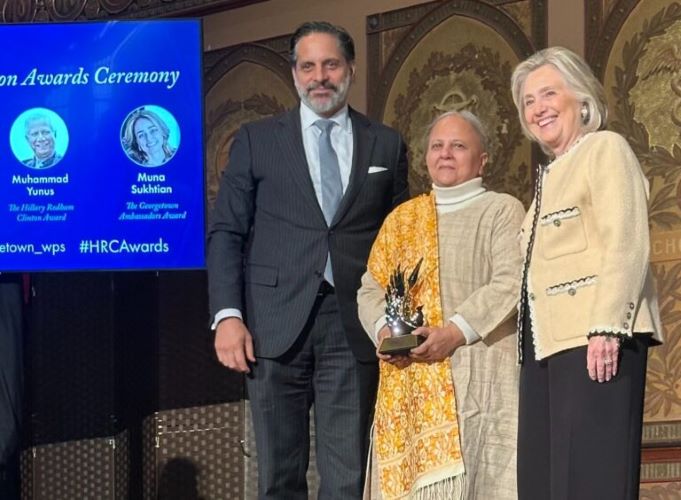
The global recognition of Reema Nanavaty, a leading figure in the Self-Employed Women’s Association (SEWA), is a reminder that economic development cannot be judged by growth figures alone. Its true measure lies in whether those who sustain the economy possess the means to secure their livelihoods, exercise their rights and participate in decisions affecting their lives. Nanavaty’s receipt of the 2026 Hillary Rodham Clinton Award at Georgetown University in Washington on October 15 brings renewed attention to women’s economic empowerment, collective action and self-reliance. It also underscores the contemporary relevance of Mahatma Gandhi’s conviction that a nation’s strength rests upon the dignity and independence of its people.
At a time when governments celebrate investment, infrastructure and technological advancement as indicators of progress, the experience of millions of women in India’s informal economy raises an uncomfortable question: can development be called inclusive when those who sustain everyday economic life remain insecure? Street vendors, agricultural labourers, domestic workers, artisans and home-based producers contribute substantially to the economy, yet many lack regular incomes, adequate social protection and the bargaining power enjoyed by workers in formal employment.
For these women, empowerment is not an abstract slogan. It means earning a dependable income, gaining access to credit, securing social protection and having a voice in decisions affecting their families and communities. Nanavaty’s work seeks to make these possibilities tangible by strengthening women’s collective institutions and building economic opportunities around their skills and experience.
Founded by Ela Bhatt in 1972, SEWA emerged from the recognition that self-employed women needed an organisation capable of defending their interests and acknowledging their contribution to the economy. It brought together women whose labour frequently remained invisible in official economic calculations. Under Nanavaty’s leadership, the organisation has continued to advance livelihood security, women-led enterprises, renewable energy and social protection.
The significance of this model extends beyond the immediate benefits of collective organisation. It challenges the assumption that poor women must depend primarily upon state assistance or private charity. Welfare measures are indispensable for protecting vulnerable populations, but lasting economic independence requires more than relief. It demands access to productive assets, financial services, markets, skills and institutions through which people can negotiate better terms for their labour.
Here lies the connection with Gandhi’s philosophy of swavalamban, or self-reliance. For Gandhi, independence was not merely a transfer of political power. It required people to recover control over their economic lives and participate in shaping the institutions governing their communities. His advocacy of swadeshi emphasised local production, indigenous skills and economic arrangements that served human needs rather than subordinating them entirely to distant markets.
These principles should not be mistaken for a rejection of modernity or technological progress. Their enduring relevance lies in the insistence that economic systems must serve people, rather than leave them at the mercy of market forces. Nanavaty’s approach gives this argument a contemporary expression by linking collective organisation with enterprise development, financial inclusion and livelihood security.
Women’s empowerment, however, cannot be reduced to income generation alone. A woman may earn money and still remain vulnerable to hunger, inadequate healthcare, unsafe working conditions and environmental degradation. Her economic independence may be undermined by a natural disaster, the loss of productive assets or the absence of social protection. Development must therefore address the interconnected conditions that determine whether a family can sustain a decent life.
Food security illustrates this relationship. It is not merely the availability of grain but the ability of households to obtain sufficient and nutritious food consistently. Women often bear primary responsibility for household nutrition, yet their capacity to fulfil it depends upon secure livelihoods, purchasing power and access to local resources. Linking economic opportunities with food security helps address the structural causes of deprivation rather than treating hunger as an isolated problem.
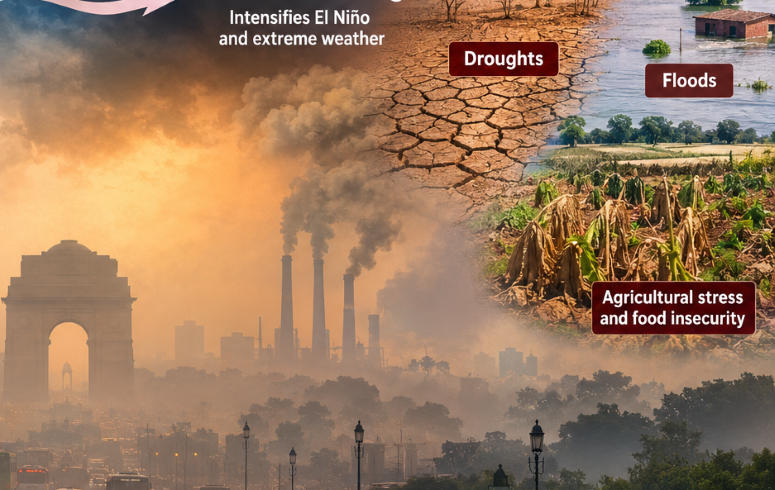
The relationship between livelihood development and environmental sustainability is equally important. Climate change increasingly threatens agricultural production, water availability and rural incomes. Poor communities are often least equipped to absorb these shocks, although they have contributed relatively little to the emissions responsible for global warming. Women face additional disadvantages because they frequently have limited access to land, finance, technology and alternative employment.
Nanavaty’s work through the Hariyali Green Energy and Livelihoods Initiative seeks to connect renewable energy with economic opportunity. The underlying proposition is significant: environmental protection need not come at the expense of employment. Clean energy, sustainable production and locally rooted enterprises can reduce vulnerability while creating new sources of income. Such efforts challenge development models that treat ecological concerns as secondary to economic expansion.
Gandhi’s conception of Gram Swaraj, or village self-rule, offers a useful framework for understanding this approach. Gram Swaraj was not merely an administrative arrangement. It envisaged communities capable of identifying their priorities, managing local resources responsibly and participating in decisions about their collective future. Decentralisation, in this sense, was inseparable from economic democracy.
The contemporary challenge is to adapt this principle to a world of complex markets, urbanisation and technological change. Self-reliance cannot mean isolation or the rejection of external opportunities. It means ensuring that communities possess sufficient capacity and bargaining power to participate in wider economic networks without losing control over their livelihoods. Women’s cooperatives, producer groups and locally managed enterprises can help bridge the gap between local agency and broader markets.
Nanavaty’s experience in disaster rehabilitation further demonstrates why livelihood security must be central to development policy. Earthquakes and other natural disasters destroy not only homes and infrastructure but also savings, employment, productive assets and social networks. Emergency relief is essential, but rehabilitation remains incomplete if people cannot rebuild their means of earning a living.
Women often bear a disproportionate burden during such crises. Domestic responsibilities increase, income opportunities contract and access to resources becomes more uncertain. Rehabilitation programmes that restore productive assets, support women-led enterprises and involve affected communities in decision-making can make recovery more durable. Nanavaty’s engagement in livelihood reconstruction and rehabilitation initiatives in countries including Afghanistan and Sri Lanka reflects the importance of connecting immediate relief with long-term economic resilience.
This relationship between economic opportunity and human security also explains the wider significance of her international recognition. The Hillary Rodham Clinton Award recognises leadership advancing women’s rights, peace and security. Nanavaty shared the 2026 award with Nobel Peace Prize laureate Muhammad Yunus and entrepreneur and philanthropist Tory Burch. The recognition places women’s economic empowerment within a broader discussion of the conditions necessary for stable and peaceful societies.
Peace cannot be sustained through political agreements alone. Where unemployment, deprivation and exclusion deny people a credible stake in their future, social stability remains fragile. Economic empowerment does not automatically eliminate violence or resolve political conflict, but it can strengthen women’s agency, widen their choices and enable them to participate more effectively in public life. Collective institutions that provide economic security can also help communities withstand crises.
Nanavaty, who received the Padma Shri in 2013, represents the importance of sustained grassroots engagement. Organising workers, building trust and creating durable institutions demand patience and commitment. The success of such work cannot be measured by awards alone. Its deeper measure lies in whether women gain greater control over their earnings, whether their labour receives fair recognition and whether their families become less vulnerable to economic shocks.
India has much to learn from this experience. Women in the informal economy continue to confront irregular incomes, limited social security, unsafe working conditions and the unequal burden of unpaid domestic labour. Financial inclusion must therefore extend beyond opening bank accounts. It must include affordable credit, insurance, skill development, healthcare, market access and effective protection against exploitation. Equally important, women must participate in designing and evaluating the policies intended to improve their lives.
The central lesson is that women must not be treated merely as beneficiaries of development. They must be recognised as producers, entrepreneurs, workers and decision-makers. Policies that ignore this distinction risk perpetuating dependency even while claiming to promote empowerment. Institutions that strengthen collective bargaining, encourage enterprise and expand access to resources can transform economic participation into genuine agency.
Gandhi’s relevance lies in his insistence on the relationship between means and ends. Growth that deepens inequality cannot be regarded as complete progress; prosperity that destroys ecological foundations cannot endure; and welfare that leaves people without the capacity to shape their future cannot fulfil the promise of self-reliance.
Nanavaty’s global recognition offers an opportunity to reconsider these questions. Her work demonstrates that economic empowerment, environmental responsibility and social justice can reinforce one another when development begins with the needs and aspirations of those who have too often remained at its margins.
The real tribute to Gandhi is not to invoke his name in speeches but to translate his principles into institutions that expand human freedom. Nanavaty’s achievement reminds us that self-reliance is not an outdated ideal. It remains a practical necessity in a world where inequality, insecure employment and climate uncertainty threaten human dignity. Her award honours not only an individual’s contribution but also the collective struggle of millions of women seeking a fairer share in the economic and social life of their communities.
For India, the question is whether this recognition will inspire a deeper commitment to that unfinished task. Development acquires meaning only when the people who sustain it gain the power to shape it. That is the enduring promise of Gandhi’s economics—and the challenge Nanavaty’s work places before policymakers today.
(The author, a senior journalist of Bihar, is a known commentator on governance, development, and diversity issues.)







[[comment.comment_text]]