ShareChat earmarks $19.1 million for its first ESOP buyback

EW•NN
5 years, 1 month ago
Kolkata, Mohalla Tech, the parent company behind India’s undisputed market leader in short video app Moj and Indic language social media platform ShareChat, has announced its first ESOP buyback program worth $19.1 million (approx. Rs. 140 crores). This comes after the company recently raised over $500 million, taking its valuation to $2.1 billion. With Moj completing its first anniversary, the platform has already achieved market leadership in the Indian short video space with the highest active user base.
Nearly 200 existing and former employees with vested options are eligible to participate in this process.
Speaking on its first ESOP buyback, Ankush Sachdeva, CEO and cofounder, ShareChat said, “Today, ShareChat and Moj are the category leaders in the social media and short video space transforming the lives of millions of users. This exponential growth and success story wouldn’t have been possible without the relentless commitment of our people. With their immense passion and energy, we have seen the biggest growth trajectory in our history in the last few months. This ESOP buyback is our way of giving back to our employees by helping them in their wealth creation journey.” ShareChat has also revised the existing vesting schedule. The new vesting policy will allow all the qualified employees to vest 25% of ESOPs in the first year, followed by 8.25% every quarter. In case any employee leaves the organisation, the person gets to keep all the vested options and continues to enjoy the related benefits. Further, the company has revised its ESOP exercise price from Rs. 1551 to Re.1, bringing more benefits to the employees. “We are presently witnessing an exciting growth journey and following an ambitious plan. Therefore, we have aligned our ESOP policy accordingly to reward our people who will be instrumental in paving the way for the next level of growth”, he further added. Mohalla Tech will be the sole buyer in this buyback process. All eligible employees can sell up to 100% of their vested ESOPs at its present stock valuation.
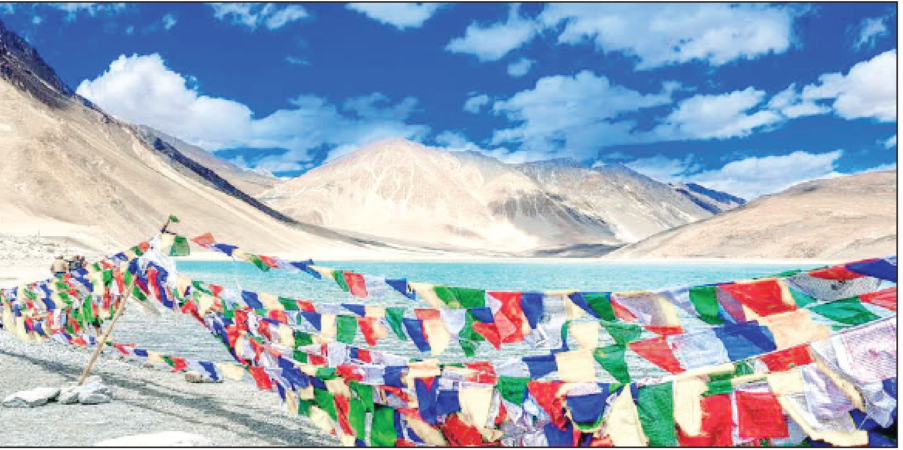
It is the 18th day as of 16th July 2026. For eighteen days, Sonam Wangchuk the visionary engineer, the educator who taught an entire generation that learning could be joyful, the man who inspired millions to think innovatively has been lying on a makeshift bed at Delhi’s Jantar Mantar. He has consumed nothing but salt water. According to medical bulletins released by the youth-led Cockroach Janta Party (CJP), his body weight has plummeted by nearly 9 kilograms, dropping dangerously to 57.15 kg.
There is a photograph that the Ministry of Road Transport and Highways loves to circulate. A freshly laid six-lane expressway stretches into a golden horizon. Smooth asphalt. Clean white markings. The kind of road that makes you believe, for a brief and generous moment, that India has arrived. Minister Nitin Gadkari has built an entire political identity around such photographs — and to be fair, he has earned some of it. When I began my career as a cost engineer on national highway projects in 2010
Temperature soared across the entire European continent in the latter half of June and early July. France, the Netherland and Belgium recorded 3700 excess human deaths and authorities warned that these numbers are preliminary and may even rise. People above 50 years of age accounted for larger proportion of the deaths. Several deaths are reported due to persons drowning in water bodies; those who did not know swimming also jumped in deep water to beat the heat and perished. Experts have found that the current heat waves in Europe is worst recorded in its history.
The contemporary struggle over religious monuments in India cannot be understood without revisiting the deeper historical questions that underlie it: the nature of “Hinduism” in the past, the evolution of temple architecture, the role of Buddhism under state patronage, and the present-day politicisation of Islamic-period monuments. Taken together, these questions reveal not only a contested past but also a deliberate project of mythmaking in the present, designed to forge a unified religious-national identity by cultivating hostility toward Muslims.
Can governments introduce sweeping policy reforms without adequate public consultation? This opinion piece examines the democratic implications of E20 ethanol, governance, accountability, and citizen participation, arguing that lasting public trust depends on transparency, evidence-based policymaking, and meaningful consultation rather than one-way administrative decisions.
An analytical look at India's ethanol blending programme, examining its impact on energy security, farmers, fuel prices, food security, water resources and the country's clean energy transition.
[[comment.comment_text]]