Tehran’s New Leverage in West Asia: Emergence of New Arms Market

 1 year, 3 months ago
Iran’s reassertion of power after its military confrontation with Israel isn’t just about geopolitics — it has the potential to reshape the region’s economic landscape in profound ways. With rising stature, renewed alliances, and access to key trade corridors, Iran may increasingly position itself to become a central economic actor in West Asia and beyond.
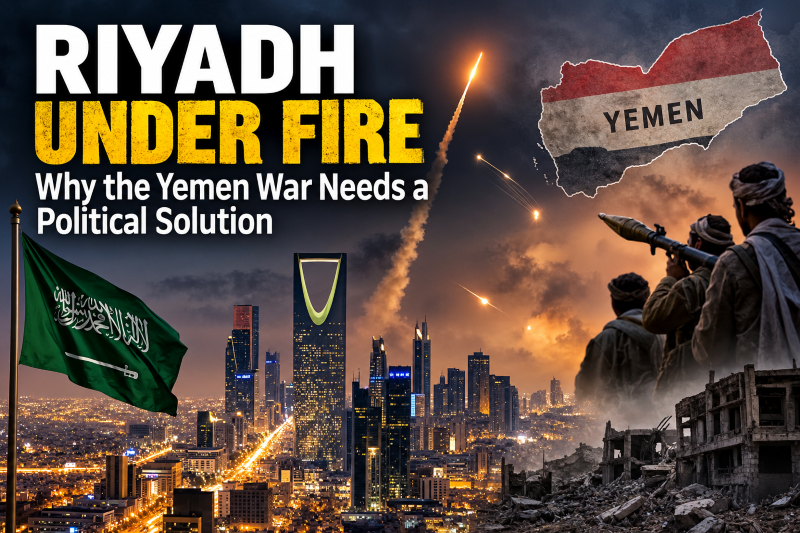
The Israeli assaults exposed the unfathomed capacity that Iran has. It demonstrated its power to devastate Tel Aviv to Israeli gateway to Europe, the Haifa port, and dreams of the western India–Middle East–Europe Economic Corridor (IMEC). Iraniancoordinated strategy flanking to Yemen, Lebanon and Gaza has had heavy cost on Israel and its master allies.
For the first time Iran openly targeted Israel from its own territory in such scale, signalling new strategic confidence. It’s no more a pariah.
It has put to myth that President Donald Trump was reshaping the Middle East by drawing closer to Israel's long-term adversaries.
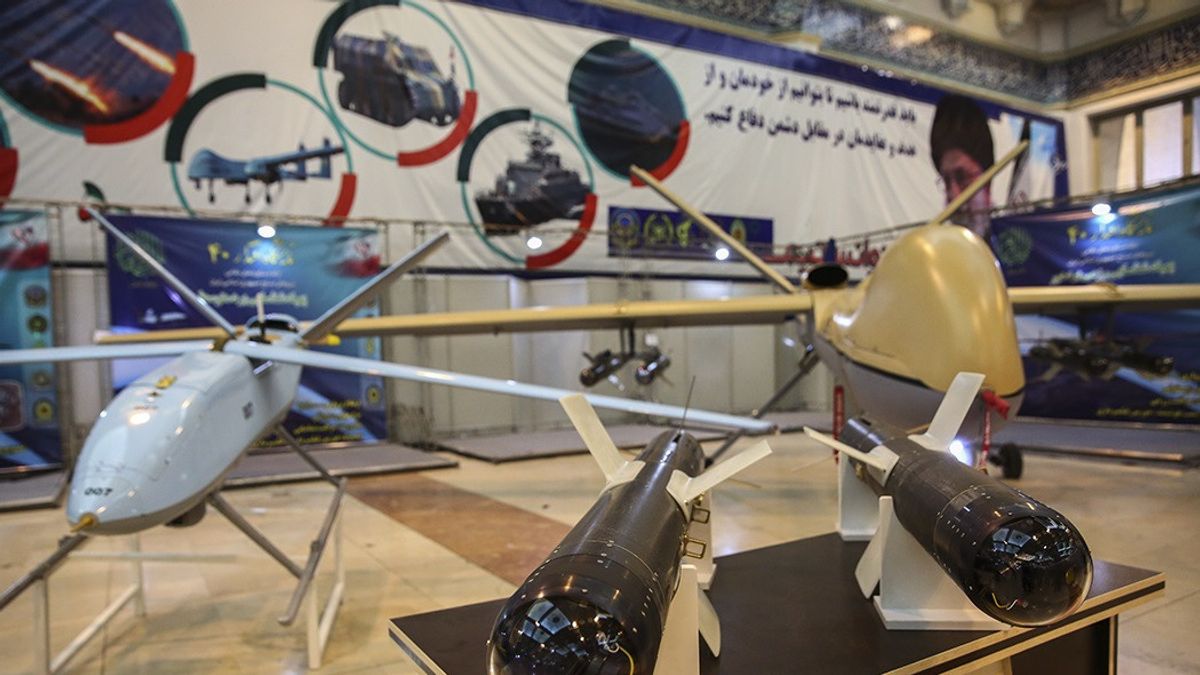
The assault exemplified that fear is not about forget everything and run but it could also mean face everything and rise. That is being termed as the major gain for an isolated Iran, which, some thought,was crushed under sanctions. It is also a showcase that an arms market exists beyond the Western dominance. Would new arms player emerge? It is quite likely and dependence on the West could dwindle.
Key Constraints
The U.S.-Israel military objective may not have been to dismantle Iran’s nuclear facilities — but rather to subdue and isolate a defiant regional power that had become a rallying point for anti-West forces. This fits a broader historical pattern seen with Egypt, Iraq, Libya, and Afghanistan.
Indeed, if reports of US-Iran backchannel talks are true, they indicate Washington may prefer a contained, partially integrated Iran. But not one capable of leading an anti-West coalition. Any Western assistance for reconstruction will come with tight political strings, limiting Tehran’s space for ideological defiance.
Yet, while Tehran may have gained in perception and prestige — particularly among its allies and adversaries — it's important to temper that view with realism.
Iran’s rise, for now, is more symbolic than structural, and whether it can reshape regional economics in a lasting way depends on how it navigates post-conflict isolation, economic strain, and complex alliances. The potential is there, but the path forward is anything but assured.
Energy Leverage — Theoretical
Iran holds some of the world’s largest reserves of oil and gas. In a less sanctioned world, this would be an obvious economic advantage. But despite its ability to keep exports flowing under the radar, Iran remains financially strangled by Western sanctions.
China may buy oil, but it avoids direct capital transfers. Financially strained Russia, under US sanctions, offers little support. Gulf states, despite some improvement of relations with Saudi Arabia and Iran, are unlikely to challenge the sanctions by funding its recovery. Iran's energy power is real — but its monetization remains limited by external constraints and internal inefficiencies.
INSTC Corridor — Short on Execution
Iran's role in the International North-South Transport Corridor (INSTC) – the link for connecting Russia and Central Asia, could, in theory, shift regional trade patterns. But decades after conception, the corridor still faces poor infrastructure, political fragmentation in the region and India’s ambivalence as it also bets on the Gulf-centric IMEC.
Without external investment and regional stability, INSTC remains an underutilized alternative, not a transformational one.
Shia Crescent
An emerging new axis of economic cooperation of - Tehran-Baghdad-Damascus-Beirut- can turn Iran’s political control across Iraq, Syria, Lebanonand Yemen. It might translate into the “Shia Crescent” viewed as turning into a semi-integrated trade and logistics block, with Iranian goods, fuel, and currency flowing across borders. There are views that the US and the sunni Arabs would not like it.
Would the fledgling Crescent be able to undermine the US-backed economic models in the region; create alternative energy and trade routes, especially as Syria begins tentative reconstruction?Would the West allow Tehran to dominate grey-zone economies that operate outside Western sanctions regimes?
Iran also a BRICS member, with China its emerging sympathiser, might become an important player in de-dollarising. In reality, with its rupee trade with India decades back, it had rolled it on. India cocooned under the sanctions but still Iran maintains ties with India and could be a strength for BRICS, much to the chagrin of MAGA backers. It’s uncertain if US would let Trump dream of – MIGA- Make Iran Great Again, a reality or push an anti-Iran tirade?
Could there be an end or a new beginning to the tri-religion – Judaism, Christianity and Islam - Abrahamic war?
Iran is exploring crypto, currency swaps, and non-dollar trade. But these measures remain tactical workarounds, not scalable systems; vulnerable to secondary sanction; unattractive to larger, risk-averse economies, including India. The India-owned Chabahar port despite initial success is stuck. While symbolic, these financial alternatives don’t yet offer the foundation for a new economic order.
Indian Opportunity
India has to reassess and take steps to become a leader of the global South. It may have to change its tack on the Gaza and force Israel to stop strikes as also negotiate with the Palestinians on humanitarian ground, ask the West to allow a free trade with Iran, establish peace in the region and shed ambiguities in diplomacy. It has to demonstrate mettle at the upcoming BRICS meeting in July. Launched on the sidelines of the 2023 G20 summit in New Delhi, the IMEC was hailed as a counterweight to China’s Belt and Road Initiative and Pakistan. It aimed to connect Indian ports to the UAE and Saudi Arabia, and further to Europe via rail and shipping routes.
Tehran’s manoeuvres—diplomatic, military, and strategic—have complicated India’s outreach and interests across West Asia. The IMEC's architecture carefully excluded Iran. That exclusion sowed the seeds of strategic retaliation from Tehran.
Iran’s gains in stature are real — but they don’t automatically translate into economic dominance. The perception of strength post-conflict may help Iran politically, but rebuilding its economy and reshaping regional economics will require a stable, long-term détente with the West, major infrastructure investments, and an exit from isolation — none of which are currently guaranteed.
So, can Iran reshape regional economics?
Yes — but only if it first reshapes the constraints that still define its economy. And that, for now, remains a possibility, not a certainty.
(Author is a well-recognised social and political commentator. He has served in different academic capacities including as a Professor at the capital-based Indian Institute of Mass Communication.)



[[comment.comment_text]]