Rising Expenses of Nuclear Weapon States: ICAN Report
 1 year, 3 months ago
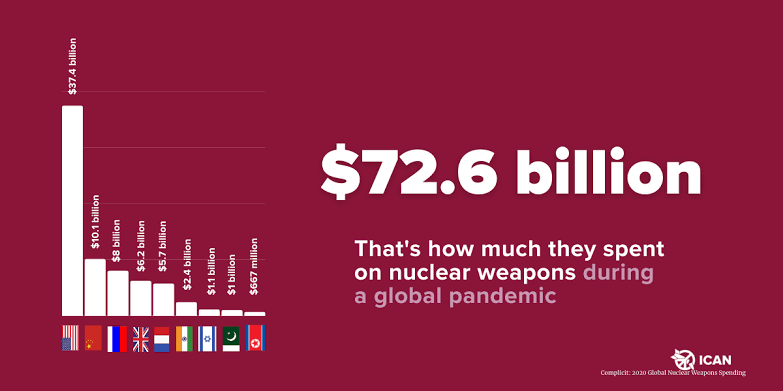
In 2024, the world's nuclear-armed states collectively poured over $100 billion into their atomic arsenals, marking a nearly $10 billion increase from the previous year. This substantial expenditure, highlighted by the International Campaign to Abolish Nuclear Weapons (ICAN), a Nobel Peace Prize laureate, raises significant concerns about transparency and the allocation of global resources.
The United States led this spending spree, allocating a staggering $56.8 billion to its nuclear program. China followed with $12.5 billion, and Britain committed $10.4 billion. The other nuclear-armed nations contributing to this sum include Russia, France, India, Pakistan, and North Korea, alongside Israel, which is widely believed to possess nuclear weapons although it has never officially acknowledged it.
A critical point emphasized by ICAN is the severe lack of democratic oversight concerning these massive expenditures. This issue is particularly pronounced when it comes to the "hosting costs" incurred by countries that house other nations' nuclear weapons. These costs often remain hidden from both citizens and lawmakers, effectively bypassing public scrutiny and accountability.
ICAN’s report specifically cited Belgium, Germany, Italy, the Netherlands, and Turkey as countries reportedly hosting US nuclear weapons. While Russia claims to have nuclear weapons stationed in Belarus, some experts remain unconvinced.
The report lamented the "little public information" available regarding the financial implications of hosting US nuclear weapons in NATO European countries. These costs encompass facility security, nuclear-capable aircraft, and readiness for deployment. The secrecy surrounding these arrangements, often governed by classified agreements, was described by ICAN as an "affront to democracy," denying citizens and legislators knowledge of foreign nuclear weapons on their soil and the associated taxpayer expense.
Beyond the direct spending by states, ICAN's report shed light on the significant financial gains of the private sector in the nuclear weapons industry. In 2024 alone, private companies reaped at least $42.5 billion from nuclear weapons contracts, with ongoing contracts totaling a staggering $463 billion, some extending for decades.
Last year saw at least $20 billion in new contracts awarded. These companies, the report revealed, heavily invested in lobbying governments, spending $128 million in the United States and France alone, the only two countries for which such data was available.
ICAN underscored the stark contrast between this colossal nuclear spending and other global needs. The organization calculated that the 2024 nuclear weapons expenditure could have funded the entire United Nations budget nearly 28 times over. This disparity highlights a fundamental imbalance in global priorities and resource allocation.
Susi Snyder, ICAN's program coordinator, articulated the organization's stance by stating that "the problem of nuclear weapons is one that can be solved." She emphasized that addressing this issue requires understanding the "vested interests fiercely defending the option for nine countries to indiscriminately murder civilians."
This statement encapsulates ICAN's broader mission: to expose the mechanisms and motivations that perpetuate the existence and expansion of nuclear arsenals, ultimately advocating for their complete abolition. The report serves as a powerful reminder of the economic and democratic implications of the ongoing commitment to nuclear deterrence, a doctrine rooted in the Cold War era's assumption that these devastating weapons would never be used.
(Author holds a PhD from the School of International Studies, JNU. Views are personal.)








[[comment.comment_text]]