Escalating Israel-Iran Conflict: A Litmus Test of America’s Leadership
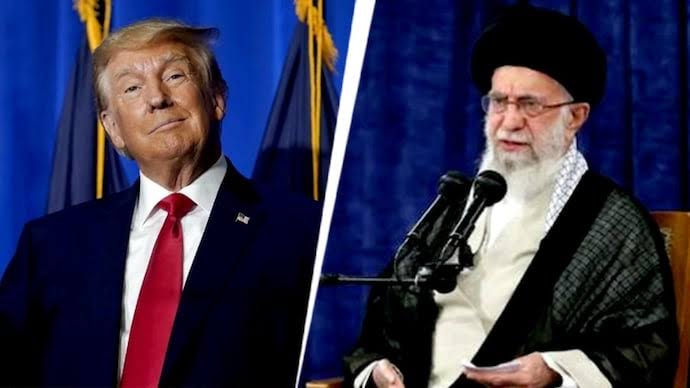

 

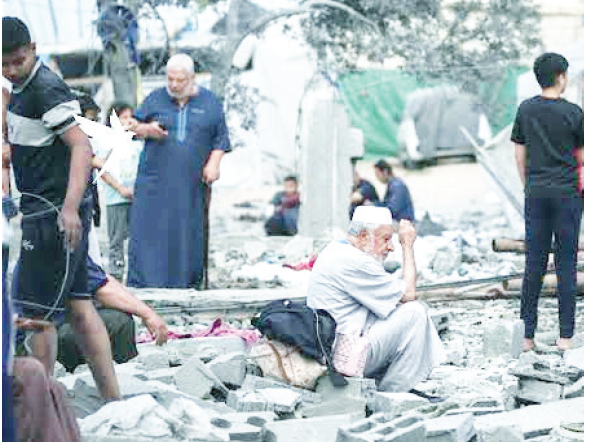
The escalating conflict between Israel and Iran has intensified, with both nations engaging in direct military actions and issuing severe threats.


The current escalation began last Friday when Israel conducted precision air strikes on Iranian military and nuclear facilities. Iran retaliated by firing hundreds of ballistic missiles across Israel, and on Wednesday, it launched hypersonic missiles, specifically the Fattah-1, at Israeli cities. Ayatollah Ali Khamenei declared, "In the name of God, the battle begins," vowing "no mercy" for Israel.


Iran's Supreme Leader, Ayatollah Ali Khamenei, has defiantly stated that Tehran "will never surrender" to calls for unconditional surrender, directly responding to US President Donald Trump. Khamenei warned the United States of "irreparable damage" if it intervenes militarily, asserting that the harm to the US would be "far greater than any harm that Iran may encounter." He dismissed Trump's threats, stating the Iranian nation is "not frightened."


President Donald Trump had issued an ultimatum to Khamenei to "surrender unconditionally," suggesting the US and Israel know "exactly where the so-called 'Supreme Leader' is hiding." While stating Khamenei is an "easy target" and they wouldn't "take him out (kill!)" for now, Trump warned that US patience is "wearing thin" regarding missile attacks on civilians or American soldiers. The international community, including the G7 nations, is closely monitoring the situation, with calls for de-escalation while reaffirming that Iran cannot possess a nuclear weapon.


It appears Israel's recent actions are viewed by some as an attempt to draw the United States and its Western allies into a broader Middle Eastern conflict, aiming to solidify its regional dominance. The crucial question remains whether President Donald Trump, who has often positioned himself as a peace broker, will abandon this stance and actively engage in Israel's war. A common sentiment among those advocating for peace is that the U.S. should prioritise de-escalation rather than contributing to further devastation.
 

A Spark Already Lit: The End of Sonam’s Fast Won't Quench the Fire

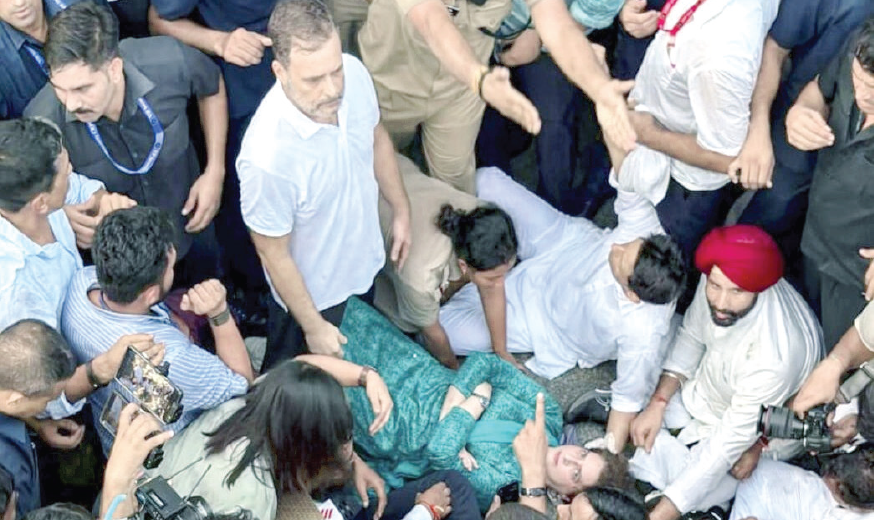
It is the 18th day as of 16th July 2026. For eighteen days, Sonam Wangchuk the visionary engineer, the educator who taught an entire generation that learning could be joyful, the man who inspired millions to think innovatively has been lying on a makeshift bed at Delhi’s Jantar Mantar. He has consumed nothing but salt water. According to medical bulletins released by the youth-led Cockroach Janta Party (CJP), his body weight has plummeted by nearly 9 kilograms, dropping dangerously to 57.15 kg.

Khushboo Jha   |  5 days ago

India’s Highway Dream Is Costing Us a Fortune — And Nobody Is Asking Why?

There is a photograph that the Ministry of Road Transport and Highways loves to circulate. A freshly laid six-lane expressway stretches into a golden horizon. Smooth asphalt. Clean white markings. The kind of road that makes you believe, for a brief and generous moment, that India has arrived. Minister Nitin Gadkari has built an entire political identity around such photographs — and to be fair, he has earned some of it. When I began my career as a cost engineer on national highway projects in 2010

Ashok Bharti   |  5 days, 7 hours ago

HEATWAVE CONDITIONS AND STATES’ FAILURE TO CONSERVE & PLANT TREES

Temperature soared across the entire European continent in the latter half of June and early July. France, the Netherland and Belgium recorded 3700 excess human deaths and authorities warned that these numbers are preliminary and may even rise. People above 50 years of age accounted for larger proportion of the deaths. Several deaths are reported due to persons drowning in water bodies; those who did not know swimming also jumped in deep water to beat the heat and perished. Experts have found that the current heat waves in Europe is worst recorded in its history.

B. K. Singh   |  1 week, 2 days ago

Revisiting Religious History In India: Temples, Myths, and the Politics of Memory

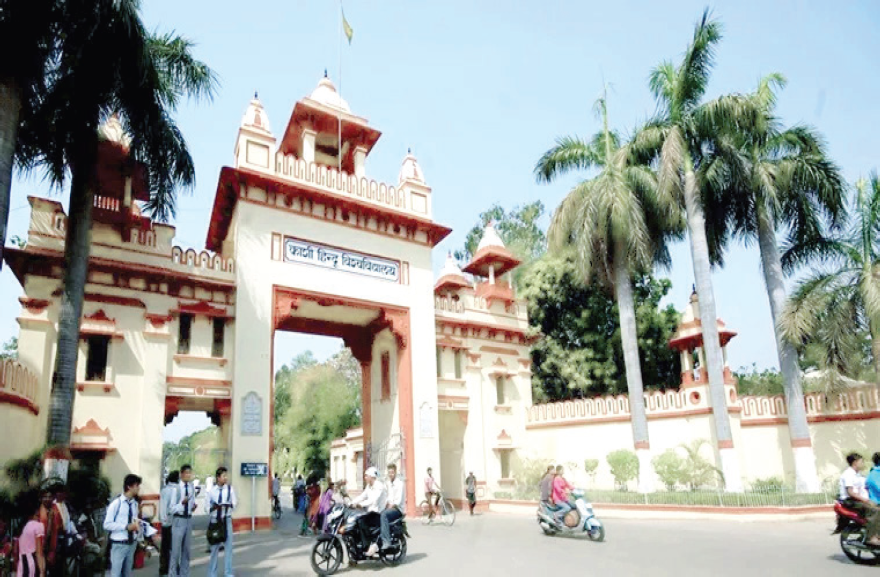
The contemporary struggle over religious monuments in India cannot be understood without revisiting the deeper historical questions that underlie it: the nature of “Hinduism” in the past, the evolution of temple architecture, the role of Buddhism under state patronage, and the present-day politicisation of Islamic-period monuments. Taken together, these questions reveal not only a contested past but also a deliberate project of mythmaking in the present, designed to forge a unified religious-national identity by cultivating hostility toward Muslims.

R C Ganjoo   |  1 week, 4 days ago

When Citizens Become Guinea Pigs

Can governments introduce sweeping policy reforms without adequate public consultation? This opinion piece examines the democratic implications of E20 ethanol, governance, accountability, and citizen participation, arguing that lasting public trust depends on transparency, evidence-based policymaking, and meaningful consultation rather than one-way administrative decisions.

NIRAJ KRISHNA   |  1 week, 5 days ago

Ethanol in India's Fuel Tank: A Green Revolution or a Growing Dilemma?

An analytical look at India's ethanol blending programme, examining its impact on energy security, farmers, fuel prices, food security, water resources and the country's clean energy transition.

Sanjay Pandey @ EW•NN   |  1 week, 6 days ago

Comments

YOU MIGHT ALSO LIKE

View More