Can Prez Trump Deport Elon Musk?

 1 year, 2 months ago
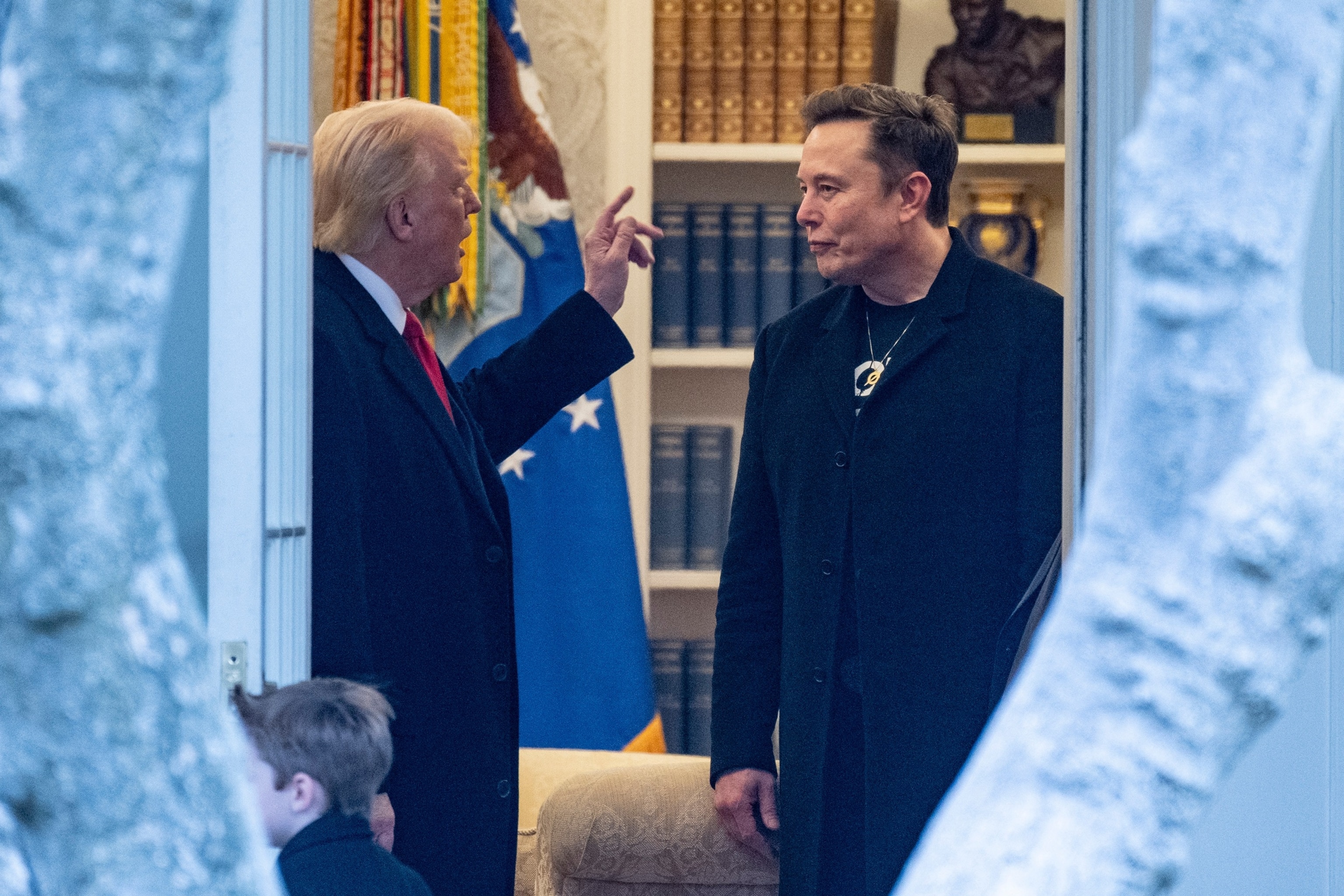
The mere mention of Elon Musk, deportation, and Donald Trump in the same breath is enough to send a jolt through the American public consciousness. For years, the discourse around deportation in America has been centered on undocumented migrants and asylum seekers, often portrayed as a "cattle class." However, the idea of America’s President potentially seeking to deport Elon Musk, a naturalized U.S. citizen and arguably one of the most recognizable figures of modern innovation, fundamentally shifts the narrative. It transforms a somber policy discussion into a surreal political drama, highlighting the unusual and unpredictable nature of contemporary American politics.
Elon Musk, born in South Africa, became a naturalized U.S. citizen in 2002. His presence is deeply intertwined with the American narrative of technological advancement and entrepreneurial spirit, symbolized by companies like Tesla and X (formerly Twitter). Despite past amicable interactions between Musk and Trump, the political landscape is not governed by personal friendships. When Trump suggests "taking a look" at deporting Musk, in response to Musk's criticism of a legislative measure, it elevates the situation from a mere political disagreement to a spectacle, posing the question: can a U.S. President truly deport a naturalized citizen for dissenting views?
The legal precedent for denaturalization, the process of revoking citizenship, exists but is historically rare and subject to stringent legal hurdles. During the McCarthy era in the mid-20th century, denaturalization was used to target foreign-born U.S. citizens for their political beliefs, leading to thousands of such cases. However, a crucial 1967 Supreme Court ruling, Afroyim v. Rusk, significantly curtailed this practice, affirming that a U.S. citizen cannot lose their citizenship unless they voluntarily renounce it, or if it was obtained through fraud or material misrepresentation during the naturalization process. This makes it exceedingly difficult to strip a naturalized citizen of their status, especially for reasons stemming from political disagreement after citizenship has been granted.
While it is theoretically possible for an administration to pursue denaturalization, it typically requires proving that the citizenship was obtained illegally or fraudulently. Simply disagreeing with government policy or expressing controversial opinions, even those deemed by some as "flashing an apparent Nazi salute" or "encouraging right-wing extremists," are not generally grounds for denaturalization or deportation for a naturalized citizen under current U.S. law. Any such attempt would face immense legal challenges and would likely be viewed as a profound assault on democratic principles, potentially aligning the U.S. with authoritarian regimes.
If Donald Trump were to successfully pursue the denaturalization and deportation of Elon Musk, it would represent a monumental shift in American jurisprudence and political norms. It would not only be the ultimate irony, seeing a champion of American capitalism cast out by the very system he helped elevate, but also a stark warning about the volatility of power and loyalty in modern America.










[[comment.comment_text]]