Changing Agendas, Political Mobilisation and Suspicions of Foreign Interference Raise Serious Questions

 an hour ago
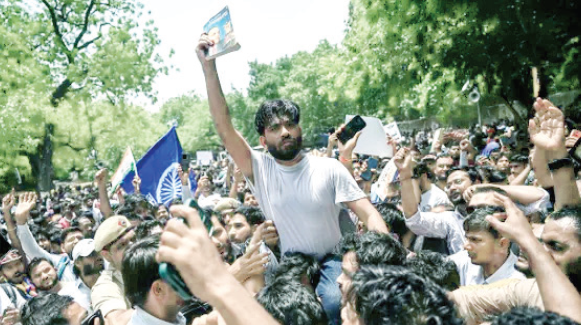
The changing nature of protests, political mobilisation and concerns about foreign interference have raised serious questions in India. Are these movements genuine expressions of public grievances, or are some being used to advance political interests? Unemployment, social justice, electoral transparency and opposition to government policies are legitimate democratic concerns. However, their political use and the possibility of coordinated mobilisation deserve scrutiny.
Critics argue that while the issues change, many of the faces and organisations associated with recent protests remain the same. Continuity in leadership does not prove a conspiracy, but it raises questions about coordination, funding and objectives. The answers must come from evidence rather than political rhetoric.
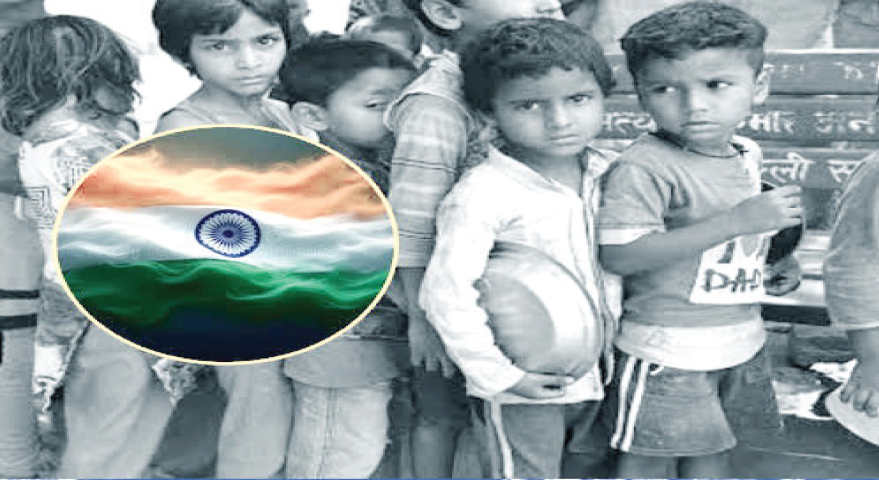
The judicial custody of Ashutosh Ranka and Saurav Das reportedly arose from allegations that they had violated the conditions of a peace bond, rather than merely from hoisting the national flag. The Tricolour represents India’s sovereignty and constitutional unity, but its use at a protest does not determine whether the demonstration is lawful. During proceedings, the Delhi High Court reportedly observed that the issues had changed since the controversy began, prompting questions about the movement’s evolving agenda.
These observations highlight the importance of transparency and accountability among protest organisers. Their affiliations, objectives and conduct deserve examination, particularly when demonstrations extend across multiple issues. However, any alleged violation of a peace bond must be established through due process, and judicial custody must remain subject to legal scrutiny.
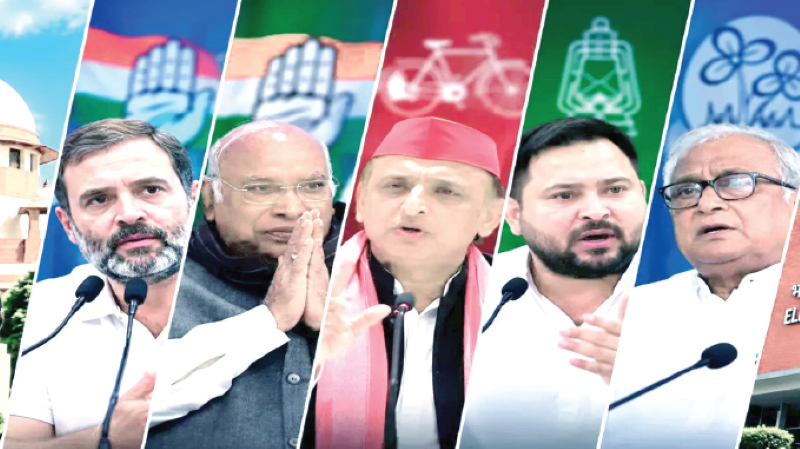
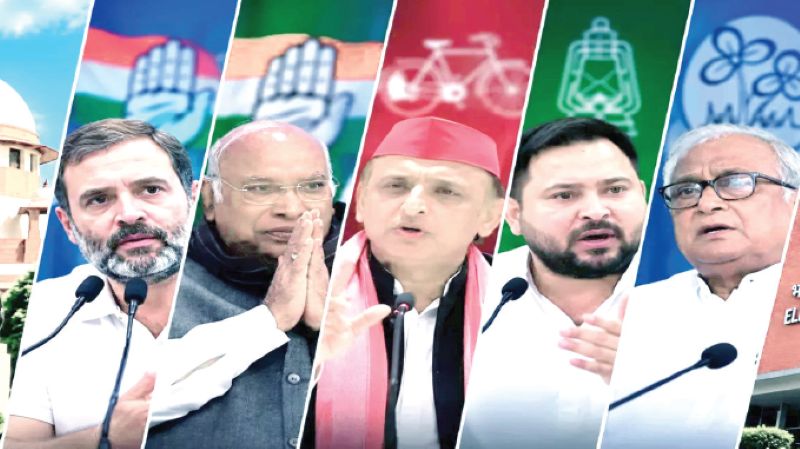
Seeking a change of government is fundamental to democracy. The distinction lies between peaceful political mobilisation and attempts to achieve political objectives through violence, intimidation or unlawful disruption. Sanjay Raut’s remarks about Rahul Gandhi’s return from abroad triggering political upheaval have added to the debate over opposition strategy.
The BJP has questioned Rahul Gandhi’s foreign engagements and alleged links with George Soros, raising concerns about possible efforts to influence India’s political future. If the government possesses evidence of unlawful foreign interference or criminal activity, it should investigate and take appropriate legal action. Political accusations cannot substitute for evidence.
On Vijayadashami, Prime Minister Narendra Modi urged citizens to remain vigilant against forces that divide the country and weaken its institutions. Meanwhile, claims concerning Zakir Naik’s alleged financial links with the Rajiv Gandhi Foundation and statements attributed to him about returning to India after a possible regime change have also attracted attention. Allegations involving Dawood Ibrahim and other individuals wanted by Indian authorities likewise require scrutiny based on verifiable evidence.
International political networks have become another focus of concern. A Fox News Digital report titled Global Chaos Inc. Grows to 101 Groups in 9 Countries discusses an alleged coalition of communist and socialist youth organisations involved in student mobilisation across several countries. It reportedly refers to the Neville Roy Singham network and India Alliance Paris. Any evidence of undisclosed foreign funding or unlawful political interference should be investigated, without treating international associations alone as proof of wrongdoing.
The central question is whether these movements seek specific policy changes through democratic action or whether individuals within them are engaging in unlawful attempts to destabilise constitutional institutions. Their funding, organisational links, stated objectives and actual conduct should determine the assessment. Where evidence establishes criminal activity, the government must act firmly and transparently.
India’s economic progress and growing international influence have also become subjects of political contestation. Comparisons with unrest in Europe may offer lessons, but they must be grounded in facts rather than fear. The government has a responsibility to protect national security while ensuring that investigations are impartial and that dissent is not mistaken for disloyalty.
India’s democracy is strong enough to withstand peaceful protests and political disagreement. Protecting constitutional institutions requires action against violence and unlawful interference, but it also demands respect for the right to dissent. The real test is to uphold both principles: prevent lawlessness without suppressing legitimate opposition, and defend national interests without compromising democratic freedoms.
(The writer is a senior Delhi-based journalist and political analyst. Views are personal.)






[[comment.comment_text]]