Inside Narwapahar’s Underground World of Uranium Mining

 2 weeks, 6 days ago
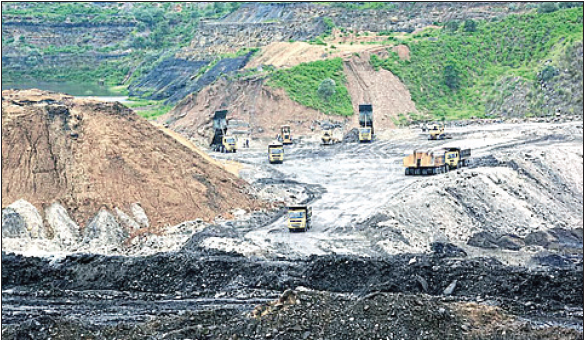
The prospect of exploring a world nearly 300 metres beneath the earth’s surface is intriguing in itself. At Narwapahar’s uranium mine in East Singhbhum, the underground mining process offers a glimpse into a highly controlled technical environment where safety, engineering and scientific planning work together.
The underground mine itself was not entered during the visit. Instead, the procedures for accessing the underground workings, the safety systems involved and the technology used for extracting uranium-bearing ore from beneath the surface were studied and explained.Safety comes before the descentEntering an underground uranium mine is not comparable to an ordinary industrial visit. Safety is the first priority before anyone is permitted to access underground areas.
Prescribed safety equipment, entry procedures, monitoring systems and information about underground conditions form an essential part of the process.
The movement of personnel and machinery is also regulated to ensure safe operations.
Uranium mining involves additional safety considerations, including ventilation, occupational safety and radiation protection, making technical supervision an integral part of underground operations.
A journey into the depths begins at the surface: Narwapahar is an underground uranium mine where access to the ore body requires specially developed underground infrastructure.
Declines and ramps
Provide access to different underground levels and are used for transporting mining equipment, materials and personnel to the working areas. What appears from the surface to be an ordinary hill conceals a multi-level mining environment beneath it.
Searching for uranium ore among the rocks: Uranium occurs underground within specific geological formations. Mining therefore begins with geological assessment and planning based on the location and characteristics of the ore body. At Narwapahar, underground mining methods such as Horizontal Cut and Fill are used. Under this approach, ore is extracted from a designated section and the resulting void is filled with suitable material before mining advances to another section.
The operation involves a sequence of activities, including drilling, rock breaking, loading and transportation, supported by specialised underground machinery. From underground ore to the surface. The ore extracted underground does not simply move directly to the surface. It is transported through designated underground routes to an ore pass. After processes such as crushing, the ore is brought upward through a shaft.
Thus, the journey of uranium-bearing ore involves several carefully coordinated stages—from its extraction within the rock to its transportation and eventual movement towards processing facilities. Ore is not the final nuclear fuel. The material extracted from the mine is not itself finished nuclear fuel. It is sent for further processing, where scientific and chemical processes are used to recover the useful uranium-bearing material.
This stage connects underground mining with the wider nuclear fuel cycle. Uranium mines such as Narwapahar therefore represent an important early link in the chain that ultimately supports the country's nuclear energy programme.
Why is safety so critical? Underground uranium mining involves several specialised safety requirements. Ventilation is essential for maintaining suitable underground working conditions, while workplace monitoring, safe movement of machinery, occupational safety and radiation protection require continuous attention.
Consequently, access to underground areas and mining operations are governed by established safety procedures and technical supervision.
The hidden world beneath the surface
Understanding the underground mining process at Narwapahar demonstrates that the story of nuclear energy does not begin with a reactor or electricity generation. It begins much earlier—with identifying mineral resources beneath the earth and extracting them through controlled and scientific mining practices.
The process associated with reaching underground mining levels, the machinery involved, the movement of ore and the extensive safety arrangements reveal a technological world largely invisible from the surface.
Narwapahar offers a reminder that an important part of India's nuclear energy journey begins deep beneath the earth, among rocks and mineral formations, in an environment where access is necessarily restricted and every stage of the operation is carefully controlled.
(Author, a senior journalist, is RE to TEW Palamu edition.)








[[comment.comment_text]]