Indira Gandhi Through Her Daughter-in-Law’s Eyes: Formidable, Temperamental, Yet Deeply Human

 31 minutes ago
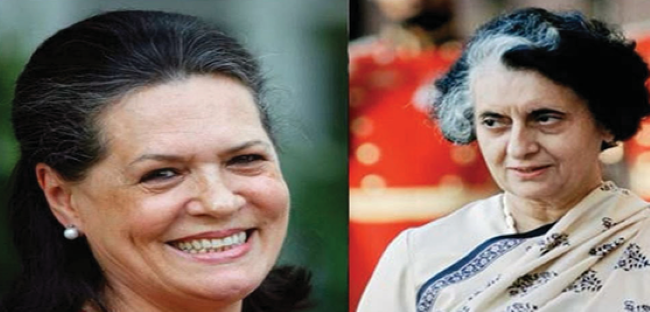
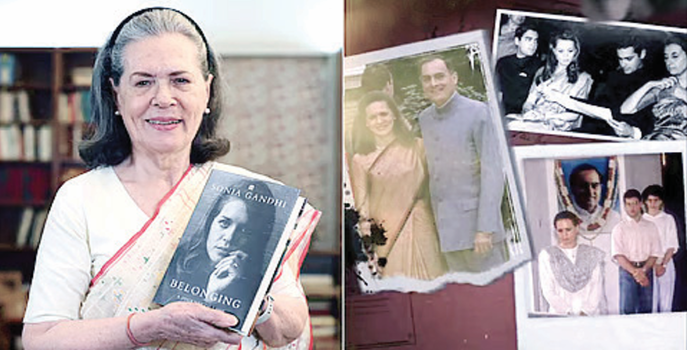
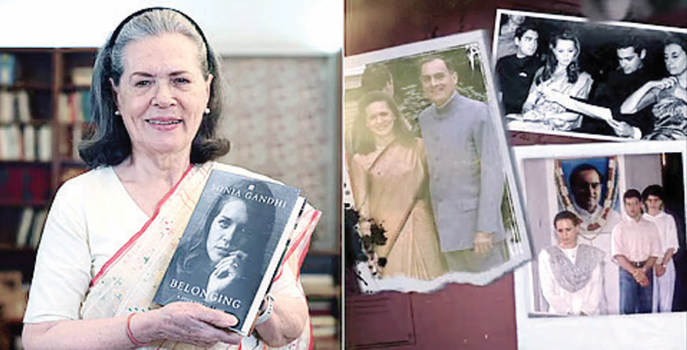
Sonia Gandhi’s recently published memoir Belonging: A Journey of Love offers one of the most intimate contemporary portraits of Indira Gandhi available from within the family. Drawing on decades of shared life under the same roof, Sonia presents her mother-in-law not as a one-dimensional political titan but as a complex woman who could be formidable and sharp-tempered while remaining loving, protective, and at times emotionally vulnerable.
The book does not claim to rewrite political history. Instead, it filters public events through private observation, showing how the pressures of power shaped the woman Sonia came to know as both mother-in-law and confidante.
A Formidable Presence in Private and Public Life
From the moment Sonia entered the Nehru-Gandhi household after her 1968 marriage to Rajiv, Indira dominated the domestic and political atmosphere. Sonia’s early sense of awe mixed with intimidation. Indira was already Prime Minister, decisive in family matters as well as affairs of state. She took an active role in Sonia’s adjustment to Indian life, intervening in practical details and guiding the young bride through cultural transitions.
This authority extended to everyday household rhythms. Staff and even the family doctor reportedly checked Indira’s mood before approaching her, a detail that recurs as evidence of her commanding presence. Sonia’s narrative frames this not as mere eccentricity but as the natural expression of a woman carrying enormous responsibility.
Temper and Its Aftermath
The memoir does not soft-pedal Indira’s temper. It recounts episodes in which frustration over political setbacks or household lapses produced sharp outbursts. One recollection involves Indira, after a difficult parliamentary exchange, pushing her lunch plate across the table with force. Other incidents involved staff members being ordered to stand in a corner or face a wall as a form of reprimand. Sonia admits she initially found these moments frightening and would quake until Rajiv reassured her that the storm would pass.
These descriptions serve a dual purpose. They humanise Indira by showing the emotional cost of constant public scrutiny, while also illustrating the distance a young Italian daughter-in-law had to bridge before the relationship deepened into genuine closeness.
Moments of Care and Unexpected Tenderness
Against this backdrop of intensity, Sonia records acts of quiet consideration that reveal Indira’s capacity for affection. Early in their acquaintance, during a meeting in London, Indira put a nervous Sonia at ease and, noticing a frayed hem on her dress, promptly took needle and thread to repair it herself. Such gestures stayed with Sonia as symbols of a woman free of pretension despite her position.
Indira emerges as an engaged grandmother who doted on Rahul and Priyanka. She participated actively in family rituals, offered practical support during Sonia’s pregnancies, and maintained a protective watch over the household even as national crises mounted. Sonia portrays these domestic roles as inseparable from Indira’s public identity: the same steely resolve that defined her political decisions also underpinned her loyalty to family.
Vulnerability Beneath the Armour
Perhaps the most affecting strand in Sonia’s account is the recognition of Indira’s loneliness and emotional strain. Despite wielding extraordinary power, Indira could feel isolated. The memoir notes her distress after Operation Blue Star in 1984; when shown photographs of the damage inside the Golden Temple, tears came to her eyes. Sonia also suggests that Indira was never fully at ease with the Emergency of 1975–77 and later came to regard aspects of it as having gone too far.
These reflections do not amount to political apology. They present a leader who, in private, carried the weight of decisions whose consequences she could not fully control. Sonia’s affection for her mother-in-law coexists with an awareness of human fallibility.
A Portrait of Complexity
What emerges from Belonging is neither hagiography nor exposé. Sonia’s Indira is formidable because the times and her own temperament demanded it; temperamental because the pressures of office and family were relentless; loving and caring because those qualities were genuine and repeatedly demonstrated in private; and vulnerable because even the most powerful figures remain subject to grief, doubt, and isolation.
The memoir’s value lies in this layered view. For readers seeking insight into one of modern India’s defining figures, Sonia Gandhi offers the perspective of someone who lived the daily reality behind the public image. The result is a portrait that acknowledges both the steel and the softness, the command and the occasional fragility, of Mrs Indira Gandhi.
(Author is a former member of the history faculty at St. Xavier’s College, Mumbai.)





[[comment.comment_text]]