The Pathology of Paranoia: How the "Dimagi Naxal" Construct Mirrors American McCarthyism

 1 month, 2 weeks ago
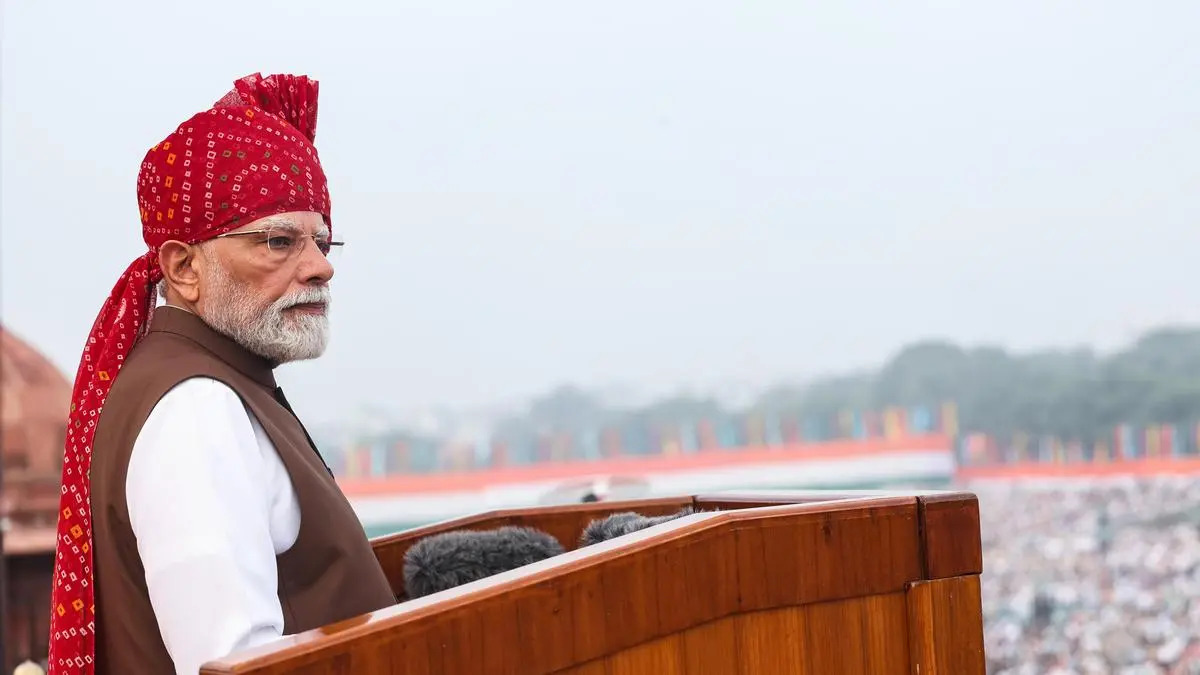
The rhetoric of national security frequently relies on political and ideological labeling to reframe domestic dissent as an existential threat to the state. Governments often use strong labels to make peaceful criticism look like a danger to the nation. Prime Minister Narendra Modi introduced the phrase "Dimagi Naxal" (intellectual Naxal) during his 2026 Independence Day address from the ramparts of the Red Fort. He used the phrase to describe people he claims threaten the country through dangerous ideas. In his speech, he declared that while physical, armed insurgency ("Hathiyariya Naxal") had been effectively dismantled, the nation faced a dangerous new threat from ideologues embedded across public institutions who supposedly seek to drag the country down a violent path.
This terminology builds upon earlier political catchphrases such as "Urban Naxal". In its political function, psychological power, and societal impact, the construct bears striking structural parallels to the wave of anti-communist paranoia that swept the United States in the mid-twentieth century, known as McCarthyism. In other words, this idea is very similar to McCarthyism, a wave of fear that swept the United States in the 1950s. Both concepts weaponize collective fear, blur the fundamental distinctions between constitutional opposition and state treason, and enforce a rigid ideological conformity across civil society and thus,both ideas use fear to make people believe that disagreeing with the government is the same as betraying the country.
The Anatomy of McCarthyism
During the early 1950s, an American leader named Senator Joseph McCarthy led a campaign to find hidden communists inside the U.S. government, spearheaded a relentless public crusade aimed at exposing alleged communist sympathizers within the local government, higher education, schools, scientific institutions, news media and the entertainment industry. McCarthyism did not focus primarily on foreign military forces or enemy armies abroad; instead, it directed public anxiety toward an invisible, internal enemy lurking inside domestic institutions.
Under this framework, expressing progressive political ideas, advocating for labor rights, criticizing foreign policy, or associating with left-leaning thinkers was treated as direct evidence of disloyalty to the republic. It made people afraid of invisible enemies living inside their own communities. McCarthyism did not rely on court trials or real proof.
The power of McCarthyism lay not in formal legal convictions or concrete evidence presented in court, but in the institutionalisation of ambient fear. Public accusations, legislative summons, and informal blacklists effectively destroyed the careers, public credibility, and social standing of thousands of citizens, creating a pervasive culture of self-censorship that chilled American intellectual life for a generation. It used public blame and secret blacklists to ruin people's jobs and social lives. This made regular people afraid to speak their minds.
The Architecture of the Dimagi Naxal Construct
The idea of the "Dimagi Naxal" similarly moves the focus of national security away from armed fighters in forests to the world of thoughts, books, and public speech. The concept of the "Dimagi Naxal" shifts the focus of national security away from physical insurgents operating in remote forest corridors to the domain of thought, writing, and peaceful critique. By combining the word "dimag" (mind or intellect) with "Naxal" (a reference to a banned, violent Maoist movement), the state frames critical thinking and dissent as an intellectual extension of armed rebellion.
While government officials argue that the phrase targets individuals who subvert the Constitution or block economic growth, the term is applied far more broadly in political discourse. University professors, investigative journalists, civil rights activists, legal scholars, and opposition leaders who challenge state policies frequently find themselves branded under this label. As a consequence, the construct functions as a potent rhetorical weapon, delegitimizing critics as national security threats long before any judicial process or formal charge takes place.
Comparative Parallels in Mechanism and Intent
The political playbooks of McCarthyism and the "Dimagi Naxal" rhetoric mirror each other in several fundamental operational ways. Both methods try to attach the bad reputation of a violent group to peaceful people who simply disagree with official policies. Both mechanisms rely heavily on red-baiting techniques that attach the moral stigma of a violent, anti-state ideology to non-violent political disagreement. McCarthyism used fear of Soviet Russia, while the "Dimagi Naxal" label used fear of past internal violence. Where McCarthyism used the looming geo-political threat of the Soviet Union to purge progressive voices, the "Dimagi Naxal" label utilizes the memory of domestic Maoist violence to delegitimize contemporary constitutional critique. In both historical instances, the definition of the ideological enemy remains deliberately vague and elastic.
This strategic ambiguity allows the state and its political allies to expand the list of subversives at will to suit immediate political needs. This allows politicians
to call almost anyone a threat. Both ideas set up a simple loyalty test: if you question the government, you are accused of working against the nation. Furthermore, both constructs perform an identical social function: they establish a mandatory loyalty test wherein questioning official policy is treated as actively undermining the integrity and survival of the nation.
Crucial Distinctions in Context and Execution
Despite these strong operational similarities, notable contextual differences distinguish the two historical phenomena as even with above mentioned strong similarities, there are important differences between the two ideas. McCarthyism unfolded during the height of the global Cold War, driven by international superpower rivalries and nuclear anxieties. In contrast, the "Dimagi Naxal" discourse emerges primarily from internal political dynamics, leveraging domestic security concerns to contain debate and manage public opinion.
The legal and statutory environments also differ significantly. McCarthyism operated largely through public congressional hearings, political pressure, media vilification, and industry blacklists. Modern Indian political labeling, however, intersects directly with stringent security statutes like the Unlawful Activities Prevention Act (UAPA), under which individuals accused of ideological subversion can face years of pre-trial detention without bail. Additionally, while McCarthyism was amplified through traditional newspaper reporting and television broadcasts, the "Dimagi Naxal" narrative spread rapidly through organized digital ecosystems and social media networks, enabling immediate, decentralized, and continuous public harassment.
The Threat to Democratic Principles
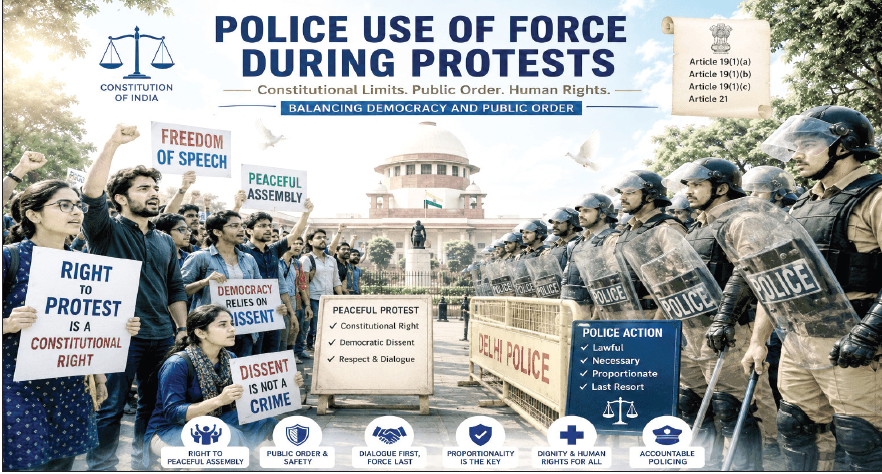
Constitutional democracies depend upon the protected right of citizens to analyze state actions, challenge official narratives, and express dissenting opinions without fear of state reprisal. Free countries depend on the right of citizens to ask hard questions, criticize state decisions, and share different opinions. When government rhetoric systematically mixes up intellectual inquiry with violent extremism, it fundamentally damages the democratic contract between the state and the public.
When a government treats peaceful political debate like vicious crime, it harms the fundamental principles of democracy. Just as McCarthyism is remembered in American history as a dark period of collective paranoia that compromised fundamental civil liberties and eroded constitutional protections, the normalisation of labels like "Dimagi Naxal" risks replacing open debate with compulsory ideological conformity. It endangers doing the same thing by replacing open debate with forced silence.
Ultimately, a resilient and healthy democracy demonstrates its strength not by policing the minds of its citizens, but by protecting their fundamental right to think, write, and speak freely.







[[comment.comment_text]]