Beyond Article 370: Jammu and Kashmir's Transformation, Democratic Integration, and the Emerging Contrast Across the LOC

 2 months, 2 weeks ago
Few constitutional decisions in modern India have generated as much international commentary as the abrogation of Article 370 and Article 35A on 5 August 2019. For some observers, the decision represented the long-delayed completion of India's constitutional integration; for others, it raised legitimate questions about federalism, autonomy, and the process of democratic consultation. Nearly seven years later, however, the debate can increasingly be informed not by competing slogans but by measurable outcomes on the ground.
Whether one supported or opposed the constitutional change in 2019, a serious assessment today requires examining what has actually happened since: in governance, security, infrastructure, economic growth, education, tourism, and public administration. It also requires an honest comparison with conditions across the Line of Control in Pakistan-administered Jammu and Kashmir, where recurring protests over inflation, electricity tariffs, unemployment, and political representation have exposed persistent structural weaknesses in an alternative model of governance.
This article makes the case that the post-2019 transformation of Jammu and Kashmir deserves to be judged by empirical indicators rather than by the ideological positions that dominated the initial reaction in 2019. The argument advanced here is that the territory has undergone significant institutional restructuring, an unprecedented expansion of infrastructure, a marked increase in public investment, improvements in administrative transparency, and a substantial revival of economic and civic life. These developments merit serious consideration by scholars, policymakers, and international observers who are accustomed to viewing Kashmir only through the lens of conflict.
Constitutional Integration and Administrative Reform
The constitutional changes of August 2019 fundamentally altered the governance architecture of Jammu and Kashmir. What had been a bifurcated legal order — one set of constitutional provisions for the erstwhile state, another for the rest of the Union — was replaced by a single, uniform constitutional framework applicable throughout the country.
Proponents of the reform argue that this uniformity was long overdue. From the standpoint of public administration, it enabled the extension of hundreds of central laws, welfare schemes, anti-corruption statutes, and regulatory institutions that residents elsewhere in India had long taken for granted — from the Right to Education Act to central anti-corruption bodies and consumer protection frameworks. Digital governance accelerated, direct benefit transfers expanded, and administrative procedures shifted decisively toward technology-driven delivery systems designed to reduce the discretionary power of local intermediaries.
Supporters contend that this reduced opportunities for rent-seeking by a narrow political class that had, in their view, long monopolised the benefits of the region's special status. Critics continue to debate the constitutional propriety and political implications of how the change was carried out, and that debate is legitimate and ongoing. What is less contestable is that the scale of administrative transformation itself — measured through the expansion of centrally sponsored development programmes, e-governance platforms, and uniform legal protections — has been substantial.
Security: From Persistent Instability Toward Relative Stability
Perhaps the most consequential transformation, and the one with the broadest downstream effects, has occurred in the security environment.
For three decades prior to 2019, terrorism, cross-border infiltration, targeted killings, separatist mobilisation, and frequent curfews and shutdowns disrupted the rhythms of everyday life in the Valley. Schools closed for extended stretches, academic years were compressed or lost entirely, businesses absorbed repeated losses from strikes and closures, and tourism — the region's most natural economic asset — went through cycles of collapse and fragile recovery.
Official data cited by supporters of the post-2019 order point to a significant decline in terror-related incidents compared with the preceding decades, alongside a sharp reduction in organised stone-pelting, once a near-weekly feature of public disorder in Srinagar and other towns. This has allowed markets, schools, transport networks, and commercial establishments to function with a regularity that would have been unthinkable a decade earlier.
The downstream consequences of this stability, advocates argue, extend well beyond security statistics. Parents report greater confidence sending children to school on ordinary weekdays; small businesses plan inventory and staffing without the constant threat of an unannounced shutdown; and investors — domestic and, increasingly, from the Gulf — evaluate opportunities in the region with a materially lower risk premium than was conceivable before 2019.
Security alone does not guarantee development, and no serious analyst would claim otherwise. But sustainable development rarely occurs in its absence. In this respect, supporters argue, the post-2019 environment represents a genuine departure from the preceding decades — not a cosmetic one.
Economic Transformation
Economic development has become one of the central pillars of the Union Government's stated strategy for Jammu and Kashmir, and the scale of announced investment is, by regional standards, considerable.
Large industrial incentive packages have sought to attract private capital while encouraging entrepreneurship in manufacturing, food processing, horticulture, handicrafts, and tourism-linked services. The flagship industrial development programme, valued at roughly 28,400 crore, is among the largest investment incentive frameworks ever introduced for the region, and its architects have deliberately designed long-term fiscal incentives — rather than one-off subsidies — intended to encourage sustained industrial growth over short-term capital inflows that evaporate once concessions expire. Employment generation remains, understandably, the most closely watched metric, and government projections estimate that these initiatives could create several lakh direct and indirect jobs across agriculture, horticulture, manufacturing, logistics, and services. Supporters note that the true test of these projections will be realised over the coming decade, and that scepticism about employment figures is a fair and necessary check on official optimism — but they argue the direction of travel, from a moribund pre-2019 industrial base to active investment interest today, is itself notable.
Equally significant, in this reading, has been the expansion of digital financial inclusion, banking penetration, and direct benefit transfers — reforms that, while less visible than a new highway or bridge, are argued to meaningfully reduce leakages in welfare delivery and improve the transparency with which public money reaches intended beneficiaries.
Tourism: Recovery Through Stability
Tourism has emerged as one of the clearest and most visible indicators of changing ground realities, and it is the sector most directly sensitive to the security improvements described above.
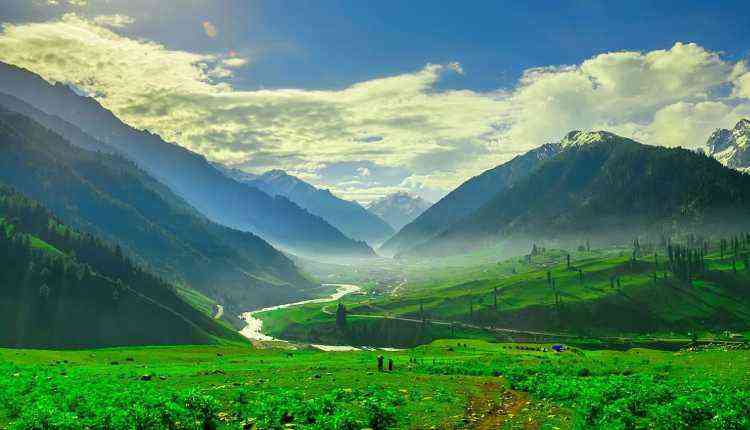
For decades, the tourism industry remained hostage to violence, shutdowns, and travel advisories that discouraged international visitors and left hotels operating well below capacity even in peak season. Recent years, by contrast, have witnessed record tourist arrivals across Jammu and Kashmir, with destinations including Srinagar, Gulmarg, Pahalgam, Sonamarg, Doodhpathri, and Gurez experiencing sustained growth in domestic visitation, alongside a cautious but real return of international travellers.
Religious tourism has expanded substantially as well, sustained by the continued popularity of the Shri Mata Vaishno Devi pilgrimage and by improved infrastructure supporting pilgrims making that journey.
Advocates of the post-2019 model are careful to note that tourism's contribution extends well beyond hotel revenue. A busy tourist season stimulates handicrafts, transport, restaurants, agriculture, construction, retail, adventure sports, and cultural industries — generating employment across both urban centres and the rural periphery, where alternative livelihoods are scarce.
Infrastructure: Building Long-Term Connectivity
Perhaps no aspect of the transformation is more visible, or more difficult to dispute in its physical existence, than the expansion of infrastructure.
The completion of the Udhampur–Srinagar–Baramulla Rail Link stands as one of India's most ambitious engineering achievements of the past decade. For the first time in its history, the Kashmir Valley has direct, all-weather railway connectivity with the rest of the Indian subcontinent — a link that planners on both sides of the political debate acknowledge will have economic implications lasting well beyond any single government's tenure.
The Chenab Rail Bridge, part of that project, is the world's highest railway arch bridge, and its supporters present it as a symbol of both engineering capability and a long-term commitment to the region's integration with the national economy. Beyond the railway, new road tunnels, upgraded highways, expanded rural roads, and improved logistics corridors have significantly reduced travel times and, crucially, extended year-round connectivity to areas that were previously cut off for months during winter. Economists across the political spectrum broadly agree that such infrastructure investment carries long-term implications — reducing transportation costs, facilitating trade, attracting outside investment, and integrating what were once isolated local markets with the wider national economy.
Education and Human Capital
For years, repeated shutdowns disrupted academic calendars, delayed examinations, and — by the admission of educators across the political spectrum — adversely affected learning outcomes for an entire generation of students.
The decline in prolonged, conflict-driven disruptions has allowed schools and universities to function with a consistency that was rare before 2019. Simultaneously, higher education has expanded through the establishment of institutions such as IIT Jammu, IIM Jammu, and AIIMS campuses, alongside the regional rollout of the National Education Policy 2020.
Digital classrooms, skill development programmes, vocational training, research initiatives, and accreditation reforms are all cited by supporters as elements of a broader effort to improve educational quality while preparing students for a more competitive economy — one less dependent on government employment as the sole aspiration. Education, in this framing, represents perhaps the most enduring investment in long-term peace, precisely because it expands opportunity, encourages innovation, and strengthens the habits of democratic participation among the young.
Transparency and Governance
Administrative reforms since 2019 have placed a heavy emphasis on transparency, digital governance, and accountability. Digital procurement systems, online public services, direct benefit transfers, and e-governance platforms have, in the government's telling, reduced bureaucratic delays while widening citizen access to services that once required personal connections or informal payments to navigate.
The stated objective has not been administrative efficiency alone but a deeper restoration of public confidence in institutions — confidence that had eroded over decades of perceived local capture and unaccountable intermediaries. Governance challenges undoubtedly remain, as they do in most developing regions of any country, but supporters argue the institutional direction has shifted meaningfully toward measurable accountability rather than discretionary patronage.
Comparing Developments Across the Line of Control
Any comparison between Jammu and Kashmir and Pakistan-administered Jammu and Kashmir should be approached with care and grounded in verifiable evidence rather than rhetoric. That caveat stated, the contrast is instructive.
While Jammu and Kashmir has experienced substantial public investment, infrastructure expansion, tourism growth, and institutional integration since 2019, Pakistan-administered Jammu and Kashmir has witnessed repeated, large-scale public demonstrations over inflation, electricity pricing, unemployment, governance failures, and resource allocation — protests that have at times paralysed the region for weeks. Civil society organisations and local protest movements there have repeatedly demanded greater political representation, stronger constitutional protections, economic justice, and basic administrative accountability — demands that echo, in structure if not in specifics, many of the historical grievances once raised on the Indian side of the Line of Control.
These contrasting trajectories, advocates argue, illustrate how governance capacity and sustained public investment — not constitutional slogans alone — shape developmental outcomes for ordinary residents. Rather than reducing the comparison to competing political claims, serious scholars are encouraged to examine measurable indicators: education access, healthcare infrastructure, employment generation, transparency in public spending, and the reliability of basic services such as electricity.
Challenges That Remain
A credible case for this transformation must also acknowledge, rather than obscure, the challenges that persist.
Youth unemployment remains a serious concern despite rising investment, and the gap between announced projects and realised jobs will need to close visibly in the coming years for public confidence to deepen. Cross-border terrorism has not disappeared entirely, even if its scale has diminished. Political participation — including the restoration of full statehood and elected legislative government — continues to evolve and remains, for many residents and observers, an unfinished part of the post-2019 project. Environmental sustainability requires careful attention as tourism expands rapidly in an ecologically fragile Himalayan region. And balanced development between the Jammu and Kashmir divisions, long a source of intra-regional grievance, must remain a policy priority rather than an afterthought.
Addressing these challenges, supporters of the reform argue, will require continued democratic engagement, further institutional strengthening, and economic growth that is demonstrably inclusive — not simply aggregate growth that bypasses the communities most affected by decades of conflict.
Nearly seven years after the abrogation of Article 370, Jammu and Kashmir presents a markedly different landscape from the one that existed before 2019. Improved security, expanding infrastructure, institutional reform, digital governance, rising tourism, industrial investment, and educational development collectively point, in the assessment of the reform's supporters, to a significant structural transformation.
No public policy of this magnitude is beyond debate, and constitutional decisions of this scale will continue to attract differing political interpretations for years to come — that is a normal and healthy feature of democratic societies, not a defect to be papered over. Yet serious scholarship, this article contends, should distinguish between the ideological positions that dominated the discourse in 2019 and the measurable outcomes that can now be assessed seven years on.
For international observers, the most meaningful question may no longer be simply whether Article 370 should have been abrogated in the manner it was. Increasingly, the more productive question is whether the resulting governance model has improved the lives of ordinary citizens through greater stability, opportunity, transparency, and development — and whether it continues to do so as remaining challenges are addressed.
A Note on the Broader Debate
Readers should be aware that this assessment reflects the case made by supporters of the 2019 decision and its aftermath, and that it is contested on several fronts. Human rights organisations, opposition politicians, and many Kashmiri civil society voices have raised concerns that deserve equal attention in any complete picture:
Political representation: Jammu and Kashmir remains a Union Territory without full statehood, and elected state government was only restored in 2024 after an extended period of central rule — a gap critics describe as a prolonged suspension of local democratic voice rather than its strengthening.
Civil liberties: Human rights groups, including Amnesty International and Human Rights Watch, have documented concerns about detentions, restrictions on press freedom, and communication blackouts, particularly in the period immediately following August 2019.
Land and demographic change: Critics argue that changes to domicile and land laws, which opened property rights to non-residents, threaten to alter the region's demographic and cultural character — a concern the government disputes.
Security statistics: While official data shows declines in some categories of violence, independent analysts note that security force presence remains extremely high relative to population, and dispute how far apparent calm reflects durable peace versus suppression of dissent.
Economic claims: Some economists caution that announced investment figures and projected employment numbers have historically outpaced realised outcomes in the region, and that tourism growth, while real, remains vulnerable to renewed instability, as briefly demonstrated by periodic incidents since 2019.
(Mr Rasool, a Kashmiri sociologist, is a writer, researcher, and columnist. His research Interests Include Kashmir Affairs, South Asian Politics, Human Rights, and Public Policy issues.)








[[comment.comment_text]]