Collapse of Diplomatic Channels Between India and Pakistan

 1 year, 4 months ago
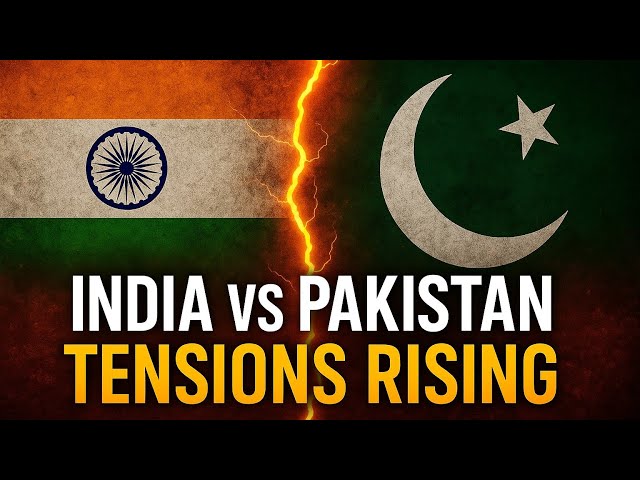
The enduring rivalry between India and Pakistan, long dismissed by the world as a cyclical flare-up of ancient enmities, has undergone a profound and dangerous transformation. This shift, highlighted by a recent escalation of military conflict following a terrorist attack in Kashmir, signals the demise of the diplomatic space that once prevented these nuclear-armed neighbours from spiralling into devastating confrontation. The predictable cycle of skirmishes, followed by negotiations and de-escalation, often facilitated by the United States, is now a relic of the past.
For decades, the international community, including former U.S. presidents, viewed the India-Pakistan dynamic through a narrow lens of age-old religious and territorial disputes, primarily over Kashmir. While this perspective acknowledged the deep-seated animosity, it also carried an underlying assumption that, despite occasional hostilities, both nations would ultimately pull back from the brink. This was largely due to established “guardrails” – a mix of diplomatic channels, third-party mediation, and a mutual understanding of the catastrophic implications of nuclear warfare. Even after severe provocations, such as the 2008 Mumbai attacks, India typically responded with restraint and periodically extended peace overtures, maintaining an uneasy equilibrium.
However, this delicate balance has been irrevocably disrupted by the diverging trajectories of India and Pakistan. India has embarked on a remarkable ascent, emerging as a significant geopolitical and economic powerhouse on the global stage. This rise, particularly under the leadership of Hindu nationalist Prime Minister Narendra Modi, has fostered an uncompromising mindset in New Delhi. India no longer perceives Pakistan merely as a disruptive nuisance but as an acute threat to its rightful climb to global prominence. This perception has hardened India’s stance on Kashmir, the Muslim-majority region claimed by both nations and intensified its impatience with Pakistan’s alleged support for anti-India terrorism.
Cautious Restraint
Under Prime Minister Modi, India’s approach to Pakistan has dramatically shifted from cautious restraint to a more assertive and even aggressive posture. The strategy now involves the international isolation of Pakistan, coupled with covert operations, subversion, and targeted killings.
This marks a stark departure from past Indian responses, which often involved measured retaliation and diplomatic overtures even after significant provocations like the Mumbai attacks. The current Indian government appears determined to pursue a more "absolutist endgame" – a long-term pressure campaign aimed at fundamentally altering Pakistan's political calculations regarding India and inflicting irreparable damage on its most powerful institution: the army. Following the recent Kashmir attack, prominent Indian politicians and analysts have adopted an even more maximalist position, openly advocating for Pakistan’s categorization as a failed rogue state and actively seeking its destruction.
Pakistan’s Military Establishment
Conversely, Pakistan has been mired in a protracted period of economic, political, and security crises for the past two decades. Despite these internal struggles, one institution remains unequivocally supreme: its powerful army. This military establishment dominates decision-making and possesses significant conventional and nuclear capabilities. While beleaguered, Pakistan, driven by its own aspirations to maintain regional power status, remains unwilling to back down against India, especially on issues like Kashmir, which are intrinsically linked to its national identity. Pakistan, fully aware of India’s hardening stance, has reportedly abandoned any hope of normalized relations and is seemingly preparing for a prolonged confrontation. Interestingly, there were signs of Pakistan’s army showing interest in stepping back from its traditional anti-India posture, even restoring a cease-fire in 2021 after a 2019 border conflict, exercising more restraint than perhaps at any other point in their fraught history. However, by then, India had moved on, and its new, uncompromising strategy was firmly in place.
This dangerous shift has led to the erosion of crucial guardrails that historically prevented conflicts from spiralling out of control. Alarmingly, India recently suspended a 1960 treaty on the sharing of rivers, specifically the Indus waters, threatening one of Pakistan’s most vital water supplies. Pakistan has previously warned that such a suspension would be considered an "act of war." In response, Pakistan has also threatened to abandon the 1972 Simla agreement that established the border in a divided Kashmir, further destabilizing an already volatile region.
Role of the U.S. as a Crisis Manager
Adding to the perilous situation is the significant retreat of the United States from its traditional role as South Asia’s crisis manager. In past decades, Washington served as a trusted intermediary, capable of de-escalating tensions and pulling both nations back from the brink. Instances like President Bill Clinton’s personal intervention in 1999 to end direct fighting in Kashmir, U.S. shuttle diplomacy after the 2001 attack on India’s Parliament, and American efforts to prevent military escalation after the 2008 Mumbai attacks underscore this historical role.
Today, however, the prospects for such good offices have significantly withered. The Biden administration has largely distanced itself from India-Pakistan tensions, primarily to placate New Delhi, which Washington views as a crucial regional counterweight to China. The Trump administration, while expressing strong support for Modi, has been preoccupied with a global trade war, conflicts in Ukraine and Gaza, and diplomacy with Iran.
Furthermore, third-party mediation is no longer welcomed in New Delhi, which perceives it as enabling Pakistan. Simultaneously, it is often ineffective with Islamabad, which harbours distrust towards Western countries' ties with India. Crucially, communication channels between India and Pakistan that once served as vital safety valves have also atrophied.
Danger of Future Conflicts Not Over
The international community must not remain complacent in the face of these developments. The Russia-Ukraine war has shattered long-held taboos surrounding nuclear threats, demonstrating the dangerous precedent of such rhetoric. If India’s limited armed actions fail to alter Pakistani calculations, there is a real and ominous risk that it may resort to more punishing military operations, bringing it dangerously close to Pakistan’s nuclear redlines.
A deeper, more spiteful animosity between two nuclear-armed nations, which collectively account for approximately one-fifth of humanity, would undoubtedly exacerbate the world’s mounting political and economic troubles. Beyond the geopolitical ramifications, the potential human costs of an expanded conventional war along the densely populated India-Pakistan border are unfathomable.
The world can no longer afford to dismiss the India-Pakistan rivalry as just another predictable flare-up; it is a profound and increasingly perilous shift demanding urgent international attention.







[[comment.comment_text]]