Beyond Borders: The Village Becoming a Symbol of Hope Between India & Pakistan

 2 hours ago
Keran: Where Peace Meets Humanity on the Kishanganga
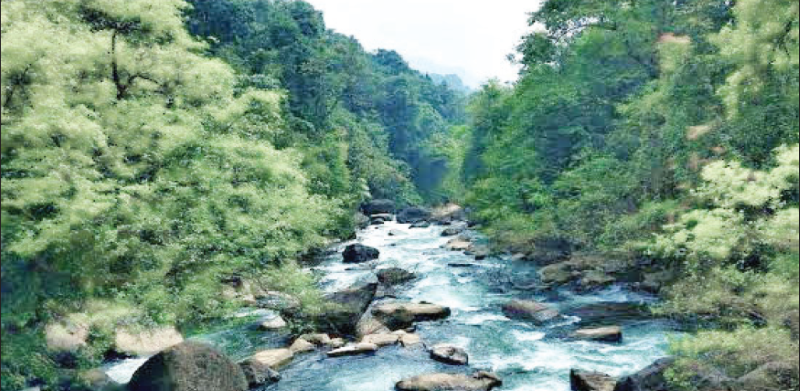
For decades, Keran, a picturesque landscape on the banks of the Kishanganga River in Jammu and Kashmir’s Kupwara district, symbolised the fragility of peace between India and Pakistan. Frequent ceasefire violations, infiltration attempts and the displacement of civilians shaped life in this sensitive frontier region. Every exchange of fire disrupted education, agriculture and livelihoods, while uncertainty became an inseparable part of everyday existence.
Today, however, Keran is gradually acquiring a different identity. Its transformation offers an encouraging illustration of how peace can reshape border communities. Tourism, people-to-people interactions and enduring cultural bonds among families living on both sides of Kashmir demonstrate the tangible benefits of stability and mutual understanding.
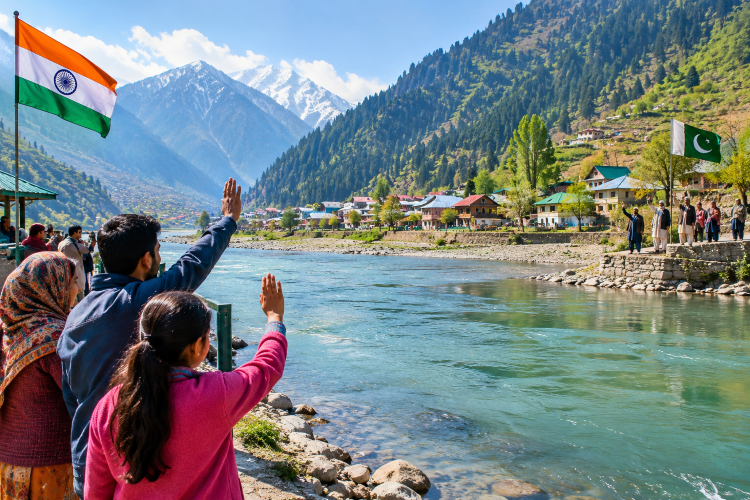
One of the defining sights of present-day Keran is that of people standing on opposite banks of the river, waving to one another. Tourists and local residents occasionally exchange greetings across the Line of Control (LoC), using simple gestures to acknowledge those on the other side. Although these interactions are informal, spontaneous and subject to security regulations, their symbolic significance is immense. They serve as reminders that political divisions cannot erase the shared cultural and social heritage of communities separated by the border.
Perhaps nothing illustrates this shared humanity more poignantly than the funeral of Naib Tehsildar Liyaqat Ali Khan in April 2026. Following his untimely demise, his mortal remains were brought to his ancestral village of Keran for burial. News of his death travelled across the LoC, prompting close relatives living in Pakistan-occupied Kashmir to gather on the opposite bank of the Kishanganga River.
Unable to cross the border to shoulder his coffin, embrace grieving family members or offer condolences in person, they stood across the river, offering prayers and bidding farewell to a loved one from a distance. For a few moments, the coffin was positioned so that they could catch one last glimpse of someone they would never meet again.
It was a deeply moving reminder that while borders may regulate movement, they cannot erase love, memory or family bonds. The LoC physically separated the mourners, but their grief transcended the divide. Their sorrow was shared, their prayers were shared and their sense of loss was shared.
Such moments explain why Keran has become much more than a tourist destination. Visitors arrive not merely to admire its breathtaking scenery but also to experience a place where geopolitics intersects with humanity and where the realities of an international frontier coexist with enduring family ties.
The dividends of peace
Keran’s transformation gathered momentum following the reaffirmation of the India–Pakistan ceasefire along the LoC in February 2021. The significant reduction in cross-border shelling restored a measure of normalcy to villages that had endured years of insecurity.
Farmers could return to their fields, schools could function more regularly, roads remained accessible for longer periods, and residents began rebuilding livelihoods repeatedly disrupted by violence. The improvement in the security environment created opportunities for economic activity and renewed confidence among local communities.
One of the most visible outcomes has been the emergence of border tourism. Visitors from across India now travel to Keran not only for its natural beauty but also to experience the unusual landscape of a village divided by one of South Asia’s most sensitive frontiers.
The Kishanganga River separates the Indian side of Keran from the area across the LoC in Pakistan-occupied Kashmir, where a settlement bearing the same name lies in the Neelum district. From the Indian riverbank, visitors can see habitations, roads and people on the opposite side. The proximity of the two communities makes the political division particularly striking.
For tourists, this is an extraordinary experience. For residents, however, the river represents something more complex: a geographical divide separating families, memories and communities whose connections predate the present political boundaries.
The contrast between the physical closeness of the settlements and the restrictions governing movement across the LoC offers a powerful perspective on the human consequences of prolonged conflict. It also explains why even the simplest exchange of greetings can carry such emotional significance.
Tourism and local livelihoods
The economic transformation accompanying greater stability is equally important. Homestays, transport services and small businesses have benefited from increased tourist arrivals, creating opportunities for families that previously depended on seasonal migration or uncertain employment.
By hosting visitors, providing transport and selling local products, residents can increasingly earn livelihoods within their own communities. Tourism also creates opportunities for young people to develop entrepreneurial skills and participate in the local economy.
Improved roads, infrastructure development and government initiatives have contributed to better accessibility while seeking to maintain the safety of residents and visitors. Keran is increasingly being recognised for its scenic beauty and potential for community-based tourism.
Yet the value of tourism extends beyond immediate financial returns. It can help strengthen local confidence, encourage the preservation of cultural traditions and give younger generations greater reasons to remain in their villages. When managed responsibly, it can become an instrument of inclusive development rather than merely a seasonal source of income.
Sustainable tourism, however, requires careful planning. The region’s ecological sensitivity, limited infrastructure and security considerations must be taken into account. Waste management, environmental protection, reliable public services and responsible visitor behaviour will be essential if tourism is to provide lasting benefits without damaging the landscape that attracts visitors in the first place.
Changing the narrative of border villages
For years, places such as Keran, Bangus, Tangdhar, Teetwal, Machil and Gurez appeared in the news primarily in connection with ceasefire violations, infiltration and security operations. Today, these areas are increasingly discussed in terms of scenic beauty, local entrepreneurship, tourism and development.
This shift in public perception is itself an important outcome of prolonged peace. It allows border communities to be seen not merely as vulnerable settlements along a contested frontier but as places with distinctive cultures, economic potential and aspirations for a better future.
Human contact plays an important role in reducing perceptions of hostility. A smile, a wave or a greeting across the river cannot resolve the political differences between India and Pakistan. Nor should such gestures be mistaken for a substitute for diplomacy. Nevertheless, they reinforce an essential truth: ordinary people generally seek peace, dignity and stability rather than confrontation.
The residents of Keran have experienced the consequences of conflict directly. They understand the disruption caused by shelling, the anxiety of living under the threat of violence and the economic costs of prolonged uncertainty. Their experience lends particular significance to the opportunities created when tensions subside.
For them, peace is not an abstract diplomatic concept. It means children attending school without interruption, farmers cultivating their land, businesses welcoming customers and families planning their futures with greater confidence.
Peace remains fragile
Despite these encouraging developments, Keran’s progress remains vulnerable. Renewed violence or escalating tensions between India and Pakistan can quickly affect tourism, interrupt economic activity and reverse gains painstakingly achieved by local communities.
A decline in visitor numbers can have immediate consequences for homestay owners, transport operators, shopkeepers and other small entrepreneurs. Security restrictions may also disrupt routine activities, reminding residents that their economic prospects remain closely tied to the broader political environment.
This vulnerability demonstrates that peace is not merely a political aspiration but an economic necessity for people living along the LoC. Stability provides the foundation upon which development can take root, while renewed confrontation threatens both livelihoods and public confidence.
Every tourist who visits Keran, every local entrepreneur who earns an income and every greeting exchanged across the Kishanganga River reinforces the same message: border communities prosper when peace prevails.
For this reason, the development of frontier villages must be approached through a broader framework that combines security with sustained investment in infrastructure, healthcare, education, digital connectivity, tourism and cultural preservation. Residents should have access to essential services and economic opportunities comparable to those available elsewhere, rather than being defined solely by the strategic location of their homes.
Government support, local participation and environmentally responsible planning can help ensure that the benefits of tourism reach a wider section of the community. Equally important is the need to protect the region’s natural environment and cultural identity while expanding economic opportunities.
A village of resilience and hope
Keran’s transformation offers a compelling example of the human and economic dividends that peace can deliver. In a region long associated with conflict, it demonstrates that development, tourism and people-to-people goodwill can coexist with legitimate security concerns.
Its significance lies not in the disappearance of political differences but in the opportunities that emerge when violence recedes. A village once known primarily for its vulnerability is gradually becoming a destination associated with natural beauty, renewed livelihoods and the enduring humanity of people separated by a border.
The funeral of Liyaqat Ali Khan remains a poignant illustration of this reality. The inability of relatives to cross the river did not prevent them from mourning together in spirit. Their silent farewell revealed the limits of political boundaries when confronted with the universal bonds of family, grief and affection.
Ultimately, Keran’s story is not simply about a ceasefire or the growth of tourism. It is about communities rebuilding their lives, families preserving their connections across generations and ordinary people finding hope amid the uncertainties of a sensitive frontier.
Borders may divide nations, regulate movement and reflect unresolved political disputes. But they cannot extinguish humanity. Keran stands as a quiet testament to that enduring truth—and as a reminder that when peace takes root, even the most sensitive frontiers can become places of resilience, compassion and hope.
(A lawyer by profession, the author actively engages in public policy, research and discourse on border tourism in the Kashmir Valley. Views are personal.)

[[comment.comment_text]]