The 'Buffer Zone' is an advantage for China in Ladakh

 2 years, 8 months ago
Nawang Rigzin Jora
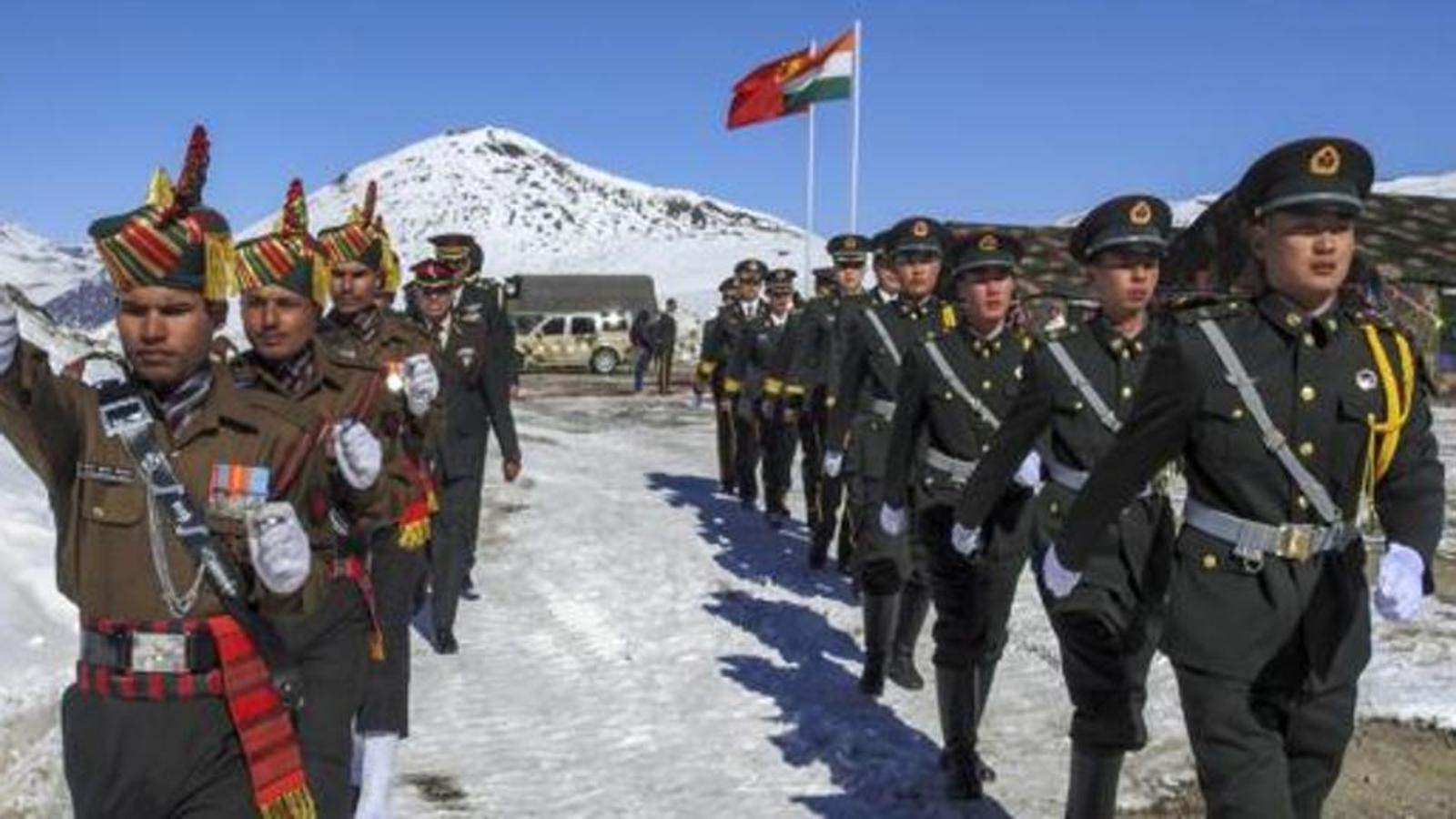
Military veterans fear that the creation of non-militarised “buffer zones" inside the India-claimed lines at multiple transgression points in eastern Ladakh may help the Chinese Army to force India to agree to its reinterpretation of the Line of Actual Control (LAC).
They said India’s “capitulation” in agreeing to the demilitarised zones has made a restoration of the pre-April 2020 status quo difficult.
Expressing apprehensions, a former lieutenant general told The Emerging World that the Indian troops' withdrawal from its claimed territory to create buffer zones seemed to imply that India had ceded territory to the Chinese People’s Liberation Army.
“The abject capitulation by the Indian government in agreeing to create buffer zones inside India’s claimed lines as part of a disengagement deal from multiple transgression points has forced a de facto change in China's favor. As of now, the restoration of the pre-April 2020 status quo looks difficult. The ball is in the PLA’s court and it remains to be seen how much India can bargain by holding further military and diplomatic-level talks to find a resolution to the ongoing border standoff,” the retired lieutenant general said.
Last month, Army Chief General Manoj Pande said India’s immediate aim was to continue holding talks with the Chinese Army to ensure the restoration of the pre-April 2020 status quo in eastern Ladakh. He also said the situation along the Line of Actual Control (LAC) was “stable” but “sensitive”.
Veterans have long been demanding that India ask China to restore the status quo ante and withdraw from the multiple areas that it had transgressed upon in May 2020. “Right now, the Chinese seem to be in a position of huge military and tactical advantage. It is very much evident that by forcing India to agree to the creation of buffer zones at multiple transgression points, the PLA is now dictating terms and trying to force India to agree to its reinterpretation of the LAC,” a former brigadier said.
A former army chief said in the wake of the buffer zones the situation in eastern Ladakh was different from what existed before April 2020 when India was patrolling up to its perception of the LAC. “So far, the creation of buffer zones has been a win-win deal for China,” he said, adding that “the disengagement deal had made India leave tracts of land within its territory earlier claimed by it. This has also made these buffer zones vulnerable to Chinese aggression in the future.”
The negotiations through 20 rounds of military talks between India and China over the past nearly four years have resulted in partial disengagement from the Galwan Valley, Pangong Lake, Hot Springs, and Gogra through the creation of buffer zones with the Chinese and Indian armies stepping back by an agreed and equal distance each. This has left the Chinese still within India-claimed lines, while the Indians have retreated within their territory, fuelling the “ceding more territory” allegations.
A former colonel said: “China has so far not shown any willingness to accept restoration of the status quo which had existed along the Line of Actual Control before April 2020. The Chinese are even refusing to disengage from the Depsang Valley in northeastern Ladakh and at Demchok in southeastern Ladakh, both of which are strategically very important for India.”
Earlier, local elected representatives in Ladakh had expressed concern at India agreeing to no-patrolling “Buffer zones” within its territory as part of the disengagement process with the Chinese, saying that this had blocked the local people access to grazing land for their livestock. Overall, the Chinese Army is estimated to have taken over close to 1,000 sq km of India-claimed territory in Ladakh.
(Writer is a well-known social activist based in Leh)







[[comment.comment_text]]