Rampant Corruption in Pakistan’s Military Establishment: A Never-Ending Saga

 2 weeks, 6 days ago
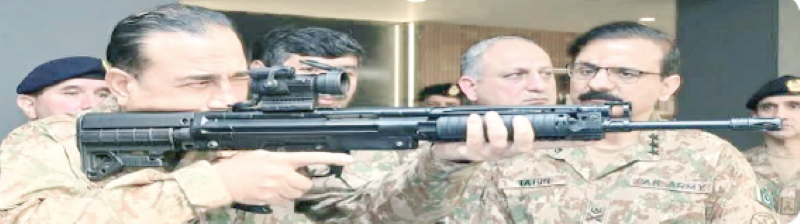
For decades, the Pakistan Army has presented itself as the institution standing above the country’s political and administrative disorder. It has repeatedly projected itself as the guardian of national security, discipline and sovereignty. Yet the institution’s own record of accountability has repeatedly raised a different set of questions. From allegations involving land and business interests to cases of misuse of authority by senior officers, the issue of corruption within and around Pakistan’s powerful military establishment has refused to disappear.The conviction of former Inter-Services Intelligence chief Lt Gen (retd.) Faiz Hameed has once again brought the issue into the spotlight. In December 2025, a Field General Court Martial sentenced Hameed to 14 years’ rigorous imprisonment after finding him guilty on four counts, including engaging in political activities, violating the Official Secrets Act, misusing authority and government resources, and causing wrongful loss to individuals.
The proceedings had begun in August 2024. The case was extraordinary not simply because of the rank of the officer involved. It demonstrated how deeply questions of authority, political influence and accountability can become intertwined in Pakistan’s civil-military system. Hameed was not an ordinary officer. He had headed the country's powerful intelligence agency, the ISI. His subsequent court martial therefore attracted considerable attention inside Pakistan and beyond. The charges themselves were serious, and the military's decision to prosecute a former senior intelligence chief represented an unusual instance of internal accountability. At the same time, the case also raised questions about how such alleged misuse of authority could continue for years before reaching the stage of formal proceedings.
This is where the larger question of military accountability begins.
Pakistan's armed forces are not limited to conventional defence functions. Over the decades, military-linked foundations and organisations have developed extensive commercial interests. Parliamentary records and reporting have documented businesses associated with organisations such as the Army Welfare Trust and Fauji Foundation, spanning sectors including fertiliser, cement, banking, insurance, aviation, energy, security services and real estate.The existence of military-linked businesses is not, by itself, proof of corruption. Many such organisations were established with welfare objectives, particularly to support serving personnel, veterans and their families. The problem arises when the boundaries between institutional welfare, commercial influence, public resources and private interests become insufficiently transparent. That concern becomes more important in a country where the military has historically exercised considerable influence over political life.
When an institution possesses both political influence and extensive economic interests, independent oversight becomes essential. Without transparency, allegations of preferential treatment, conflicts of interest or misuse of authority can persist even when individual cases are investigated. Pakistan's wider governance problems add another layer to the debate. An IMF governance and corruption diagnostic published in 2025 identified significant weaknesses in procurement, taxation, oversight and governance and noted concerns surrounding state-owned enterprises and transparency. It also specifically called for greater transparency concerning the military-backed Special Investment Facilitation Council.
The issue, therefore, is bigger than one general or one scandal. Every time a senior officer is accused of abusing authority, questions are raised about the effectiveness of the mechanisms that are supposed to prevent such conduct. And every time accountability comes only after an individual has retired or after allegations have accumulated for years, the public is left wondering whether the system is capable of detecting wrongdoing early enough. The Faiz Hameed case also carries an important qualification. The military's prosecution of a former senior officer demonstrates that accountability mechanisms do exist. His conviction shows that even a highly placed former officer can face punishment under the military justice system. But one case cannot, by itself, settle the broader debate about institutional transparency.
For ordinary Pakistanis struggling with inflation, unemployment and economic uncertainty, questions surrounding powerful institutions have a direct relevance. Public resources, land, contracts and economic opportunities ultimately affect the wider economy. When citizens believe that powerful institutions operate under different standards of scrutiny, confidence in governance suffers. Pakistan does not need more slogans about accountability. It needs accountability that is transparent, consistent and capable of reaching every institution whose decisions affect public resources. The Army's enormous influence in Pakistan makes this particularly important. A strong military institution does not become weaker when its finances and senior officers are subject to credible scrutiny. In principle, the opposite is true: institutional credibility depends on public confidence that power cannot be converted into personal privilege.
The story of corruption allegations surrounding Pakistan's military establishment is therefore not merely a series of isolated scandals. It is a continuing debate about power, privilege, economic influence and accountability. The conviction of Faiz Hameed may mark an important moment in that debate, but it should also prompt a larger question: can Pakistan build an accountability system in which no office, uniform or institution places anyone beyond scrutiny?Until that question receives a convincing institutional answer, allegations of corruption and misuse of authority will continue to return, producing what has increasingly become a familiar saga in Pakistan's political and military landscape.
(The author, a commentator on Pak-occupied Kashmir and Gilgit-Baltistan. At his own request, his photograph has been partially blurred to protect his identity and respect his preference for privacy. Email: syedjahanzeeb2@gmail.com.)







[[comment.comment_text]]