CONFLICT & PEACE: THE MIDDLE EAST AT A DANGEROUS CROSSROADS

 3 weeks ago
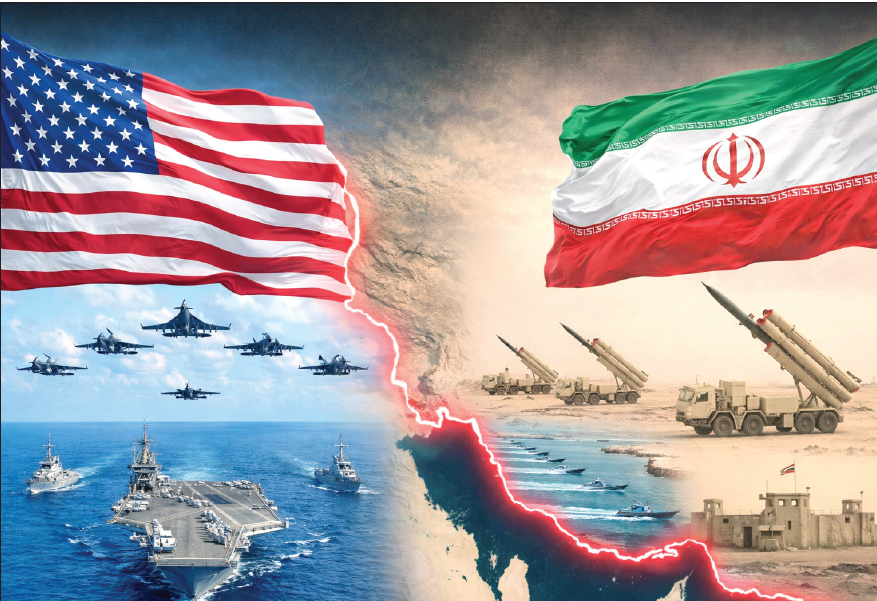
The Middle East is passing through one of the most serious and consequential periods of instability in recent years. The present situation is not a single conflict but a series of interconnected confrontations involving Iran, the United States, Israel and Palestine, Lebanon, Yemen and the wider Gulf region. Developments in one theatre increasingly affect the others, while the consequences are being felt far beyond the region.
As of 3 October 2026, tensions between Iran and the United States remain unresolved. Diplomatic channels have not completely disappeared, but substantial differences remain. At the same time, fighting in Yemen has intensified, while the security of the important maritime routes through the Strait of Hormuz and the Bab el-Mandeb has become a major international concern. Recent reporting says Saudi Arabia is preparing a major operation against Houthi forces in Yemen in an effort to regain control of the Bab el-Mandeb area, demonstrating how rapidly the regional crisis can widen.
The Humanitarian Dimension
The humanitarian consequences of these conflicts are extremely serious. In Gaza, despite the ceasefire announced in October 2025, violence and humanitarian difficulties have continued. UN agencies reported that by June 2026, more than 72,000 Palestinians had been reported killed and more than 173,000 injured since October 2023, according to figures from the Gaza Ministry of Health cited by the UN. Most of Gaza's approximately 2.1 million people have also remained displaced and face inadequate access to essential services. These figures should not be viewed merely as statistics. Behind every number is a human life, a family and a community.
Yemen presents another grave humanitarian situation. The World Food Programme reported in October 2026 that three out of four families in government-controlled areas of Yemen were facing food insecurity amid renewed fighting. The organisation warned that the conflict was disrupting food supplies and threatening millions of people.
The humanitarian consequences therefore extend well beyond the battlefield. Food, fuel, medicine, water and basic services are all affected when conflict continues for prolonged periods.
The Strait of Hormuz and the World Economy
One of the most important international consequences of the crisis concerns the Strait of Hormuz. The Strait is one of the world's most important energy chokepoints. According to the U.S. Energy Information Administration, total oil flows through Hormuz averaged 20.9 million barrels per day in the first quarter of 2025, but fell to approximately 4.9 million barrels per day in the second quarter of 2026 during the period of severe disruption.
More recently, oil flows have recovered considerably. September 2026 crude-oil exports through the Strait were reported at approximately 16.5 million barrels per day, although refined petroleum-product flows remained substantially below their pre-conflict levels.
This distinction is important. The fact that some oil flows have resumed does not mean that the underlying security problem has disappeared.
The disruption has already affected prices, shipping costs, insurance and supply chains. EIA reported that Brent crude reached $118 per barrel on 29 April 2026, illustrating how quickly geopolitical disruption in the Middle East can be transmitted to international energy markets.
Impact on Europe
Europe is particularly exposed to these developments because its economies depend heavily on international energy markets, shipping and global supply chains.
Higher energy and transportation costs can contribute to inflation and increase the cost of manufacturing, transport and essential goods. Disruption of the Red Sea route can also force ships to take longer alternative routes, increasing both journey times and costs.
The crisis therefore presents Europe with several simultaneous challenges: protecting its citizens in the region, maintaining energy security, safeguarding maritime commerce, managing humanitarian consequences and preserving diplomatic channels with the countries involved.
There is also a wider security dimension. Prolonged conflicts can increase concerns about terrorism, radicalization, political polarization and instability far beyond the Middle East. Europe therefore has a direct interest not merely in managing the consequences of the crisis, but in helping to create conditions for a diplomatic settlement.
Consequences for the Wider World and India
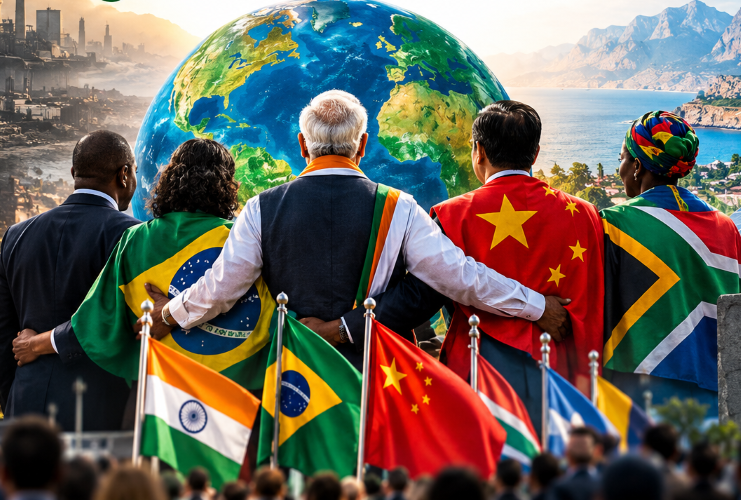
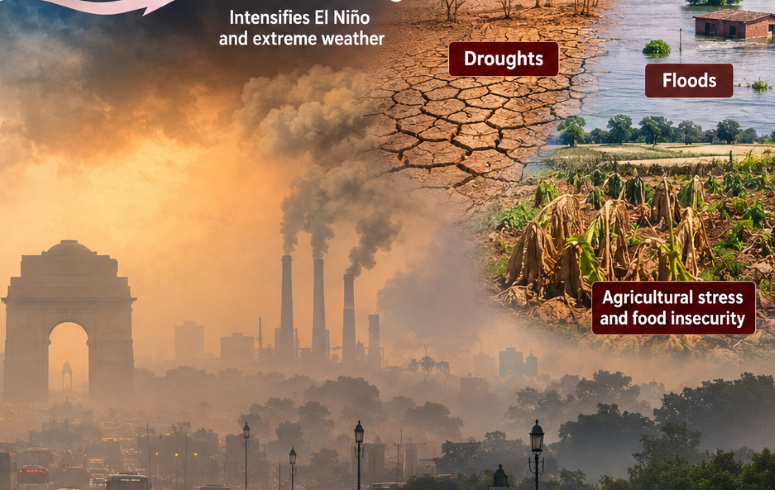
The effects are not confined to Europe. Asian and African countries are also exposed to higher energy, shipping and food costs. Developing countries can be particularly vulnerable because increased fuel and transportation costs can quickly affect inflation, food security and foreign-exchange requirements.
India has a direct interest in peace and stability in the Middle East. The region is important for India's energy security, trade, maritime connectivity and the welfare of the large Indian community living and working there.
Recent reporting also illustrates India's position in the changing energy environment. Indian buyers have increasingly used ship-to-ship transfers and alternative arrangements to maintain supplies from West Asia despite the disruption around Hormuz.
India therefore has a legitimate interest in supporting diplomatic engagement, humanitarian assistance and peaceful negotiations.
What Can Be Done?
Prioritize De-escalation: The first priority should be de-escalation. Every government capable of influencing events should work to prevent additional military fronts from opening. Retaliation should not automatically become the response to every new incident.
Sustain US-Iran Dialogue: Diplomatic communication between the United States and Iran should be maintained and expanded. The disagreements concerning nuclear issues, sanctions, regional security and military activities are serious, but these are precisely the questions that require sustained negotiations.
Build Regional Security Mechanisms: The countries of the Gulf and the wider Middle East should work towards a permanent regional security and confidence-building mechanism. Such a mechanism could include direct communication channels, procedures for preventing accidental escalation and arrangements for resolving disputes before they become military confrontations.
Protect Maritime Commerce: The international community must protect commercial shipping and freedom of navigation. Maritime security is essential to the world economy. At the same time, military protection must be accompanied by diplomatic efforts aimed at resolving the political causes of the conflict.
Deliver Humanitarian Assistance: Humanitarian assistance must remain a central priority. Food, medicine, drinking water and other essential supplies must reach civilians safely and without unnecessary obstruction.
Advance Palestinian Peace Process: The Palestinian question requires a serious political process. Israel's security concerns and the political rights, security and future of the Palestinian people must both be addressed. Humanitarian assistance is essential, but it cannot permanently substitute for a political settlement.
Strengthen the United Nations: The effectiveness of the United Nations should be strengthened. The present crisis demonstrates the need for an international organisation capable of preventive diplomacy, monitoring ceasefires, protecting civilians, facilitating negotiations and helping Member States resolve disputes peacefully.
Equality and Dignity of All Nations
The present crisis should also remind the world of a fundamental principle of international relations: all nations, whether large or small, powerful or weak, are sovereign states and equal members of the international community.
A country's size, population, economic strength or military capability should not determine the degree of respect and dignity it receives. We are living in an age in which education, civilisation, democracy and international institutions are deeply rooted in human society. It is therefore the responsibility of the great powers and powerful nations to treat every country with respect, decency, dignity and appropriate diplomatic protocol.
No small or militarily weak country should feel that it can be pressured, controlled, humiliated or subjected to excesses simply because it does not possess the power to resist.
The self-respect and sovereignty of every Member State must be protected. The feeling among smaller nations that they can be manipulated, mobilised or subjected to arbitrary pressure by powerful countries must disappear from international relations.
The Need for a United Nations Sub-Headquarters in Asia
This leads to an important institutional question. Asia is home to a very large proportion of humanity and is the scene of many of the world's most important political, economic, security and humanitarian developments. The United Nations already has important regional institutions in Asia, including the Economic and Social Commission for Asia and the Pacific in Bangkok.
However, there is a strong case for considering a dedicated United Nations sub-headquarters in Asia, with appropriate political, diplomatic, humanitarian and administrative capacity.
Such a sub-headquarters would bring the United Nations closer to the countries and peoples whose problems it is required to address. It could facilitate consultations, preventive diplomacy, humanitarian coordination and the early consideration of emerging crises. It would complement, rather than replace, the existing UN Headquarters in New York and the regional institutions already operating in Asia.
Final Appeal
A respectful appeal is hereby made to the Secretary-General of the United Nations and to all Member States to give serious and early consideration to the establishment of a United Nations sub-headquarters in Asia, and to place this proposal before the General Assembly for discussion and consideration at the earliest possible opportunity.
The world today needs a United Nations that is not only strong in principle, but also accessible, responsive and capable of addressing international crises promptly and effectively.
The present crisis in the Middle East should not become another chapter in an endless cycle of war and retaliation. It should become an opportunity for the international community to reaffirm the principles of sovereignty, equality, dignity, international law and peaceful settlement of disputes.
Peace cannot be built on fear, and civilisation cannot be built on domination. Every nation, great or small, has the right to live with dignity, security, sovereignty and self-respect.
In the interest of peace, in the interest of the future of the coming generations, and for the children who will inherit this planet, every nation must recognise its responsibility to leave this world better than we found it—safer, more peaceful, more just and more united. Let us work together not merely to preserve the world we inherited, but to leave to the generations that follow a world better than the one we found.
(The author, a former Cabinet Minister and Acting Chief Minister in UP government, is a widely respected political leader and educationist. A life President for The Organisation of Nuclear Disarmament and World Peace, he has extensively traveled to the US, UK, Turkey, Afghanistan, Hong Kong, Italy, Russia, Iran, Iraq, Kuwait and South East Asian nations.)





[[comment.comment_text]]