Beyond the Ballot: Why Israel’s Next Election May Only Yield More Gridlock

 2 hours ago
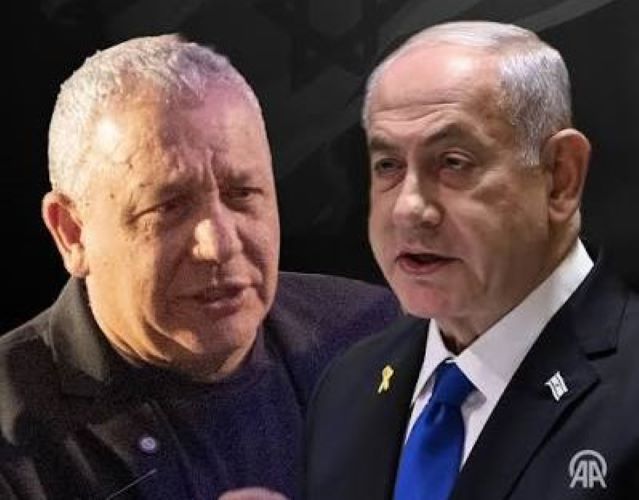
As Israelis prepare to head to the polls on October 27 for the first national election since the Hamas-led attacks on October 7, 2023, and the devastating war in Gaza that followed, the nation stands at a critical historical crossroads. The upcoming vote takes place within a deeply divided society, where critics argue that Prime Minister Benjamin Netanyahu and his far-right government failed to prevent the initial attacks and have systematically undermined liberal democracy. Yet, Mr. Netanyahu retains a formidable base of supporters who regard his leadership as indispensable during times of existential crisis. Opposing him is a wide-ranging, ideologically diverse anti-Netanyahu coalition led by Gadi Eisenkot, a former military chief of staff. Despite their contrasting worldviews—spanning left-wing secularists, centrist technocrats, nationalist West Bank settlers, and Palestinian Arab factions—these opposition forces are united by a single overriding goal: toppling Mr. Netanyahu.
Under Israel’s proportional representation electoral system, individual voters cast ballots for party slates rather than individual leaders, with parliamentary seats in the 120-seat Knesset subsequently distributed according to each party’s overall vote share. Crucially, securing governance requires forming a majority coalition of at least 61 seats, a threshold neither Mr. Netanyahu nor Mr. Eisenkot is expected to reach independently. As a result, the vote itself represents merely the opening chapter of a protracted process to determine who will lead the next government. Following the election, President Isaac Herzog will consult with leaders across the political spectrum before granting a mandate to the candidate deemed most capable of assembling a viable parliamentary majority.
For Mr. Eisenkot, the most direct route to executive power lies in piecing together a coalition with Mr. Netanyahu’s other opponents—a grouping often self-described as the "change bloc." This tentative alliance relies on prominent right-wing figures such as Avigdor Lieberman of the Yisrael Beiteinu party, alongside left-wing factions like The Democrats, led by Yair Golan. The vulnerability of such an arrangement is well documented; a strikingly similar opposition coalition constructed after the March 2021 election managed to take office only to collapse after a single year of bitter internal friction. In that instance, Yair Lapid’s Yesh Atid (17 seats) and Naftali Bennett’s Yamina (7 seats) struck a power-sharing arrangement that eventually fractured as lawmaker defections mounted, ultimately returning Israelis to the ballot box by late 2022.
Recent opinion polls indicate that Mr. Eisenkot’s most realistic path toward the 61-seat threshold may depend on securing backing from Mansour Abbas and his Arab Islamist party, Raam. However, relying on an Arab faction to shore up an Israeli governing coalition has become significantly more politically fraught in the aftermath of the October 7 attacks. Furthermore, even if Mr. Eisenkot’s party secures the largest vote tally among opposition factions, his path to the premiership is by no means guaranteed. Rivals within the anti-Netanyahu camp, such as Mr. Bennett or Mr. Lieberman, could leverage their leverage to demand the prime minister’s seat in exchange for their vital parliamentary support.
An alternative election scenario rests on the possibility that pre-election polling proves inaccurate and a single unified political bloc secures an outright majority. A precedent occurred in November 2022, when Mr. Netanyahu’s right-wing bloc captured 64 seats despite winning only roughly 48 percent of the popular vote. In that election, Mr. Netanyahu benefited directly from Israel’s 3.25 percent electoral threshold, which disqualifies parties failing to meet the minimum vote share. Because left-wing Meretz and Palestinian nationalist Balad both fell just below the threshold, over 200,000 opposition votes were rendered ineffective, effectively mathematical windfalls that boosted the seat share of Mr. Netanyahu’s coalition.
Mr. Netanyahu’s political strategy largely hinges on replicating his 2022 success, which enabled him to build the most right-leaning administration in Israeli political history. Despite years of intense war and domestic instability, that governing alliance has proven resilient over its tenure. Current polling suggests, however, that repeating this feat will be exceptionally difficult, as his coalition partner factions are currently projected to fall short of 61 seats. Moreover, electoral mathematics could work against him this time: Amcha Yisrael, a newly formed far-right party, is hovering precariously near the 3.25 percent threshold, risking the total loss of its votes should it fail to cross.
Given these tight margins, political strategists on both sides of the aisle are watching turnout among Israel’s Arab citizens with acute attention. Arab Israelis have historically participated in national elections at noticeably lower rates than Jewish Israelis. Analysts note that a substantial surge in Arab voter turnout could tilt the overall arithmetic toward the opposition, directly suppressing the relative seat share of Mr. Netanyahu's right-wing allies.
Should neither major alliance assemble a working majority, the nation faces the real prospect of post-election deadlock—an outcome few citizens welcome. Prolonged political stalemate previously forced the country into five consecutive national elections between 2019 and 2022 amid a broader crisis over Mr. Netanyahu’s fitness to govern. Latest polling from Kan News/Kantar reflects this looming risk: Mr. Netanyahu’s coalition parties (Likud, Jewish Power, Religious Zionism, Shas, and United Torah Judaism) are projected around 51 seats, while opposing factions (Yashar, Together, The Democrats, Yisrael Beiteinu, Raam, The Reservists, and the Joint List) total roughly 57 seats—leaving both sides short of a clear 61-seat majority.
While an overarching national crisis—such as escalated military conflict with Iran—could theoretically incentivize a temporary national unity government, most opposition leaders remain deeply reluctant to partner with Mr. Netanyahu, fearing severe backlash from a base that opposes extending his tenure. Inter-party animosities within the opposition further complicate matters; for example, right-wing parties like Yisrael Beiteinu vehemently refuse to cooperate with the Arab Joint List. Similarly, new right-wing parties like The Reservists have pledged to reject coalitions containing either ultra-Orthodox parties or Arab slates. If these competing vetoes block any majority from forming, Mr. Netanyahu would remain at the helm as prime minister of a caretaker government during months of political maneuvering leading into yet another election.
As a rare alternative to political deadlock, Mr. Eisenkot or an ally could attempt to form a minority government sustained by informal confidence-and-supply arrangements with Arab parties without bringing them into the cabinet. Yet, experts caution that a minority coalition would remain inherently unstable unless pragmatic right-wing members of Mr. Netanyahu's camp break ranks—a difficult prospect given Mr. Netanyahu's historical discipline over his coalition partners. Ultimately, the resolution of these internal contradictions will resonate far beyond Israel's borders. In a volatile Middle East marked by regional conflict and active diplomatic maneuvering involving powers like the United States under President Donald Trump, the stability and composition of the government emerging from the October 27 vote will play a central role in determining the prospect of lasting regional peace.
(Author, a senior trilingual journalist, is an editorial adviser to TEW.)








[[comment.comment_text]]