South Korea Ends Crisis

 1 year, 3 months ago
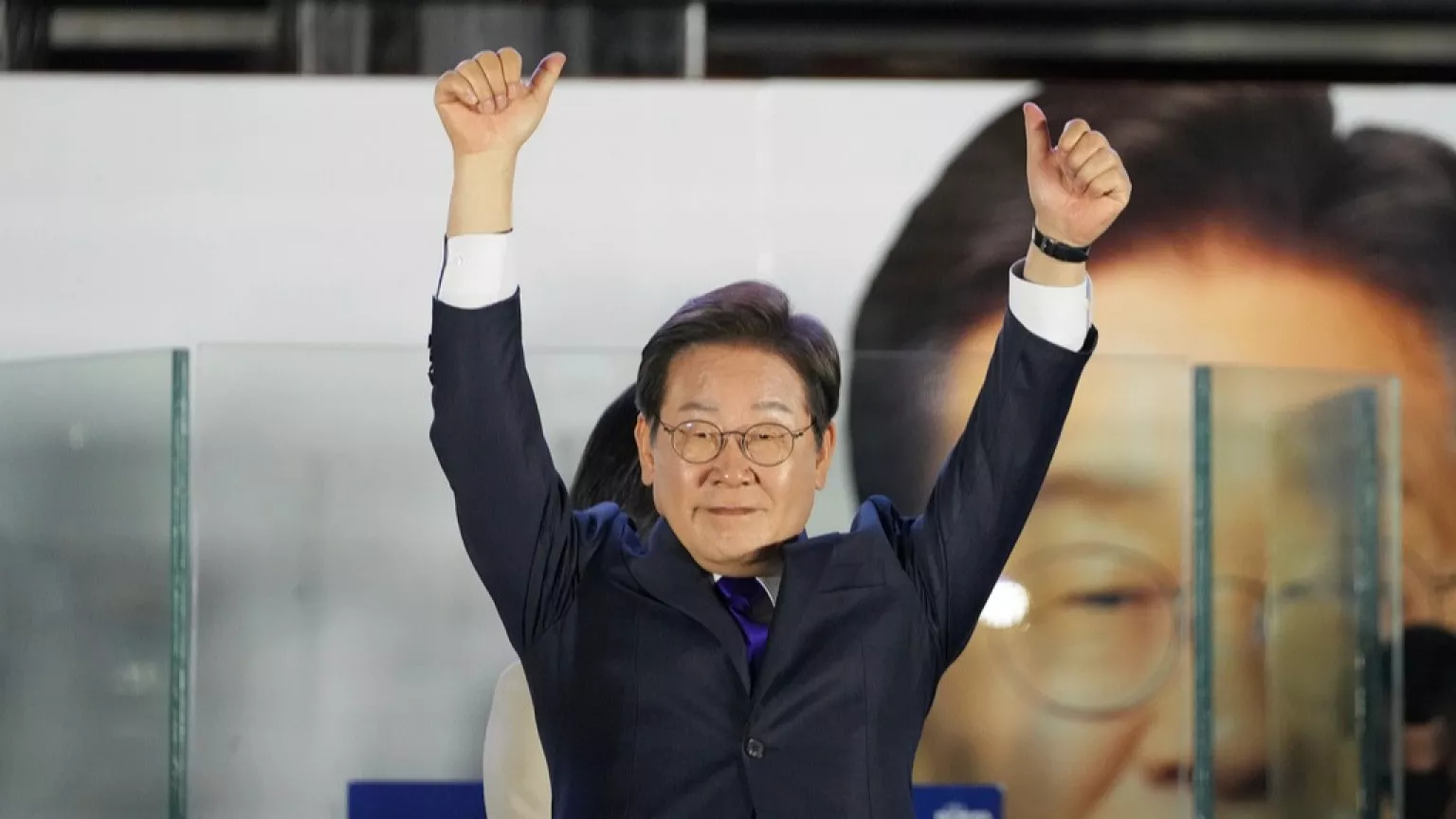
The Republic of Korea (ROK) has entered a new political era following the election of Lee Jae-myung as president on June 3, 2025, bringing an end to the instability that plagued the country after former president Yoon Suk Yeol’s controversial imposition of martial law in December 2024. Lee, representing the liberal Democratic Party of Korea (DPK), won by a decisive margin of over 8 percent against his rival Kim Moon-soo of the conservative People Power Party (PPP), securing 49.42 percent of the vote. Sworn into office on June 4, Lee takes the reins of a nation still reeling from the attempted authoritarian power grab by his predecessor.
Yoon’s attempt to justify martial law by alleging that “anti-state forces” were plotting rebellion was met with widespread disbelief and resistance. The National Assembly responded decisively, invalidating the decree and moving to impeach him. The entire episode brought into sharp focus the fragility of South Korea’s still-young democracy, which only emerged from authoritarian rule in the late 1980s. The scandal also drew attention to ongoing investigations into financial impropriety involving Yoon’s wife, adding further stain to his legacy. While Yoon promoted a value-based foreign policy that emphasized alliances with liberal democracies and sought to avoid the term “democratic backsliding,” his domestic actions painted him as increasingly autocratic.
Despite these domestic missteps, Yoon’s foreign policy initiatives earned some credit. In 2022, he released the “Strategy for a Free, Peaceful, and Prosperous Indo-Pacific Region,” positioning South Korea as a “Global Pivotal State” (GPS). This marked a clear intent to pursue foreign policy independence, align with liberal democratic allies, and strengthen ties with the United States and Japan. His approach toward China was cautious and strategic—acknowledging Beijing’s importance while reinforcing alliances to counterbalance Chinese influence. Yoon also adopted a firm stance on North Korea, deprioritizing dialogue in favor of deterrence, which contributed to heightened tensions on the Korean Peninsula.
Lee Jae-myung’s election represents a clear break from this legacy. Riding a wave of public anger against Yoon’s martial law attempt, Lee framed his campaign around restoring democratic norms and reforming executive power. His commitment to constitutional reform—aimed at decentralizing authority and improving legislative oversight—resonated with voters. As DPK floor leader Park Chan-dae stated, the election result was a “thunderous verdict by the sovereign people against a regime of rebellion.” In his inaugural speech, Lee acknowledged the damage done to the country’s democratic fabric, declaring that it was time to “restore democracy, devastated by armored vehicles and automatic rifles.” He pledged to ensure the military is never again misused for political ends and promised institutional safeguards to prevent similar threats in the future.
Beyond institutional reform, Lee’s presidency will also be tested on his ability to heal deep political polarization. In a gesture of national unity, he stated, “regardless of whom you supported in this election, I will embrace all and serve all as the ‘president for everyone.’” This commitment to inclusiveness marks an important departure from the divisive politics that characterized Yoon’s tenure.
In foreign affairs, Lee is expected to continue many of the broader themes from Yoon’s Indo-Pacific strategy, including expanding South Korea’s international stature and strengthening its economic partnerships. His inaugural speech reaffirmed commitment to the U.S. alliance and trilateral cooperation with Japan. However, Lee also emphasized a more pragmatic and interest-based approach to foreign policy. His statement that national security and peace should not be “reduced to political weapons” suggests a willingness to reengage diplomatically with North Korea and revisit relations with China, though his speech notably omitted any direct reference to China—a move interpreted as strategic ambiguity.
Lee’s foreign policy will need to strike a delicate balance. The United States, while congratulating Lee and affirming the “ironclad” alliance, expressed concerns about potential Chinese influence in democracies worldwide. This signals possible friction ahead, especially if Seoul pursues a more conciliatory approach toward Beijing. At the same time, China welcomed Lee’s victory, with President Xi Jinping describing South Korea as an important neighbor and cooperation partner. China’s foreign ministry emphasized that bilateral ties should not be influenced by third-party pressures—a clear reference to U.S. influence.
These contrasting positions underscore the complexity of South Korea’s regional diplomacy. Lee must manage the country’s strategic alignment with Washington while navigating growing pressure from Beijing. Any tilt in policy could have ripple effects on Seoul’s relations with Tokyo and its role in regional security frameworks. Meanwhile, engagement with North Korea remains a sensitive and high-stakes issue. Lee pledged to counter Pyongyang’s threats but reiterated support for dialogue and peace, signaling a shift from Yoon’s hardline approach.
Lee’s presidency begins with high expectations. He faces the dual challenge of reinforcing democratic institutions at home and maintaining strategic equilibrium abroad. Whether he delivers on his promises of constitutional reform and democratic revival, or succumbs to the cycle of political retaliation, will shape South Korea’s democratic trajectory for years to come. The nation, having rejected authoritarianism once more, now looks to Lee to embody the principles of transparency, accountability, and national unity. His leadership in navigating both domestic renewal and international complexities will determine whether South Korea emerges stronger from this pivotal moment in its history.







[[comment.comment_text]]