Nalanda: India’s Knowledge Tradition and Intellectual Heritage

 57 minutes ago
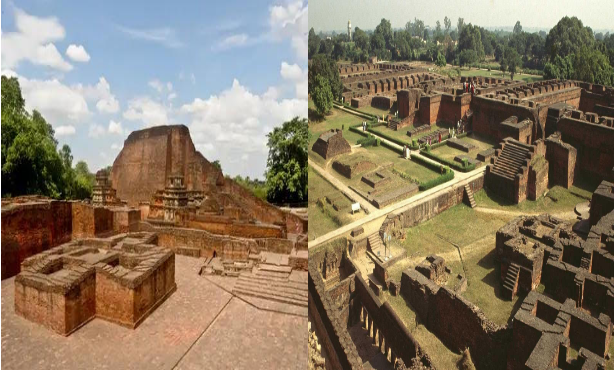
India’s identity is rooted not only in its ancient civilisation, cultural diversity and spiritual traditions, but also in a profound intellectual tradition that shaped the way knowledge, learning and human values were understood for centuries. At the heart of this remarkable heritage stands Nalanda—one of the most celebrated centres of learning in the ancient world. Nalanda was much more than an ancient seat of education. It represented a distinctive Indian idea of knowledge: open, inclusive, questioning and ultimately directed towards the larger welfare of humanity.
The land of Bihar has the unique distinction of being home to some of the world’s earliest centres of learning and intellectual activity. Nalanda emerged on this soil as a remarkable institution of higher learning nearly fifteen centuries ago. Its reputation extended far beyond the geographical boundaries of India. Scholars and students from different parts of India as well as from China, Korea, Tibet, Japan, Central Asia and Southeast Asia travelled to Nalanda in pursuit of knowledge. Its international character demonstrates the openness and intellectual vitality of India’s educational tradition.
The greatness of Nalanda did not lie merely in its antiquity. Its real strength lay in its academic culture, intellectual diversity and spirit of enquiry. The institution was associated with the study of philosophy, logic, grammar, medicine, mathematics, astronomy, languages, literature and Buddhist thought, among other disciplines. Knowledge was not confined to a single field or a narrow intellectual framework. Students were encouraged to question, reason, debate and examine ideas critically. Learning was understood as a continuous search for truth rather than the mere accumulation of information.
This spirit reflects a fundamental principle of the Indian understanding of education—“Sa Vidya Ya Vimuktaye”, meaning that true knowledge is that which liberates. Such liberation should not be understood only in a spiritual sense. It also means liberation from ignorance, prejudice, intellectual narrowness and unquestioned assumptions. Education, in its highest form, enables individuals to become thoughtful, sensitive and responsible human beings. Nalanda embodied this broader purpose of education.
The growth and flourishing of Nalanda were also closely connected with the support extended by successive rulers. From the Gupta period to the age of the Palas, different rulers contributed to the development and preservation of this great centre of learning. This patronage reflects an important feature of the Indian political tradition: education and scholarship were regarded not merely as private pursuits but as a form of social and civilisational wealth. Support for scholars, students and institutions of learning was considered an investment in the long-term intellectual strength of society.
One of the most remarkable features of Nalanda was its international outlook. The accounts of Chinese travellers such as Xuanzang and Yijing provide valuable insights into the academic life, organisation and intellectual reputation of Nalanda. Xuanzang’s prolonged stay and study at Nalanda is particularly significant. His experience demonstrates the extent to which India had become a major intellectual destination for the wider Asian world. Knowledge travelled from Nalanda across geographical and cultural boundaries, influencing intellectual and cultural traditions in several countries.
The Nalanda experience also reminds us that the strength of a great educational institution does not depend merely on its buildings, libraries or the number of students it accommodates. Its true strength lies in the quality of its teachers, the freedom of intellectual enquiry, the culture of dialogue, the seriousness of research and its responsibility towards society. This lesson is particularly relevant today, when higher education across the world is confronting rapid technological change, global competition and the transformative possibilities of artificial intelligence.
Contemporary India is witnessing a significant expansion of higher education. At the same time, there is a growing need to improve the quality of teaching, research and innovation and to reconnect education with India’s intellectual heritage. The National Education Policy has also emphasised multidisciplinary learning, research, innovation, Indian languages and the integration of Indian knowledge traditions into contemporary education. In this context, Nalanda should not be viewed merely as a memory of the past; it can serve as an important source of inspiration for the future of Indian higher education.
It is important, however, to understand Nalanda not simply as an archaeological site but as a living intellectual heritage. This does not mean romanticising the past or assuming that everything in the ancient system was ideal. The purpose of history is not to glorify the past blindly, but to understand it critically and draw meaningful lessons from it. Nalanda teaches us that knowledge becomes truly valuable when it remains open to dialogue, encourages critical thinking and serves the larger interests of society.
For Bihar, the legacy of Nalanda has a special significance. This is the land that gave the world not only Nalanda but also great centres of political, cultural and intellectual activity such as Pataliputra, Vaishali and Vikramshila. It is therefore both an opportunity and a responsibility for Bihar to place education, research and knowledge at the centre of its development strategy.
The expansion of higher education institutions in Bihar must be accompanied by greater emphasis on research quality, innovation, skill development, interdisciplinary studies and international academic collaboration. If the intellectual spirit associated with Nalanda can be connected with modern institutional structures, Bihar has the potential to strengthen its position as an important knowledge region of India.
Nalanda also offers a powerful lesson for our increasingly interconnected world: knowledge has no geographical boundary. A university becomes truly great when it opens its doors to different cultures, languages and intellectual traditions and creates a space where ideas can meet and enrich one another. Modern technology has brought the world closer than ever before. Digital learning, international research networks and academic collaborations now make it possible to recreate, in a contemporary form, the spirit of intellectual exchange that once characterised Nalanda.
At the same time, we must remember that the purpose of education cannot be reduced merely to employability or economic advancement. These are certainly important objectives, but education must also develop reason, compassion, ethical awareness, scientific temper and social responsibility. Economic progress becomes meaningful and sustainable only when it is supported by educated, responsible and socially conscious citizens. The Nalanda tradition reminds us of precisely this broader understanding of education.
As India moves towards becoming a knowledge-based economy and seeks a larger role in the global intellectual order, there is a growing need to establish a meaningful dialogue between its ancient intellectual heritage and modern science and technology. The revival of Indian knowledge traditions should not be an exercise in nostalgia. It should encourage new research, fresh questions and innovative interpretations. The past becomes truly valuable when it contributes to shaping the future.
Nalanda, therefore, is not merely a symbol of India’s glorious past; it is also a symbol of India’s intellectual possibilities for the future. Its ruins tell us a story of a remarkable institution, but its deeper legacy lies in its spirit of enquiry, openness and commitment to learning. It reminds us that India’s greatest strength has always been its capacity to generate, preserve, share and reinterpret knowledge.
To remember Nalanda, therefore, is not simply to pay tribute to an ancient university. It is to reaffirm our commitment to an India that is open in knowledge, independent in thought, committed to research, respectful of diversity and responsible towards humanity. That, perhaps, is the most enduring legacy of Nalanda—and its most important message for contemporary
(The author, a former Vice-Chancellor, Dr. Shyama Prasad Mukherjee University, Ranchi, Jharkhand, is a regular TEW columnist)








[[comment.comment_text]]