Beyond the Visible: India's Unseen Mental Health Crisis

 an hour ago
Un ke dekhe se jo aa jaati hai munh par raunaq, Vo samajhte hain ki bimar ka haal achchha hai, (The beloved’s presence briefly brings colour and liveliness to the lover’s face, even though the inner pain remains.)
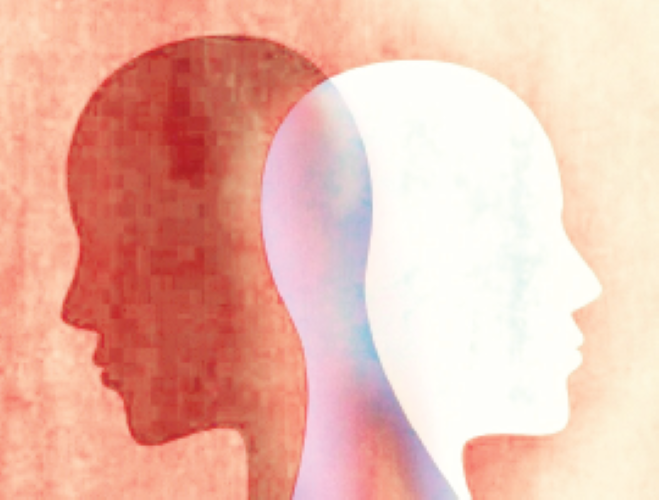
When Mirza Ghalib wrote these lines, he may have had an entirely different context in mind. Yet, the couplet captures a profound truth: people often mistake the outward radiance of a person's face for a sign of good health, failing to recognise the suffering hidden within. Something similar happens in the case of mental health. In our society, looking physically healthy is often regarded as the only reliable indicator of overall well-being. However, a person who appears perfectly healthy on the outside may still be struggling with mental health problems. Ironically, this lack of sensitivity and prioritisation is evident not only in society but also among the country's policymakers. Despite the enactment of the Mental Healthcare Act, 2017, mental disorders still need to be recognised and prioritised as a serious public health challenge.
According to the World Mental Health Today report, the World Health Organization's updated assessment of global mental health, more than one billion people worldwide were living with mental disorders in 2021. The age-standardised prevalence of mental disorders globally stood at 13.6 per cent in 2021, approximately 0.9 percentage points higher than a decade earlier.
The situation in India is broadly similar to the global picture. According to the Global Burden of Disease study published in the renowned medical journal The Lancet Psychiatry, approximately 197.3 million people in India were living with some form of mental disorder in 2017. This accounted for nearly 14.3 per cent of the country's population at the time, or roughly one in every seven Indians. Depression and anxiety disorders were among the most common conditions. These figures clearly demonstrate that mental health is not merely an individual or isolated concern in India but a serious public health challenge.
While the burden of mental health problems continues to grow, people's access to essential services to address them remains limited. One of the biggest reasons is the shortage of trained mental health professionals and the unequal distribution of healthcare services. According to the World Health Organization's Mental Health Atlas, the global average is approximately 13 mental health professionals per 100,000 people. The availability of psychiatrists in India is also alarmingly low. According to the Economic Survey 2023–24, India had only 0.75 psychiatrists per 100,000 people in 2021, against a desirable benchmark of three psychiatrists per 100,000 population. Limited healthcare infrastructure, coupled with social stigma, further widens the treatment gap. According to the National Mental Health Survey 2015–16, the treatment gap across various mental disorders ranged from 70 to 92 per cent. This means that a substantial proportion of people struggling with mental health conditions are deprived of timely and appropriate treatment.
A budget is not merely an account of income and expenditure; it also reflects the government's priorities, intentions and commitments. In the Union Budget for the financial year 2026–27, approximately ₹1.065 lakh crore has been allocated to the Ministry of Health and Family Welfare, nearly 10 per cent higher than the previous year's revised estimates. Nevertheless, this allocation remains inadequate in view of the country's public healthcare requirements. The situation is even more concerning when it comes to mental health. According to available budgetary analyses, approximately ₹1,038 crore has been earmarked for mental health in 2026–27, accounting for only around 1.05 per cent of the total allocation to the Ministry of Health and Family Welfare.
The Government of India has, however, introduced several important initiatives to improve access to mental health services at the community level. First, under the Ayushman Bharat initiative, Health and Wellness Centres, now known as Ayushman Arogya Mandirs, have been envisaged as primary healthcare facilities with provisions for integrating mental health services. This can help facilitate the early identification, screening and counselling of mental health conditions at the local level. Second, the Pradhan Mantri Jan Arogya Yojana (PM-JAY) provides financial protection to poor and vulnerable families by covering eligible hospitalisation expenses. Third, the Ayushman Bharat Digital Mission seeks to improve coordination between healthcare services through digital health records. The success of these initiatives, however, will depend on how effectively they are integrated with mental health services and how efficiently they are implemented at the grassroots level.
The World Health Organization's famous declaration, “No Health Without Mental Health”, underscores that mental health cannot be separated from overall well-being. Therefore, mental health must not be viewed merely through the lens of medical treatment or hospital-based care. It requires the active participation of both society and the government. Society must stop treating mental disorders as a stigma or a sign of personal weakness. There is a need to foster widespread social awareness to improve understanding of mental health, reduce discrimination and encourage support for those who need it.
The government, too, must reconsider its approach to mental health. Mental health policies and budgetary priorities have so far placed greater emphasis on treatment and hospital-centred care. What is needed instead is an integrated mental health system that gives equal importance to treatment, prevention, early identification, rehabilitation and mental health promotion. At the same time, the government must increase the number of trained mental health professionals, strengthen primary healthcare services and provide adequate budgetary resources for decentralised, community-based interventions.
If India aspires to become a developed nation by 2047, health, particularly mental health, must be placed at the centre of its development policies. After all, healthy citizens are the true foundation of a nation's sustainable and inclusive development.
(The author is an Assistant Professor of Economics at B.R.A. Bihar University, Muzaffarpur, and a person of versatile tastes.)









[[comment.comment_text]]