A 7.1% Economy, A Squeezed Household: The Hidden Cost of RBI’s Rate Hike

 an hour ago
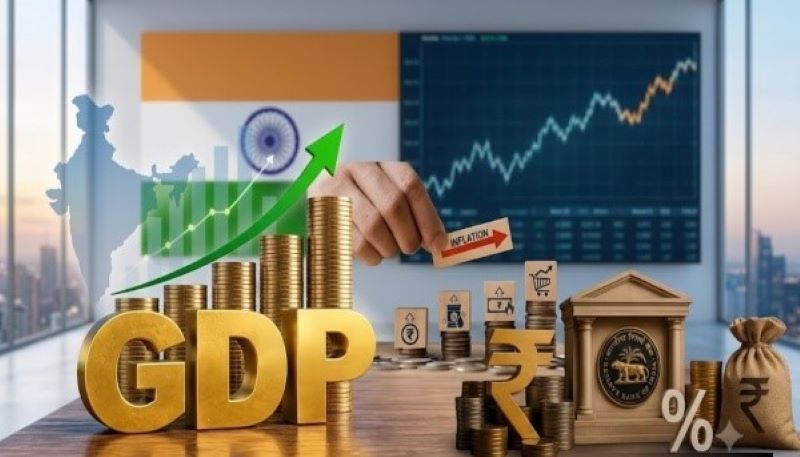
India is growing at a speed most large economies would envy. Yet the Reserve Bank of India’s latest decision suggests that high growth is not being felt equally in every household, shop or small factory. On October 7, the RBI raised the repo rate by 25 basis points to 5.50 per cent its first increase since February 2023 and shifted its policy stance to “calibrated tightening.” In simple terms, the central bank has signalled that it is no longer thinking about cutting rates soon, it is now more worried about inflation and the falling rupee.
The decision appears paradoxical. The RBI has also raised its real GDP growth forecast for FY27 to 7.1 per cent, up from 6.7 per cent. India’s economy, therefore, is expected to expand strongly even as borrowing becomes costlier. But beneath the headline growth number lies a more uncomfortable reality: households are paying more for food, fuel and imports, while their loans are becoming more expensive too.
Why the RBI acted
The repo rate is the rate at which the RBI lends short-term funds to banks. When it rises, banks generally increase their lending rates, making home, vehicle, personal and business loans dearer. The RBI’s move was driven by more than one concern.
Retail inflation rose to 4.82 per cent in August, the highest since December 2024 and above the RBI’s 4 per cent medium-term target for the third consecutive month. Food and fuel prices led the rise, but core inflation which excludes volatile food and fuel items also picked up. This suggests that price pressure is spreading beyond a few essentials.
The rupee added to the problem. A weaker currency makes imported goods, especially crude oil, more expensive in rupee terms. Since India imports a large share of its oil, currency weakness quickly travels into transport costs, cooking gas, electricity and everyday prices. The RBI has therefore tried to defend the rupee through tighter foreign-exchange rules, special dollar arrangements for oil companies and measures that drain excess liquidity from the banking system. The central bank is not merely fighting inflation; it is defending the currency. But that defence has a price, and it is being paid by borrowers.
The household squeeze
For families with floating-rate loans, the immediate effect will be visible in EMIs. A 25-basis point increase may sound small, but on a ₹50 lakh home loan spread over 20 years, it can add roughly ₹800 to the monthly instalment. The exact amount depends on the outstanding loan, interest rate and remaining tenure, but the direction is clear: monthly budgets will tighten.
The greater worry is not this one hike. It is the possibility that this is the beginning of a longer tightening cycle. A family already dealing with higher grocery bills, fuel costs and school expenses may now face a second squeeze through debt repayment. Banks may allow borrowers to extend loan tenure instead of raising EMIs, but that only spreads the burden over more years and increases the total interest paid.
The pressure is visible to those who deal with borrowers every day. A banking professional working as a manager at HDFC Bank says, “Growth looks good on paper, but everyday life for the average Indian family is getting tougher. I see exactly how a rate increase makes home loans last longer and personal loans cost more.”
The banker adds that families are being hit from both sides: “With prices rising, families are getting hit from both sides they are paying more for daily items and more for their monthly loan payments with increased EMIs. This leaves people with less disposable income to spend on extra things.”
This is where the growth story becomes personal. India may be growing at 7 per cent, but a household that postpones a vehicle purchase, delays a home renovation or cuts back on discretionary spending does not experience that growth as prosperity.
Small businesses under pressure
The impact will be sharper for micro, small and medium enterprises. Unlike large companies, MSMEs often depend on working-capital loans to buy raw material, pay wages and manage daily operations. They also operate on thin margins and have limited power to raise prices.
They now face a triple squeeze. First, credit is becoming costlier as banks pass on the higher repo rate. Second, demand may weaken because consumers with higher EMIs and living costs reduce non-essential purchases. Third, a weak rupee raises the cost of imported inputs, machinery, fuel and logistics.
The HDFC Bank manager warns that the pressure may push some borrowers towards riskier alternatives: “It becomes harder for small businesses to borrow money to run smoothly, increasing the inclination towards unorganised lending to pay existing debts and creating a cycle of compounding debt.”
A small trader or manufacturer is left with difficult choices: increase prices and risk losing customers, absorb the cost and accept lower profits, or postpone hiring and expansion. For businesses already struggling with delayed payments from bigger buyers, costlier working capital can turn a manageable problem into a serious one.
Consumption: strong, but fragile
Private consumption remains the backbone of India’s economy, accounting for about 61.5 per cent of GDP in FY26. The RBI expects urban demand to remain supported by services, employment and investment, while infrastructure spending and manufacturing continue to drive growth.
But consumption is not a uniform story. Rural demand remains exposed to weak monsoon conditions and agricultural uncertainty. Urban households face rising EMIs, rents, food prices and fuel costs. The danger is not an immediate collapse in spending, it is a quiet downgrading of aspirations. People may still spend, but less freely choosing necessity over comfort, delay over purchase, and caution over confidence.
As the banking professional puts it, “Big businesses might be happy about the strong economic growth numbers, but until prices stop rising and the rupee gets stronger, regular people will have to cut back on spending.”
The larger question
The RBI’s hike is understandable. Inflation must be controlled, and a falling rupee cannot be ignored. Monetary policy cannot solve every problem, especially when price pressure comes from global oil, weak monsoon and supply-side disruptions.
But the government and policymakers must recognise the other side of the ledger. If growth is to remain inclusive, India needs stronger food-supply management, timely support for MSMEs, protection of rural incomes and measures that ease household financial stress. Growth numbers alone cannot reassure a family recalculating its EMI or a shopkeeper postponing inventory.
India is growing fast, but growth must also feel like relief. Otherwise, the country risks celebrating a strong economy while its people quietly tighten their belts.
(The author, currently pursuing a Master’s degree in Journalism from Maharaja Sayajirao University of Baroda, is the founder of blogging site: dumpyourthoughts.)










[[comment.comment_text]]