Safeguarding the Basic Structure: Why Justice Bhuyan’s Address Matters
 2 weeks, 6 days ago
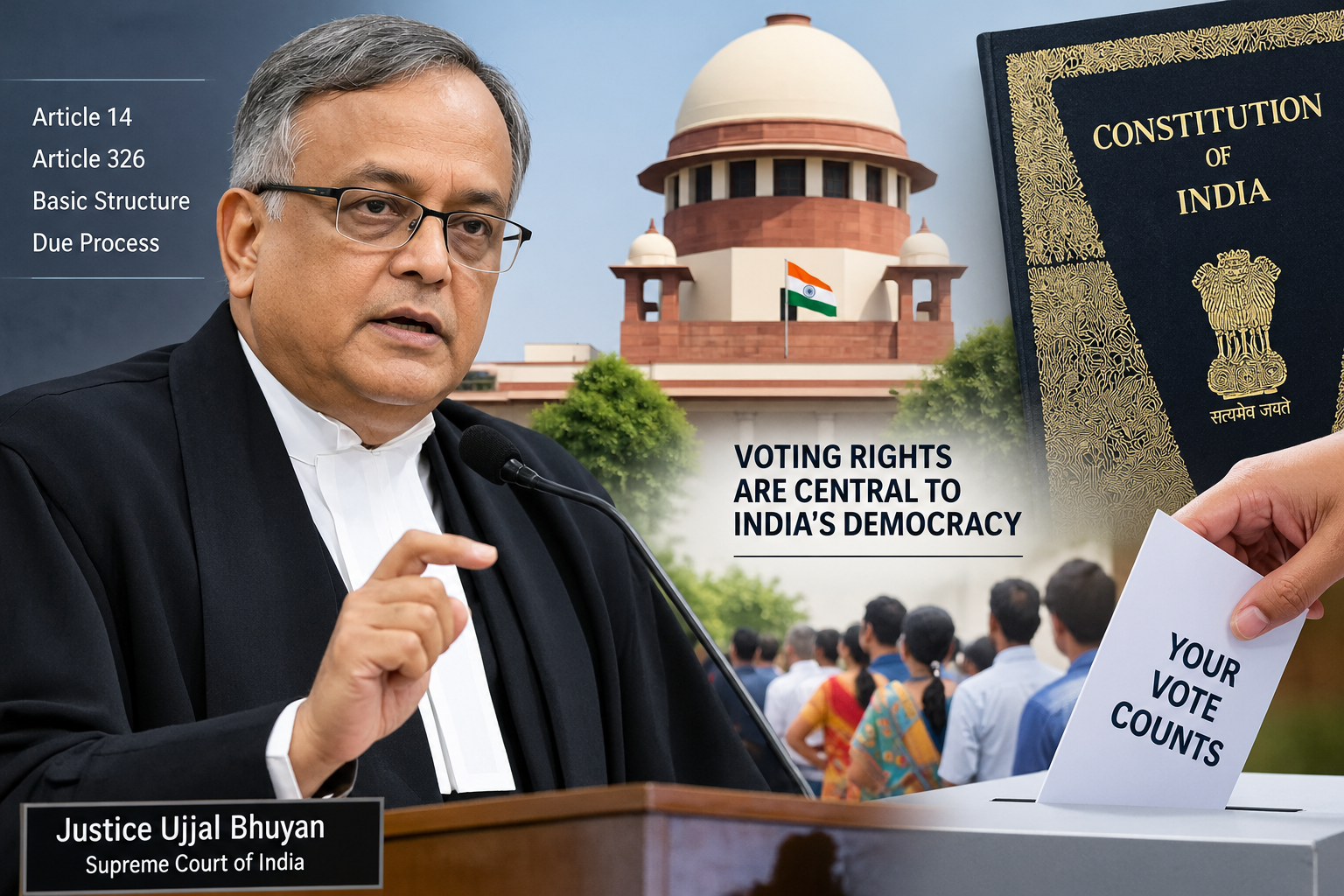
At a time when the sanctity of India’s electoral framework faces rigorous scrutiny, Supreme Court judge Justice Ujjal Bhuyan’s valedictory address at NALSAR University stands out as a crucial beacon of constitutional wisdom. Delivering a principled critique of any process that leads to mass disenfranchisement, his remarks reflect judicial thinking in precisely the right direction. Without naming specific entities, Justice Bhuyan articulated a fundamental truth that lies at the core of Indian democracy: no administrative procedure or institutional authority can be permitted to strip millions of citizens of their right to vote, effectively creating a tiered system of citizenship.
Justice Bhuyan’s core premise—that the right to vote is intrinsically tied to Article 14’s guarantee of equality and Article 326’s promise of universal adult suffrage—reminds us of the foundational values etched by the Constitution's framers. By equating the vote to the fruit of India’s independence struggle and elevating it as central to the Basic Structure doctrine, he firmly repudiated procedural arbitrary actions. His insistence that no voter’s name can be deleted without notice and a fair hearing underscores that due process is not a mere technical formality, but the non-negotiable bedrock of democratic legitimacy.
This emphatic defense of the citizen’s highest office provides immense relief to civil society and democratic observers who have watched recent institutional developments with deep anxiety.
While the Supreme Court previously upheld the Election Commission’s Special Intensive Revision (SIR) on procedural grounds, the scale of draft exclusions and rising concerns over transparency have kept public trust on edge. Justice Bhuyan’s explicit declaration that "no authority can do it; no court can condone it" serves as a timely reminder that constitutional courts remain the ultimate guardians against institutional overreach.
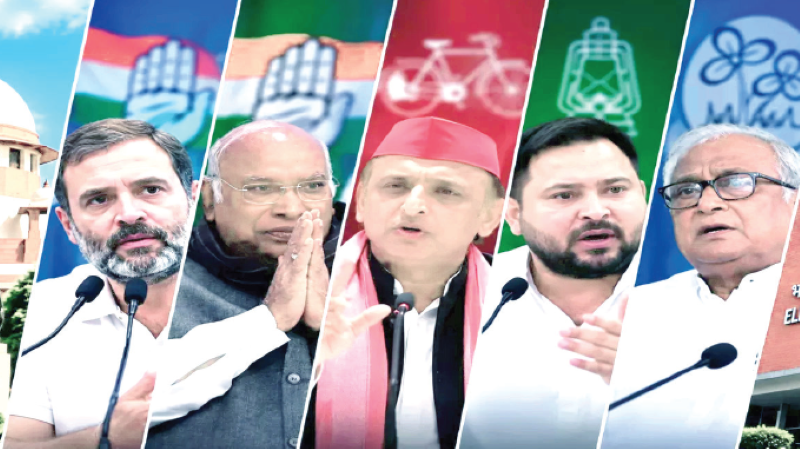
The timing of his address carries immense weight as the judiciary prepares to grapple with ongoing legal and public challenges. Key issues surrounding the SIR’s implementation—which Opposition parties allege has led to sweeping exclusions—along with fresh controversies regarding the Chief Election Commissioner's office, are yet to be substantively heard and decided by the apex court. In this tense interlude, Justice Bhuyan’s speech sets an elevated standard for constitutional scrutiny, reassuring the public that the judiciary’s conscience remains alert to the dangers of systemic voter erasure.
By quoting jurist Nani Palkhivala and US Supreme Court Justice Felix Frankfurter in his lecture, Justice Bhuyan reframed the ongoing debates not as transient political disputes, but as an existential struggle to safeguard freedom. In affirming that a democracy’s true power resides in the equal value of every citizen's ballot—whether cast by a billionaire or a rickshaw puller—his address provides a clear, principled compass. It signals that as upcoming constitutional challenges reach the bench, the Supreme Court's primary duty will be to protect the democratic faith placed in the common citizen.









[[comment.comment_text]]