Between Duty and Politics: Gadi Eisenkot’s Unconventional Challenge to Benjamin Netanyahu
 2 weeks, 6 days ago
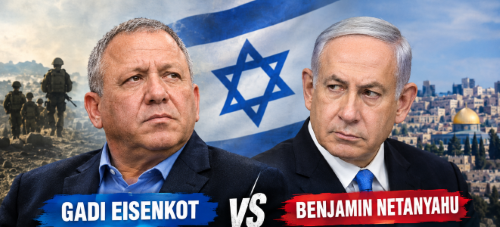
The upcoming election in Israel presents voters with a stark choice not merely between competing political platforms, but between fundamentally opposing philosophy of governance and leadership. At the center of this battle is Gadi Eisenkot, a former military chief who stands as the principal challenger to Prime Minister Benjamin Netanyahu. Unlike traditional politicians who rely on fiery rhetoric and theatrical posturing, Eisenkot brings a matter-of-fact, commander-like approach to campaigning. His appeal rests not on electrifying speeches, but on a sober, uncompromising assessment of the grave security, political, and moral challenges currently threatening Israel's future.
Eisenkot’s campaign is built upon a foundation of personal accountability and strategic discipline—qualities he argues are entirely absent in the current administration. Defining his candidacy around the promise to "save Israel," Eisenkot accuses Netanyahu of entrenching the nation in endless conflicts, degrading its international standing, and fostering domestic division. For Eisenkot, leadership is defined by standing at the front lines when things go wrong and taking responsibility, rather than deflecting blame onto subordinates or seeking photo opportunities during crisis moments. This contrast in character forms the central thesis of his message: a choice between owning responsibility and running away from it.
This commitment to duty is deeply intertwined with personal sacrifice. Eisenkot approaches the election as a grieving father who lost his youngest son, along with two nephews, in the ongoing war in Gaza. His motivation to reform Israel's path forward is fueled by a desire to be worthy of the immense price paid by his family and countless others. Rising from a working-class Mizrahi background in Israel's periphery to command the nation’s military, his journey reflects a pragmatism forged in the reality of service rather than elite privilege, reinforcing his reputation for straight talk and unvarnished truth.
On national security and domestic policy, Eisenkot offers a pragmatic counterweight to the political extremism that has increasingly defined Israeli politics. While maintaining a firm stance on defense, he advocates for structural reforms aimed at restoring normalcy—including establishing a state commission of inquiry into the October 7 failures, cracking down on lawlessness in the West Bank, requiring ultra-Orthodox Israelis to share the burden of military service, and pursuing a national constitution. Rather than making grand, unsustainable promises, his platform focuses on long-term stability and restoring faith in state institutions.
Ultimately, this election serves as a crucial referendum on the nation's leadership and moral compass. While critics question whether a former general with limited parliamentary experience can withstand global pressure, Eisenkot’s supporters view his steady, unpretentious demeanor as the precise remedy Israel needs. In a political landscape long dominated by division and maneuvering, Eisenkot presents voters with an alternative grounded in integrity, strategic clarity, and an earnest effort to heal a deeply fractured society.








[[comment.comment_text]]