Demoting Democracy: Why the ECI Must Choose Dialogue Over Detentions

 2 weeks, 6 days ago
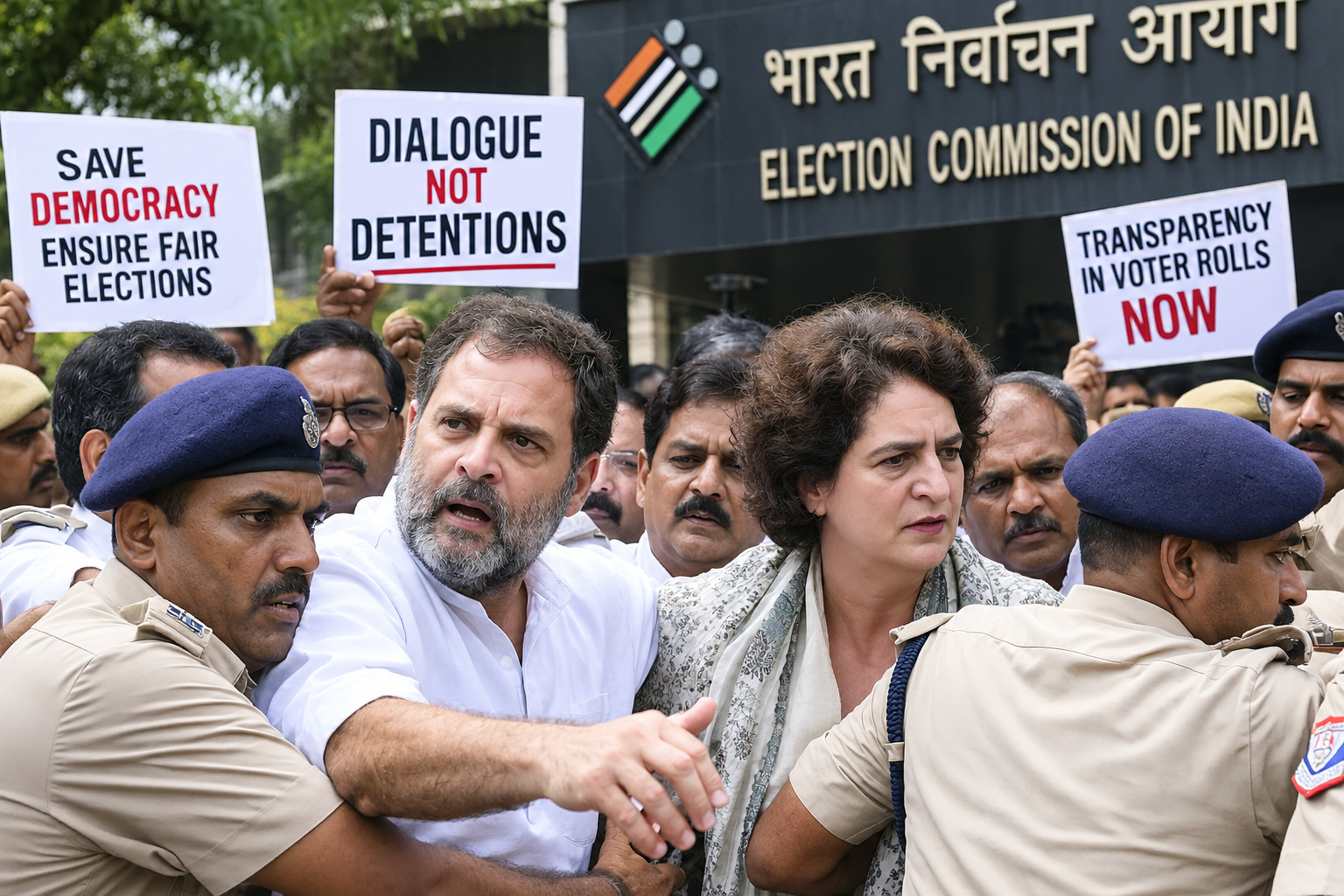
The high-handed physical removal and detention of Leader of the Opposition Rahul Gandhi, Priyanka Gandhi Vadra, and prominent Opposition lawmakers from near Nirvachan Sadan strikes at the core of parliamentary democracy. When elected representatives representing a vast cross-section of the electorate are blocked from accessing the Election Commission of India (ECI) to submit a delegation memorandum, the state signals an alarming intolerance toward peaceful constitutional dissent. Whatever procedural or security concerns the Delhi Police or the poll panel cite, using physical force to drag senior political leaders into buses sets a dangerous precedent that undermines the dignified space reserved for the Opposition.
The primary flashpoint could have easily been defused through basic institutional courtesy and dialogue. As the Leader of the Opposition, Rahul Gandhi warrants an audience with the Chief Election Commissioner (CEC) to air key electoral grievances. The rigid bureaucratic posturing over protocol—whether a meeting request arrived before or after 4 PM or whether 300 MPs could enter the premises—obscures the simple fact that a face-to-face exchange is always preferable to a nine-hour standoff. The best course for both the poll body and the Opposition would have been to negotiate a reasonable delegation size mutually and resolve procedural friction amicably.
Compounding this institutional friction is the ECI’s lack of public transparency regarding serious electoral concerns. Questions surrounding the Special Intensive Revision (SIR) of voter rolls and allegations regarding the arbitrary deletion of over 13 crore voters demand clear, empirical answers rather than administrative silence. When public trust in voter lists is shaken, the onus falls squarely on the Commission to dispel doubts through open data and dialogue. Furthermore, internal friction within the Commission and allegations of unilateral decision-making by the CEC—as echoed by fellow Election Commissioners—have only deepened the perception that the institution's collegiate character is eroding.
While political mobilization, block-level rallies, and parliamentary motions reflect an energized Opposition, the rule of law requires patience with judicial processes. With the matter currently sub-judice, political actors and public bodies alike must allow the court to examine the evidentiary merits rather than relying entirely on street theater or public posturing. A measured approach that combines legitimate political advocacy with respect for legal proceedings remains the most sustainable path to protecting democratic norms.
The ideal resolution now lies with the apex court. The Supreme Court must adjudicate the matter swiftly to stem the institutional decay affecting the Election Commission. By delivering clear guidelines on voter roll revisions, institutional transparency, and the internal functioning of the ECI, the Judiciary can restore public faith in the ‘referee’ of Indian democracy and ensure that electoral processes remain above partisan suspicion.









[[comment.comment_text]]