Architects of the Republic: Why We Cannot Afford to Forget Our National Heroes

 2 weeks, 6 days ago
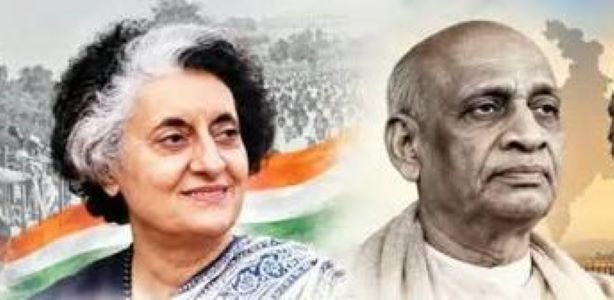
The quiet omission of our national heroes like Sardar Vallabhbhai Patel and Indira Gandhi from public commemorations and intellectual discourse is not merely an oversight of event programming; it is a symptom of a deeper cultural amnesia. Patel, the pragmatic architect who unified over five hundred princely states into a coherent republic, and Gandhi, the resolute leader who redrew South Asia's map in 1971 to restore national self-respect, represent pivotal chapters of Indian nation-building. That their contributions can pass unmentioned at major capital events and book launches suggests that collective memory is increasingly vulnerable to contemporary political convenience and short attention spans. We could see full page government-sponsored advertisements in leading dailies on Sardar Patel, but Gandhi was fully omitted in a partisan fashion. The key concern, however, is that they were found totally missing in public discourse, particularly the seminar halls of elite intellectual clubs of the capital.
This fading recollection stems partly from how modern political narratives operate. History is frequently flattened into partisan talking points, where past leaders are either selectively co-opted to serve current ideological agendas or cast aside entirely. When national figures are reduced to partisan symbols, public institutions and event organizers often choose the path of least resistance—omitting historical references altogether to avoid controversy. In doing so, the nuanced, complex legacies of leaders who navigated existential crises are erased, leaving public memory hollowed out.
However, attributing this silence solely to political partisanship overlooks a broader shift in how society engages with its history. In an era dominated by rapid news cycles and instant digital gratification, long-term historical awareness is steadily being replaced by immediate, soundbite-driven discourse. The foundational struggles of the post-independence era feel distant to a younger population focused on contemporary aspirations.
Consequently, the towering achievements that defined India’s sovereignty—from integration to geopolitical assertion—risk becoming mere footnotes in textbook history rather than living sources of national inspiration.
This growing detachment also reflects a waning public faith in the political class itself. As contemporary politics is increasingly viewed through the lens of cynicism and institutional fatigue, citizens naturally disengage from political history as a whole. When people lose trust in the integrity of modern public life, the historical leaders who shaped those very institutions often suffer by association. The inability to honor past achievements suggests a broader disillusionment with the political domain, where even genuine sacrifice and statecraft are viewed with skepticism.
A nation that forgets its history forfeits the hard-won wisdom required to navigate its future. Remembering figures like Patel and Gandhi is not an exercise in uncritical hero-worship, but a vital act of national stewardship. Their lives demonstrate that despite starkly different eras and challenges, decisive leadership and strategic clarity are indispensable for a nation’s survival. Restoring these heroes to public consciousness requires moving beyond political tribalism to recognize that the strength of the republic rests on the foundations they laid.





[[comment.comment_text]]