Vishwaguru Rhetoric, Empty Stomachs
 2 hours ago
No Glory Erases Hunger. No Slogan Feeds the Hungry
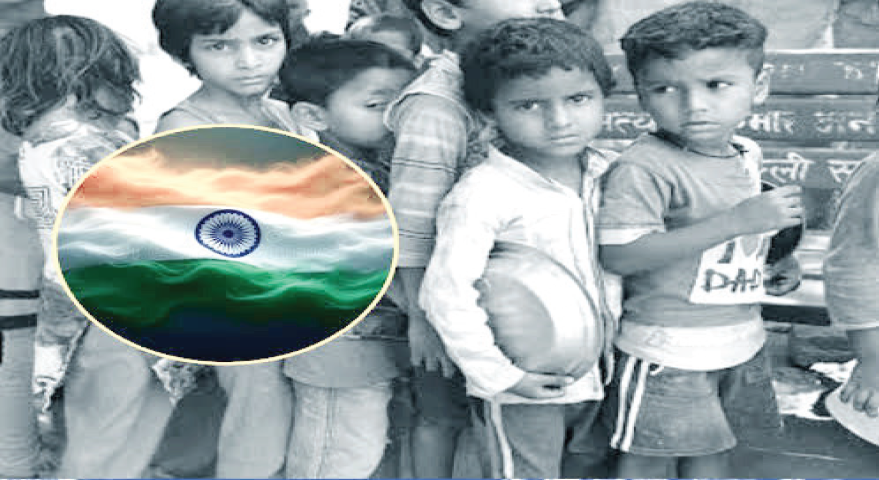
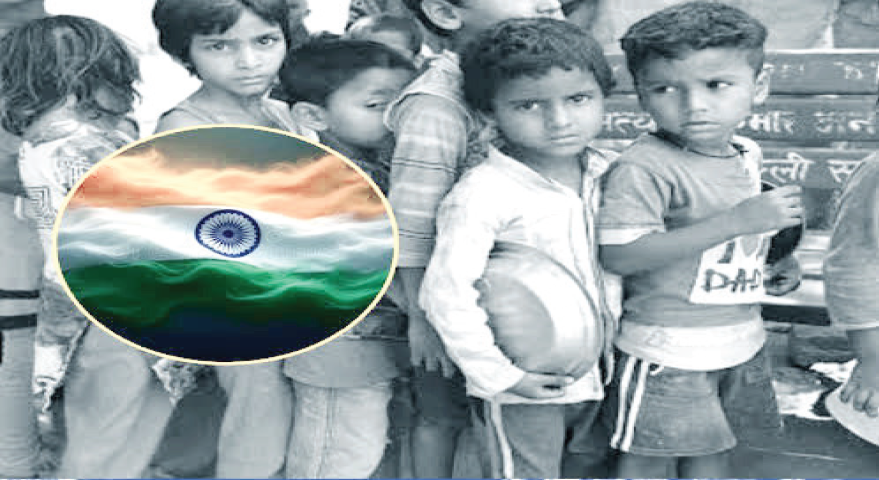
The Roman philosopher, statesman, and political philosopher Cicero (43 BCE) is credited with a sharp political aphorism that highlights the paradoxes between power and society: the poor work, the rich exploit, soldiers defend, taxpayers pay, and politicians ultimately enjoy the fruits of everyone else's labour. This saying's cutting irony is still current, but its historical legitimacy needs to be confirmed. Who is beating the drum of Vishwaguru, the world's intellectual and spiritual leader, in a nation where hunger is still a major problem? The country needs responsibility, not a chorus of patriotic words, when people's plates are empty. Don't respond to hunger with global leadership platitudes!
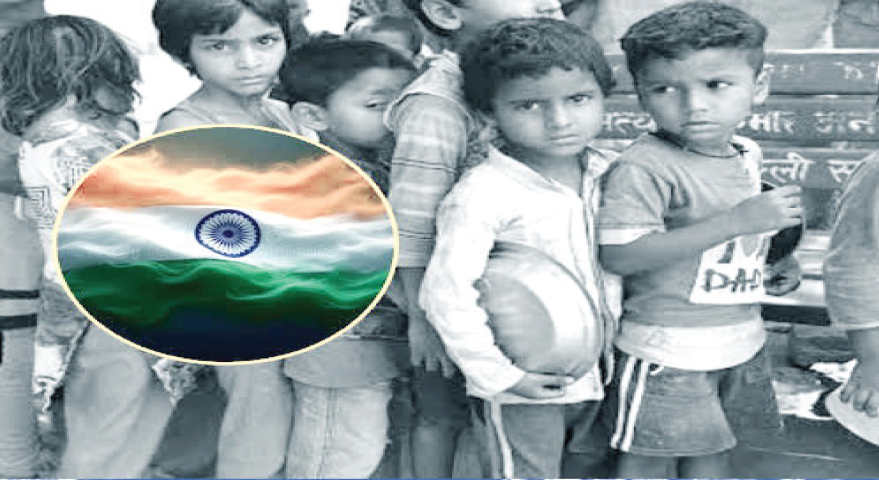
The splendour of a country's capital, the power of its armaments, or its assertions of world leadership cannot be used to gauge its grandeur. Whether its most vulnerable inhabitants have food on their plates or whether the last person gains from development must be used to gauge its success. India has achieved significant strides in digital technology, pharmaceutical production, space research, and diplomacy. Can hunger and malnutrition become less of a problem as a result of these accomplishments? Making sure youngsters receive a healthy diet is equally crucial for a nation hoping to take the lead in the world. This unsettling reality is mirrored by the Global Hunger Index. The national interest necessitates an unbiased analysis of the facts and a deliberate attempt to address the underlying issues rather than discounting its conclusions.
Beyond Rankings, Confronting Hunger
India is ranked 100th out of 122 countries in the Global Hunger Index 2026, with a score of 24.1, putting it in the serious category. Concern's compilation Undernourishment, child stunting, child wasting, and child mortality are the four factors that make up the Worldwide of Ireland and Welthungerhilfe of Germany index. A score of 24.1 indicates a composite evaluation of hunger and its effects, not that 24.1% of people are hungry.
The survey states that 9.8% of Indians are undernourished, 29.3% of children are stunted, and 19% are wasted. These numbers highlight a problem that goes beyond food supply. Ensuring proper nourishment, child health, and human dignity is the true challenge.
Hunger’s Four-Point Test
Instead of just assessing hunger, the Global Hunger Index provides a more comprehensive picture of child health and nutrition. Undernourishment, child wasting (low weight relative to height), child stunting (low height related to age), and child mortality are the four markers used to evaluate it. A score between 0 and 100 is generated by analysing data from United Nations sources. Low hunger is indicated by a score of less than 10, moderate hunger by 10–19.9, serious hunger by 20–34.9, worrisome hunger by 35–49.9, and extremely frightening hunger by 50 or higher.
2014–2026: Rankings and Accountability
India's ranking on the Global Hunger Index, which went from 55th in 2014 to 111th in 2023 and 100th in 2026, has continued to be a contentious political issue. However, because the number of nations evaluated, the underlying data, and the methodology may change, direct comparisons between years must be done with caution.
Long-term nutritional indicators, women's and children's health, and the success of government initiatives must be used to gauge real improvement. However, the government cannot escape responsibility due to methodological flaws. If the results are contested, the answer must be based on proof, clear data, and reliable analysis rather than discounting criticism as anti-national. The reality of hunger and malnutrition must not be allowed to vanish behind the dispute around rankings.
The Right to Food, the Reality of Hunger
Even though India's economy was growing quickly, then-prime minister Manmohan Singh admitted in 2012 that the country was ashamed that 42% of its children were underweight. Additionally, he realised that relying solely on the Integrated Child Development Services (ICDS) program was insufficient to address a serious issue like malnutrition. In light of this, the UPA administration passed the National Food Security Act in 2013, which for the first time made food a comprehensive legal entitlement. According to the 2011 Census, the law covered about 67% of India's population, comprising 50% of the country's urban population and 75% of its rural population.
However, the anticipated dedication to its successful execution seems to be lacking after the 2014 election of a new government. The Supreme Court also voiced grave concerns in July 2017, stating that it was extremely unsettling to shelve laws passed by Parliament that were in the public interest.
However, hunger and malnutrition cannot be eradicated by food security laws alone. Grain availability is crucial, but a balanced diet, healthcare, sanitation, and financial stability are also necessary for proper nutrition.
A thorough evaluation of food security initiatives, a precise understanding of the underlying causes of malnutrition, and practical steps to lessen economic disparity and increase social protection are what are currently required. To guarantee that human development progresses in tandem with economic growth, the government must make sufficient investments without any justifications. Because the ability of a country's population to live healthy and respectable lives is a more accurate indicator of that country's development than just economic growth.
Full Plates, Not Full Treasuries
Although they are closely related, hunger and malnutrition are not the same. The human body requires a balanced diet; the availability of grain does not ensure sufficient nutrition. Therefore, what ends up on people's plates and their children's health should be used to gauge the achievement of food security rather than just warehouse inventory or distribution statistics. Closer examination of the ground reality underlying claims of development is necessary if malnutrition continues despite increased food supply.
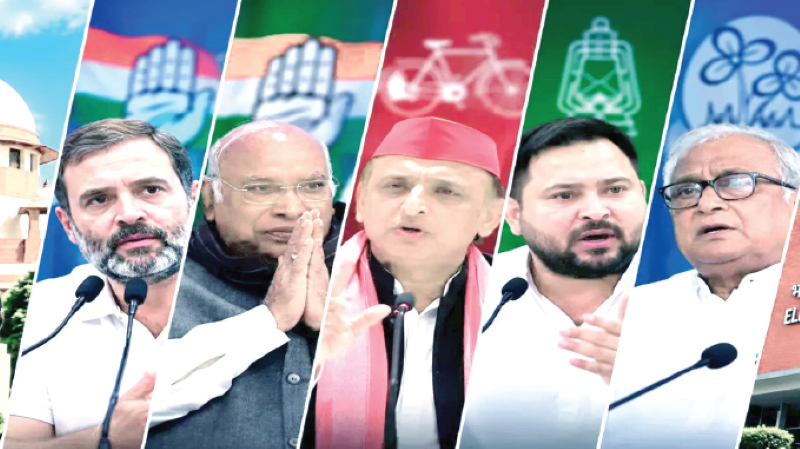
Hunger is neither an ally of the opposition nor an enemy of the governing class. There is no election symbol on it. A child's stunted growth, a woman who eats less so her family can eat more, and the daily battle to get a basic meal are all examples of it. Every government has a moral obligation to address hunger, not just one political party.
From Grain to Nutrition
Producing and distributing grain is only one aspect of food security. It entails making certain that everyone regularly has access to enough wholesome meals. Grain may satisfy hunger, but a balanced diet, protein, and minerals are also necessary for a healthy existence. Purchasing power, clean drinking water, healthcare, maternal nutrition, and appropriate child care all influence this.
India has achieved notable advancements in the production and public distribution of food grains. However, a basic issue still needs to be answered: how much of this improvement is getting to the people who need it the most? Can low-income families afford wholesome food? Are sufficient efforts being made to eradicate nutritional disparities?
Slogans or speeches cannot provide answers to these questions. They call for open data, quantifiable results, and local responsibility.
Image Over Hunger
In India, it frequently seems that more effort and resources are focused on enhancing the public's perception of political leaders than on providing sufficient nutrition for the populace. One example is oversized bags with pictures of leaders on them. With the money spent on their manufacturing and promotion, how many people may have been saved from malnutrition? It is worthwhile to ask that question. After all, what is there to brag about if people in charge of government are unable to provide their inhabitants with two square meals a day while seeming more focused on winning elections than the general welfare?
Uncomfortable questions are raised by hunger figures amid sparkling boasts of development. Domestic shortcomings cannot be justified by global crises. Why did the anticipated outcomes not materialise despite the stated goal of eradicating malnutrition in India by 2022? Rather than discounting statistics as deceptive, we need to examine the efficacy of nutrition initiatives and implement practical changes.
Food waste at large festivities reveals our insensitivity to the hungry in a society that considers food to be sacred. The food on an empty plate is a better indicator of national pride than the picture of a leader.
Global Ambition, the Last Person’s Test
It is not intrinsically immoral to aspire to be a worldwide leader, a Vishwaguru. However, the higher the claim to leadership, the greater the moral obligation. Hunger is not just a question of government policies; it is a test of our collective conscience for a society that values food as sacred and for a country motivated by Mahatma Gandhi's belief that progress must be measured by the welfare of the last individual.
Why can't India ensure that its most vulnerable inhabitants benefit from growth and that no child is deprived of their potential due to malnutrition if it wants to be a global leader in economic power and technical innovation? These enquiries are meant to make our accomplishments more inclusive rather than to discount them. Celebrating successes is only one aspect of patriotism; another is having the guts to own up to mistakes and fix them.
Beyond Slogans: Deliver Results
India's Global Hunger Index 2026 score of 24.1 and 100th place demand urgent reflection. These individuals shouldn't be disregarded in the name of patriotism or used as weapons to degrade the country. The true question is how well nutrition and food security initiatives are improving lives locally.
Transparency is required regarding the results of Anganwadi services, school nutrition programmes, maternal healthcare, and the Public Distribution System. To guarantee that children are released from the burden of malnutrition, accountability must be established.
The desire to become a Vishwaguru is not wrong, but it only takes on significance when the last person benefits from development. The dignity and standard of living of a country's population are just as important indicators of its grandeur as its place in the world.
Ironically, public discourse about hunger and malnutrition has all but vanished. There are no crowded prime-time discussions or broadcast outrage about these subjects. Editors don't say anything, and anchors don't seem to be able to identify the important questions. What problem could be more fundamentally beneficial to the public interest than hunger?
The lyrics "Bhookh hai to sabr kar, roti nahin to kya hua, /Aajkal Dilli mein hai, zer-e-bahas ye mudda" by Dushyant Kumar continue to challenge society and power with an unsettling reality.
(The author, a Doctorate in Laws, is a senior lawyer and civil society activist.)




[[comment.comment_text]]