Unsung Hero of Ram Temple Campaign: Gurudutt Singh's Courageous Stand paves way for Mandir Nirman

 2 years, 9 months ago
The Faizabad city Magistrate played major role in reclaiming Ayodhya Ram Mandir in 1949
Ashok Singhal Called Him 'Bharat’s First Karsevak'
Manoj Kumar Pathak
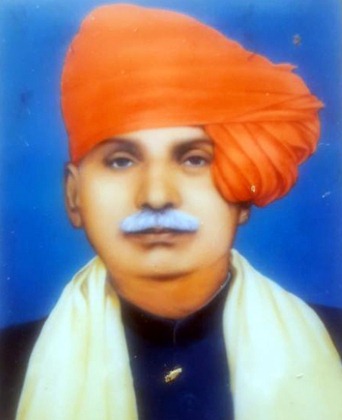
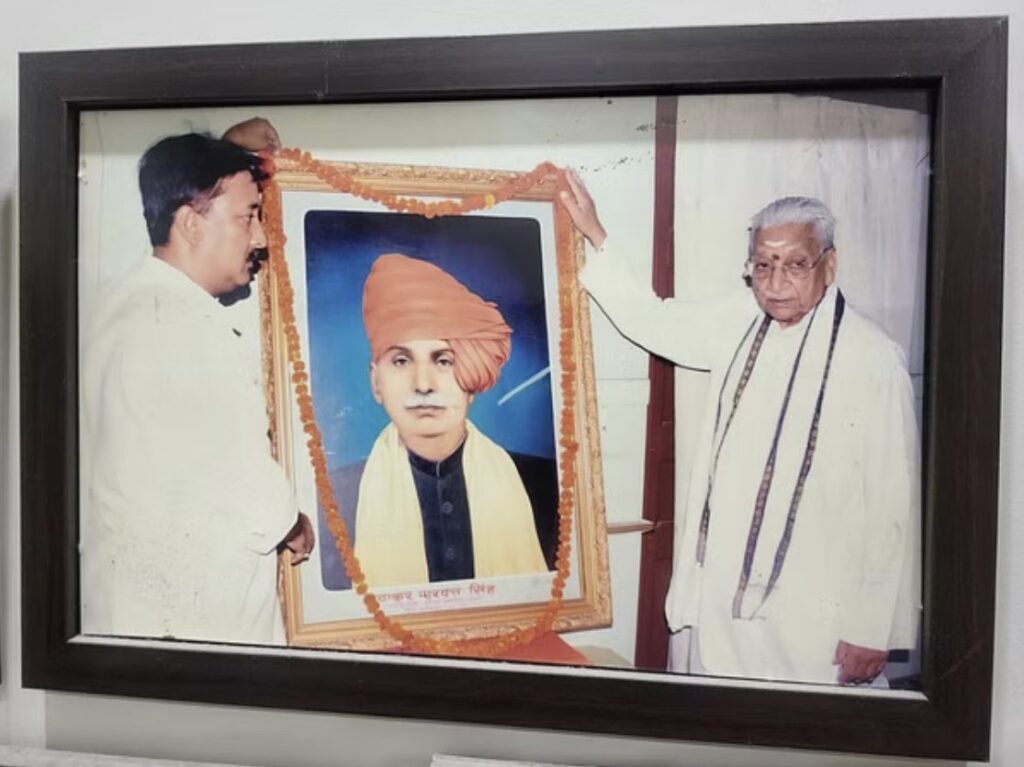
In the annals of the Ram Temple campaign, one name stands out as a forgotten hero—Thakur Gurudutt Singh, the Faizabad city magistrate who played a pivotal role in the sequence of events that eventually led to the historic demolition of the Babri Masjid in 1949. Alongside KK Nair, an ICS officer, Thakur Gurudutt Singh's contributions have often been overshadowed, but they were crucial in shaping the trajectory of the Ram Janmabhoomi movement.
Acknowledging his significance, the late Ashok Singhal, a prominent Hindu leader, bestowed upon Thakur Gurudutt Singh the title of "Bharat's first karsevak." This recognition was not just a mere accolade; it underscored the profound impact Thakur Saab had on the history of Rama Janmabhoomi and the broader narrative of Hindu struggle for the sacred site's control.
Thakur Gurudutt Singh, the Faizabad city magistrate in 1949, utilized two powerful tools in his contribution to the cause—the strength of his intellect and the authority of his pen. His devotion to Ramlalla, evident in his mind, fueled a nation-centric intellectual harvest that guided his decisions. The power of his pen, coupled with his position and authority, allowed him to stand as a bulwark between a surge of bhaktas and the forces opposing them.
To fully appreciate Thakur Saab's contribution, one must visit Shri Rama Janmabhoomi. The Ramlalla's darshan, the very sight that inspired Thakur Gurudutt Singh, unveils the story of how his strategic decisions in 1949 changed the course of history. He navigated the delicate balance between the fervor of devoted bhaktas and the exercise of governmental power, using intellect and authority to protect the sanctity of Rama Janmabhoomi.

Thakur Gurudutt Singh's grandson, Shakti Singh, provides insights into those critical days of December 1949. Facing a moment of test on December 22 and 23, Thakur Saab made sacrificial decisions for the sake of Ram and dharma. As the news of Ramlalla's pratima being found at the disputed site spread, emotions among Ram's devotees soared. Singh recounts that his grandfather, aware that he wouldn't be able to act after relinquishing his powers, took decisive actions while still in office.
On December 23, a sea of Ram bhaktas, including Nagas sadhus, surged towards Rama Janmabhoomi. The book titled "Ram Bhakt Magistrate" details how Thakur Gurudutt Singh, along with District Magistrate KK Nair, faced the challenge. They reached a conclusion that efforts to restore the pre-existing situation would be futile, and this decision was communicated to Chief Minister Govind Vallabh Pant.
Thakur Gurudutt Singh's grandson shares the moment when his grandfather had to make a difficult choice—between the path of dharma and his position, status, and livelihood. Ultimately, he chose to stand for dharma, refusing to entertain any notion of removing the pratima from the site. This bold decision led to his resignation, marking the beginning of a challenging period for Thakur Saab.
Thrown out of his government accommodation at midnight with his family, Thakur Gurudutt Singh faced financial constraints as the government hindered his pension. However, undeterred, he continued to serve the nation and uphold the principles of Hindutva.
In 2019, when the Supreme Court passed the historic judgment, ending a 500-year-long struggle for Hindus, devotees remembered Thakur Gurudutt Singh's pivotal contribution in 1949. The keertan initiated by the sants of the Nirmohi Akhada found a generational transition in the celebrations at Rama Janmabhoomi.
Thakur Gurudutt Singh's under-celebrated story is a testament to the power of keertan, an aspect often overlooked but crucial in shaping the course of history. His courageous stand in 1949 laid the foundation for the Ram Temple campaign, and his legacy lives on in the hearts of those who recognize the forgotten hero of Rama Janmabhoomi.




[[comment.comment_text]]