The Moral Weight of Blue Denim

 4 hours ago
Long ago, when I was just beginning to learn how to exist in this wild world, I found myself confined by certain limitations on my journey to becoming a better, kinder, and wiser person. These limitations had little to do with my age, my small hands, or my still-developing mind. Instead, they were imposed simply because of my gender. Because I was a girl, I was denied the chance to become a complete person. Where I come from, womanhood is often treated as a deformity, a disability, a curse rather than a condition of being.
I remember being in a hospital with my sister when a woman had just given birth to her second child, another girl. The family wore those familiar, uncomfortable smiles, repeating to anyone who would listen: “Koor gey Rahmat”, “a girl is a blessing.” They said it again and again, as if trying to convince not others, but themselves. If it had been a boy, there would have been no need for such reassurances. There would have been celebration without hesitation, pride without apology. A boy does not need to be justified. He is simply accepted as enough. But a girl must always be explained, softened, defended.
That is how a girl is introduced to the world, not as a possibility, but as a burden. She is born into apology. Her existence carries a silent shame, and her life becomes an ongoing effort to make up for the mere fact of being born female.
People today often say that girls perform better academically than boys, and to some extent, that is true. But it is not because they possess superior intelligence or a greater ability to understand. It is because they are aware of what is at stake. They know that being given the same educational opportunity as boys is not a right, it is a privilege they must justify. They study harder because failure would not just be personal; it would be proof that educating them was a mistake.
In many parts of Kashmir, if a family can afford to send only two children to a private school, they will choose a son first, and then wait for another son. The daughter is sent wherever it is cheapest. Of course, this is not true for everyone, and I know I am generalizing. But sometimes generalizations emerge not from ignorance, but from repeated observation. As the Kashmiri saying goes, “Batt Lejji Che Wuchan Pethai”, one speaks from what one sees.
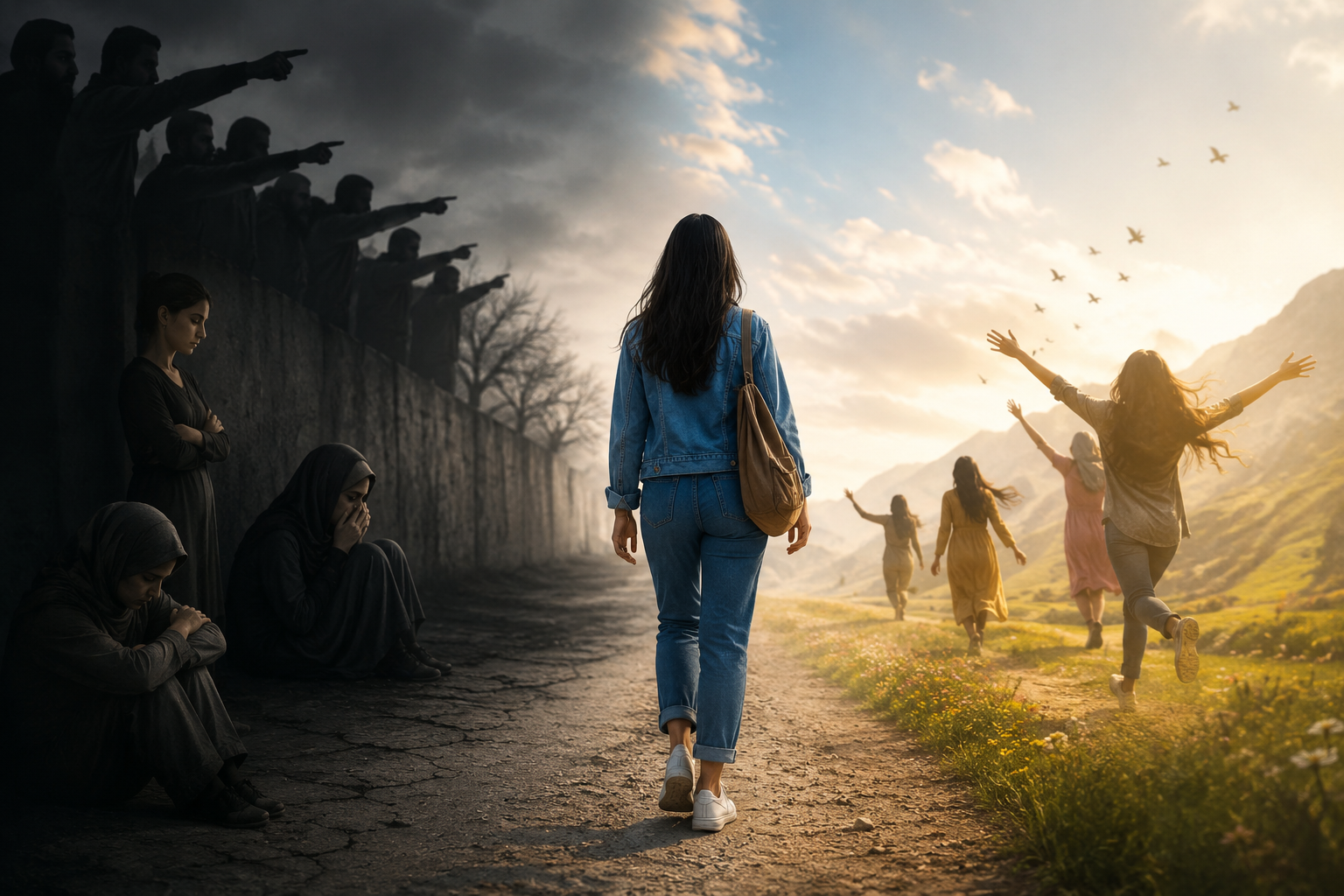
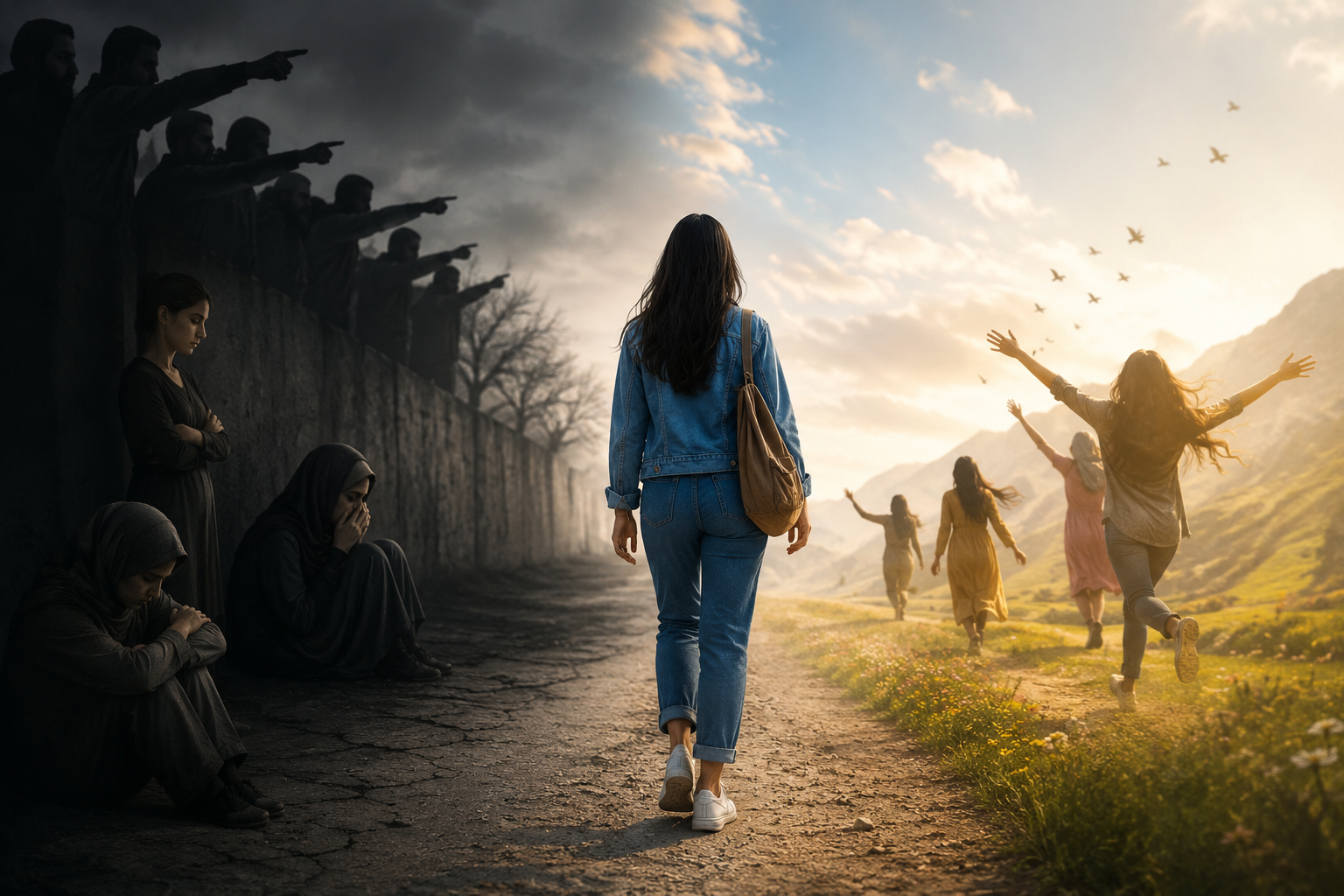
There is also a deeply troubling myth that many people seem to believe, a myth that defies reason, science, and even faith itself. It is the idea that women are responsible for the moral and social condition of society. According to this thinking, every misfortune can somehow be traced back to women.
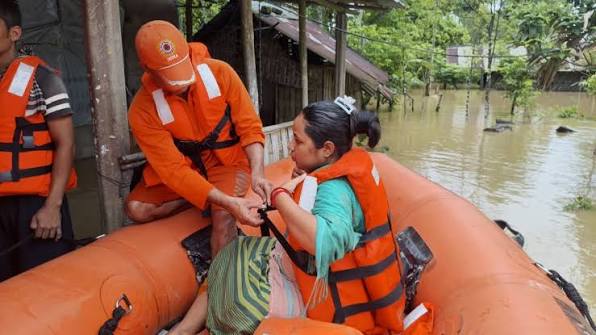
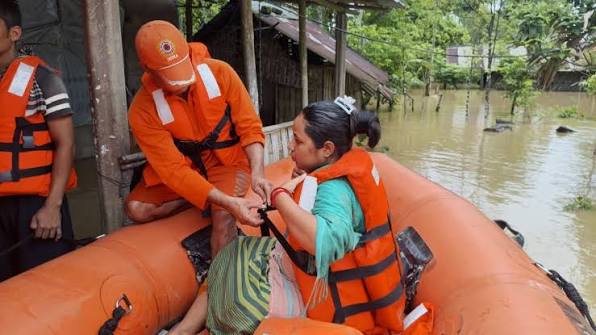
Did you know, some say the floods in Kashmir in 2014 happened because women started wearing jeans? That a recent boat accident in the Jhelum occurred because women did not observe proper hijab? That every tragedy is somehow the consequence of women existing as they are? And most recently I saw a reel on instagram where a few women influencers were shown dancing and having fun and then at the end images of the recent floods erupted with the song ‘Jehlum Roya', which is to suggest that women are somehow responsible for every natural calamity.
What is even more disturbing is what does not anger people. God, it seems, is not angry at the prevalence of drugs among men, despite frequent reports of drug trafficking. He is not angered by the widespread reality of harassment, where girls as young as six and women as old as sixty-six can recount experiences of being groped, abused, or violated in public spaces, schools, and transport. He is not angered when men in positions of power exploit women, only for the public response to be, “Galti ek taraf nahi hoti” (fault is never one-sided).
But somehow, God is believed to be deeply offended by women wearing jeans.
The hypocrisy becomes even clearer when we talk about culture. There is constant concern that our culture is fading, that women no longer wear traditional clothes, that we are losing our customs, our music, our ways of life. Yet, when girls try to preserve that very culture, like the schoolgirls I saw performing a traditional song, dressed modestly, celebrating their heritage, they are met with abuse. Not because of what they were doing, but because they were women doing it. Had they been boys, they would have been praised endlessly.
It seems that when it comes to women, culture is reduced to control. They are expected to preserve traditions, but only within strict boundaries. They can cook traditional food, wear traditional attire, and live traditionally, but the moment they step beyond these prescribed roles, they are judged, silenced, or shamed.
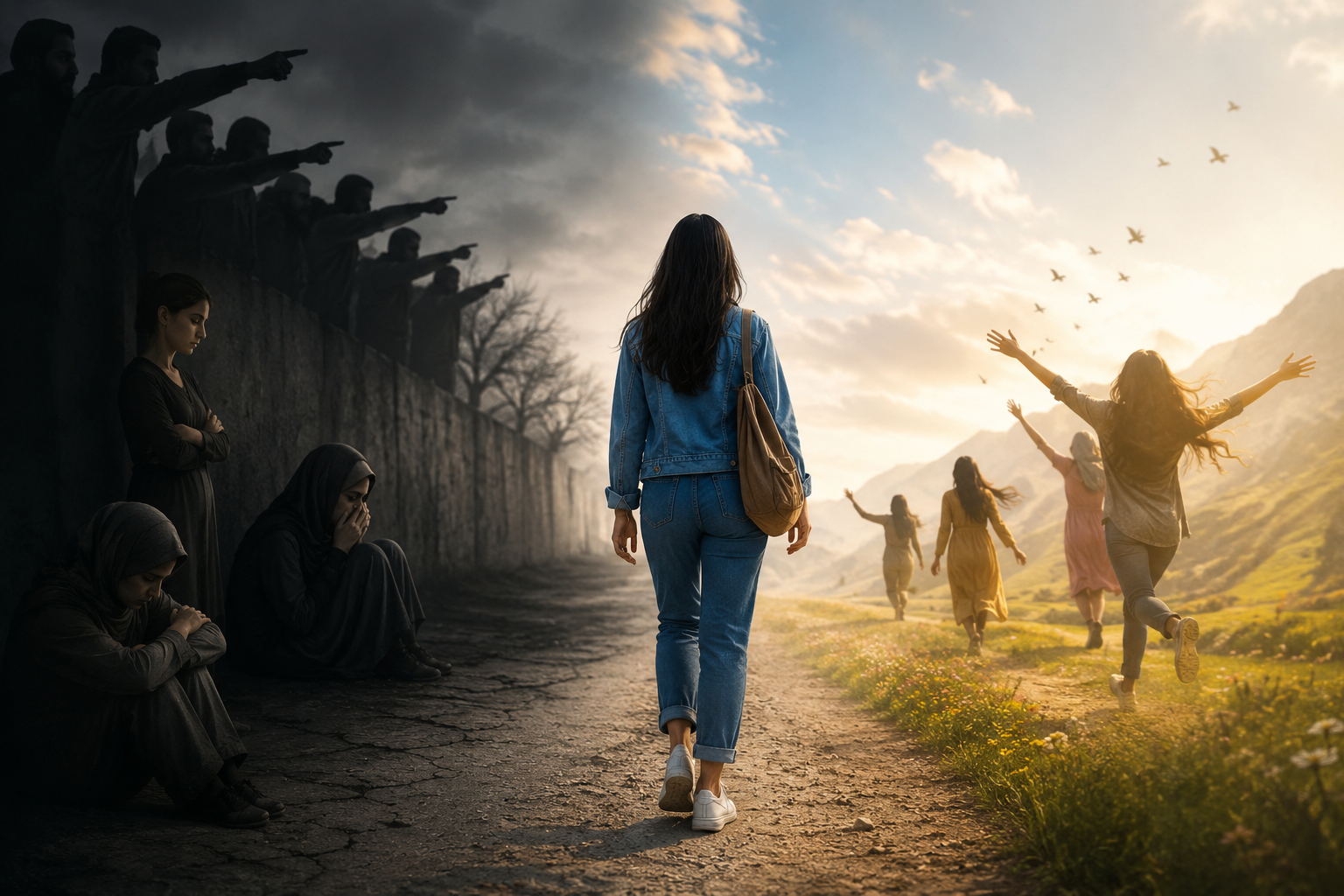
Perhaps this contradiction is rooted in our collective history, a history marked by trauma, conflict, and instability. It has shaped a society that struggles to separate joy from suspicion. Fun becomes dangerous. Freedom becomes threatening. And women, in particular, are denied the right to experience life fully. They are not allowed to travel freely, to sing, to dance, to watch films, or even to learn self-defense without scrutiny.
They are forced into extremes. They can either be revered as goddesses within the confines of the home or condemned as immoral for stepping beyond it. There is no space in between for simply being human.
And that, perhaps, is the deepest tragedy, not just that women are restricted, but that their humanity is constantly negotiated. A woman is rarely allowed to exist without justification. She must either be exceptional or invisible, pure or condemned. But she is almost never allowed to simply be.
If there is to be any meaningful change, it must begin with dismantling this binary. Women do not need to prove their worth through suffering or sacrifice. They do not need to earn their right to exist freely. Their humanity is not conditional.
A society that teaches its girls to apologize for existing ultimately teaches itself to live in fear, fear of change, fear of equality, fear of truth. And until that fear is confronted, we will continue to raise generations of women who are told they are less, and generations of men who are never taught otherwise.
The question, then, is not whether women deserve freedom, dignity, and joy. The question is: how long will we continue to deny something so fundamentally human, and at what cost to ourselves.
(Author, a masters in English literature, is a poet, writer, and women's rights activist.)
*

[[comment.comment_text]]