Youth Anger Forces the First Value-Driven Resignation

 2 months, 2 weeks ago
“What truth is being hidden that forces reliance on lies? What justice is denied in love that drives rulers to shelter in hatred?”
- Mullah Badra… Iranian Philosopher
These questions echo across India’s campuses today.
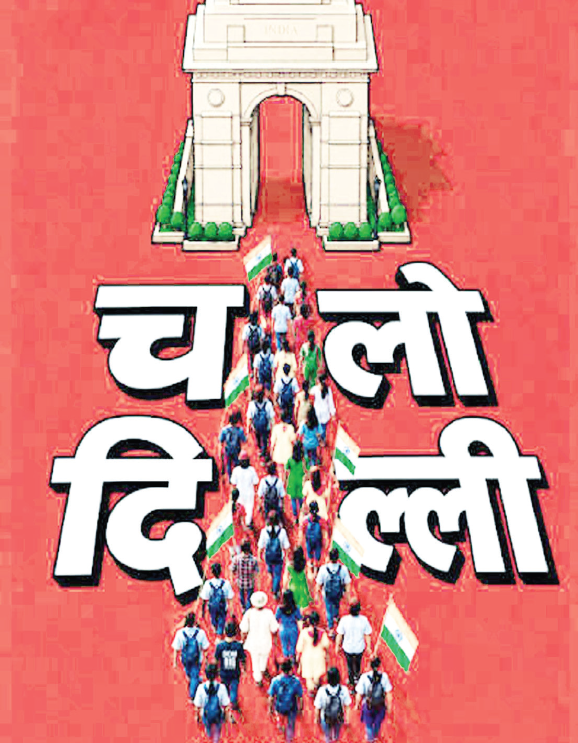
Dharmendra Pradhan’s resignation after 36 days of Gen Z-led NEET protests, spearheaded by the self styled Cockroach Janta Party, marked India’s first cultural resignation, stalling governance and exposing systemic rot. Once BJP claimed resignations weren’t forced, but youth agitation compelled it—now government must confront discontent, corruption, and accountability.
Education was meant to illuminate the human heart, as Mullah Badra once said. Yet the system that should enlighten has been repeatedly darkened by scandals. Uttarakhand, despite passing the Nakal Rodhi Kanun in 2023, saw the UKSSSC graduate exam leaked in 2025 and just now in July 2026 its Technical University cancel two B.Tech papers after a 95% leak match.
Uttar Pradesh, without such a law, has faced Telegram based paper leak scams and rumors around UPSSSC and police recruitment exams in 2025–26, leaving students duped and trust eroded. The geography differs, but the story is the same: laws and promises on one side, scams and rumors on the other—yet in both, students pay the price with canceled futures and broken faith in meritocracy.
This is not new. In 1997, Odisha’s Congress government under Janki Ballabh Patnaik faced accusations of exam paper leaks. Nearly 1,500 students staged a dharna in Bhubaneswar, led by Dharmendra Pradhan—now India’s Education Minister. Then, he was hailed as a champion of students. Today, he stands accused of presiding over the same brutality he once fought against. This irony exposes the gulf between powerless protestors and empowered rulers.
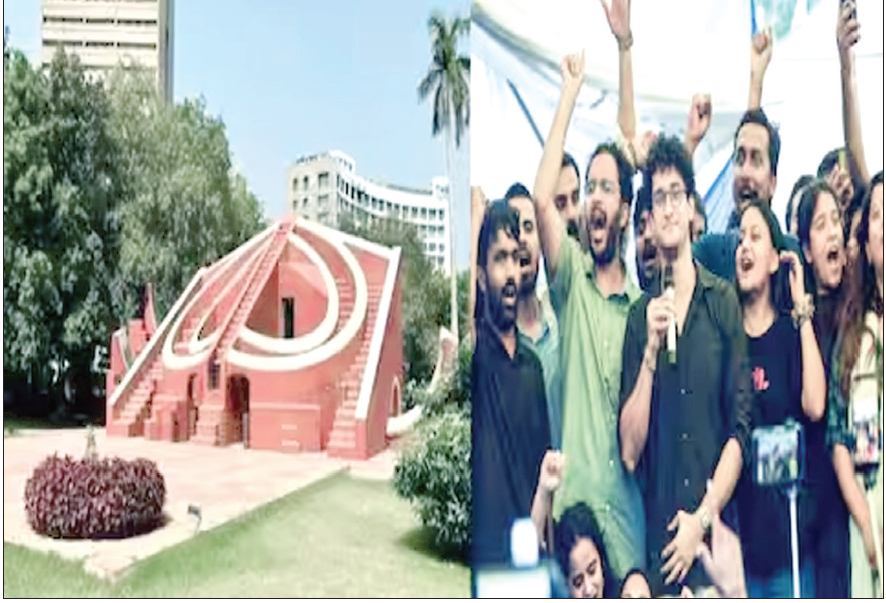
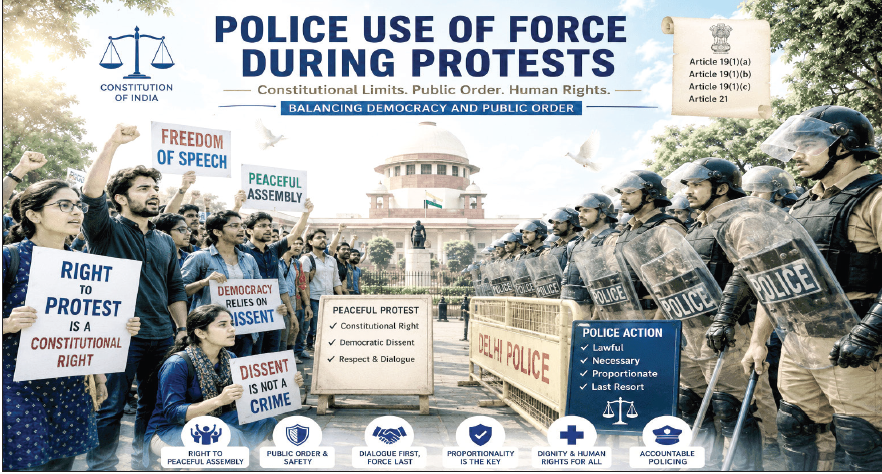
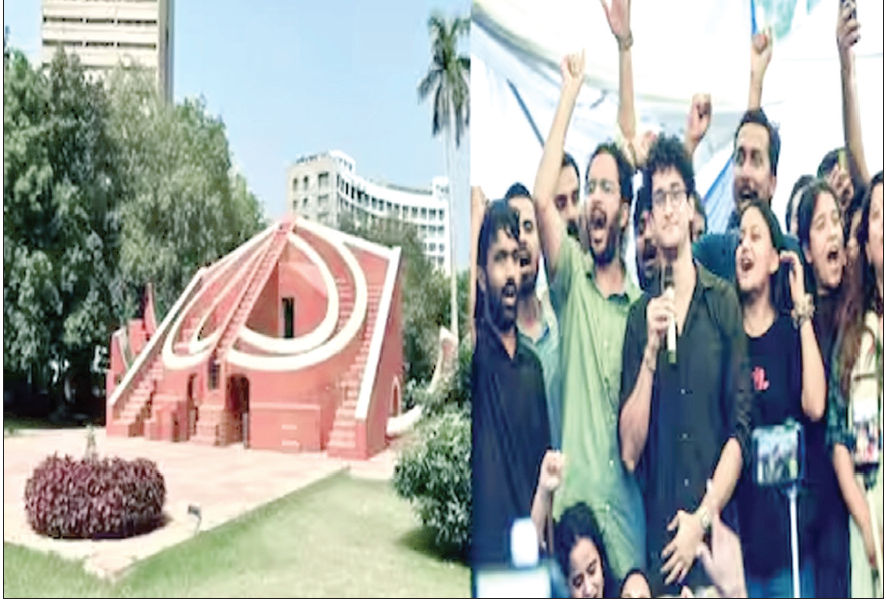
The demand remains unchanged: a transparent examination system. Students at Jantar Mantar and across Kolkata, Lucknow, Nagpur, Mumbai, Chennai, Patna, Hyderabad, and beyond have marched for fairness. Yet governments respond with silence or suppression. On July 20, 2026, Delhi police charged peaceful demonstrators with lathis and pellets. Courts had to intervene, ordering that no officer be deployed without uniform or badge. Still, no accountability followed. Who were those wielding sticks against unarmed youth? Why has the state failed to identify them?
The Prime Minister and Home Minister posted appeals on “X,” promising strict punishment for culprits. Uttarakhand’s Chief Minister Pushkar Singh Dhami passed the Anti Cheating Law hailed as historic. Yet since its passage, nine examinations have been canceled due to leaks. University selections were scrapped even this week. If laws are celebrated but leaks persist, what is their worth? Who decides the culprits when investigative agencies themselves falter?
Consider Banaras Hindu University. In 2024, the CBI investigated Vice Chancellor Sudhir Jain, only to grant him a clean chit. Later, bribery allegations surfaced in nursing staff recruitment across Rajasthan. Arrests were made, but names withheld. Eight months on, no further action. Agencies fail to punish even 2% of offenders, prompting Supreme Court questions about their efficiency. If justice is delayed indefinitely, is it justice at all?
The government insists students are misguided. But what is unlawful in demanding merit based futures? What is wrong in asking for transparency? Students are told they are powerless. Yet history reminds us: in 1942, students fought colonial rulers and won. If they could challenge the British as subjects, why should citizens today be silenced?
The contrast between monarchy and democracy lies in accountability. Philosophers remind us: rulers must act under law, with equality and participation. Democracy is beautiful only when rulers listen. After independence, Nehru chose democracy despite doubts. India embraced it as its highest virtue. But democracy without listening is hollow. Democracy without accountability is monarchy in disguise.
The student marches are peaceful. Their demands are lawful. Their voices are the conscience of the nation. Yet they are met with lathis, pellets, and silence. Why? Because governments forget that students are not merely agitators—they are the future. To dismiss them is to dismiss the very soul of democracy.
The truth is simple: students want fairness. They want exams free of leaks, selections free of bribes, and agencies free of bias. They want rulers who act under law, not above it. They want democracy in practice, not just in speeches. If rulers cannot deliver this, then what legitimacy remains?
The question returns: what truth is being hidden that forces reliance on lies? What justice is denied in love that drives rulers to hatred? Until these are answered, democracy itself stands accused.
Seeds of Antagonism and the Scale of Collapse
the seed of the current student antagonism began with the Chief Justice of India Surya Kant’s controversial remark in May 2026, when he compared unemployed youngsters who turn to activism with “cockroaches” and “parasites.” This remark went viral, triggered outrage, and directly catalyzed the student-led protests that later grew into the Cockroach Janata Party (CJP) movement. In Ladakh, activist Sonam Wanchuk was summoned by the LG, Vinay Saxsena for tea, only to be insulted. Wangchuk replied that India’s tradition is not to humiliate dissenters, and he pledged support to the student movement, drawing global attention through his hunger fast.
The Leader of Opposition’s arrival at protest venues shifted the political balance. Parliament stalled, bills piled up, and opposition demanded the Education Minister’s resignation. Student unions affiliated with political parties joined, but the core remained spontaneous—students demanding fairness without needing a leader. Two round-table talks with the judiciary hinted at possible resolution, but uncertainty persists.
The scale of collapse is staggering. Between 2024 and 2026, at least 70 major exams across 15 states were compromised, affecting nearly 1.7 crore students. NEET-UG 2024 was cancelled after leaks, impacting 9 lakh candidates. UGC-NET 2024 was scrapped a day after being held, affecting another 9 lakhs. Odisha’s OTET 2025 was cancelled hours before the exam, affecting 75,000. Railway LDCE/GDCE 2025 was cancelled nationwide after CBI arrested 26 personnel.
Uttarakhand’s UKSSSC graduate exam 2025 was cancelled, affecting 1 lakh. NEET-UG 2026 was reconducted, impacting 22 lakhs. Maharashtra TET 2026 was postponed after leaks. UP Police Constable 2026 was cancelled due to widespread leak. Each cancellation meant wasted years, shattered trust, and futures thrown into uncertainty.
The Prime Minister’s recent reel promised a new bill with harsher punishments. Yet in July 2024, he had already claimed existing laws were sufficient. The case of Sanjiv Mukhiya, arrested as the alleged kingpin in the NEET leak, but later acquitted due to lack of evidence, exposes the hollowness of enforcement. Agencies punish barely 2% of culprits, as the Supreme Court itself has noted.
Meanwhile, corruption allegations swirl. Ministers like Ashish Patel were accused of bribes in promotions. IAS officers were named in horticulture subsidy scams, with ministers Bhagirath Choudhary and Naresh Gangwar among beneficiaries. Senior IPS officers were accused of intimidation. These scandals show that education is not just plagued by leaks but by systemic loot of services and opportunities.
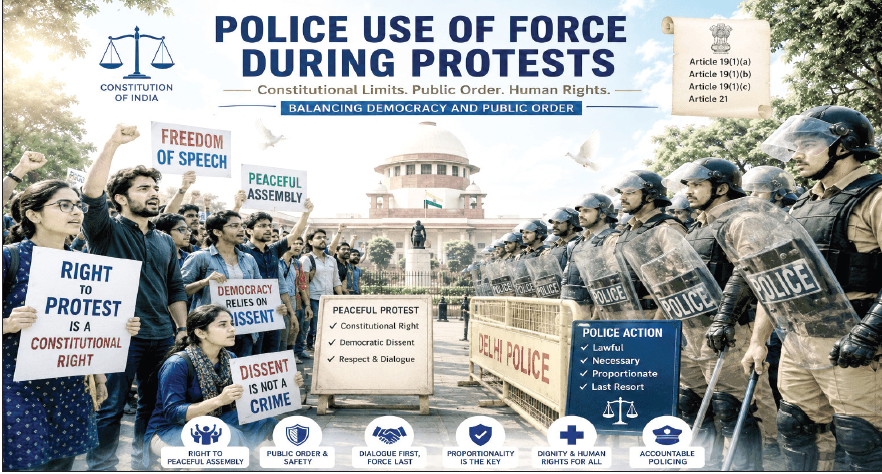
Police brutality against peaceful student marches, including lathi charges and pellet firing in Delhi, forced the High Court to order that no officer be deployed without uniform or badge. Even BJP veteran Murli Manohar Joshi spoke against the government’s handling, underscoring the seriousness of the crisis.
Surprise remains that all tools and weapons of governance exist in variety, yet compliance is absent. Laws are passed, reels are posted, but students continue to face cancelled exams, wasted years, and broken trust. If rulers dilute the matter by introducing bills without enforcement, it means the government is not serious.
Education is a moral responsibility of every Indian. Reviving it requires honesty, not cosmetic laws. The antagonism is not spontaneous—it is cultivated by repeated betrayal. Until fairness, transparency, and accountability are delivered, democracy itself stands accused.
From Paper Leaks to Political Failure
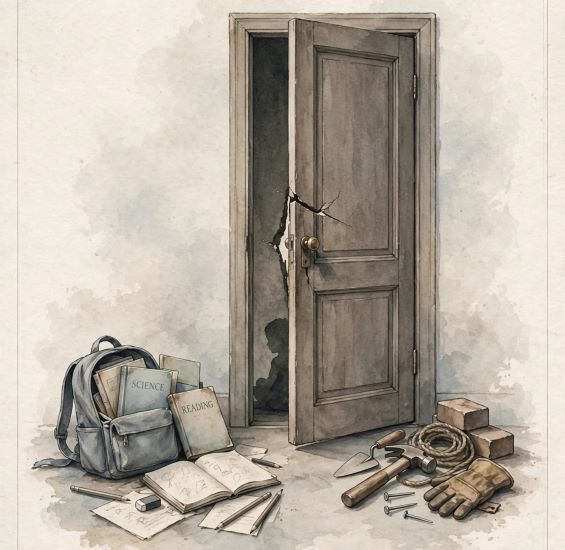
Apart from leaks and brutality, the deeper truth is that India’s education itself stands perverted. Politics refuses to admit failure, hiding behind conspiracy while conscience is absent. NCRB data shows that between 2014 and 2024, 1,15,850 students died by suicide, crushed not only by study pressure but by economic, social, and systemic burdens.
The government introduced four-year degree courses, yet jobs remain invisible. Each year, 20–22 lakh graduates emerge, with nearly 40% moving into postgraduate or research streams, but employment is scarce. Families deposit savings, only to grow poorer as courses stretch without return. Intermediate and secondary students face a market crisis where even survival work is scarce. Academic freedom has declined more steeply than in 1950, crossing the worst levels of the 1970s. Reforms exist on paper, but on the ground they fail. What Indian students inherit is not opportunity, but betrayal.
Now the time has come for conscience politics, not conspiracy politics. Students betrayed by leaks, insulted by careless words, and beaten by police demand honesty, not theatre. Laws without enforcement are deception; reels without justice are mockery.
Conscience politics means listening, acting, and restoring faith in education before democracy itself collapses.
Paper leak is a new industry opening new path for perpetual corruption destroying faith in constitutional scheme and ultimately a lethal blow to the democracy in India.
The story of India’s examinations is no longer about isolated leaks or stray scams. It is about a system collapsing under its own weight. From Uttarakhand’s Nakal Rodhi Kanun failing to prevent confirmed leaks, to Uttar Pradesh’s students duped by Telegram frauds, to the Chief Justice’s “cockroach” remark that ignited a nationwide movement — every thread points to betrayal.
Seventy exams across fifteen states, 1.7 crore futures disrupted, agencies punishing barely 2% of culprits, ministers and officers accused of corruption, police brutality against peaceful marches, and courts forced to remind the state that even uniforms matter. These are not accidents; they are symptoms of governance that has chosen convenience over accountability.
The Prime Minister’s reels and promises of new bills cannot erase the fact that in 2024 he claimed laws were already strong, yet in 2026 the leaks multiply. Cosmetic laws without enforcement are theatre, not reform. Students know this. Their antagonism is not spontaneous; it is cultivated by repeated betrayal.
Education is not a privilege; it is a moral responsibility. To dilute it with leaks, scams, and brutality is to hollow out democracy itself. If rulers cannot secure the integrity of exams, they cannot claim legitimacy. The truth is simple: students demand fairness, transparency, and accountability. Until that is delivered, the state stands accused, and democracy remains on trial.
Students suicide in India. See sharp 62% increase in 2015 onward

[[comment.comment_text]]