Parliament or the Streets: Where Should a Democracy Resolve Its Conflicts?

 2 months, 3 weeks ago
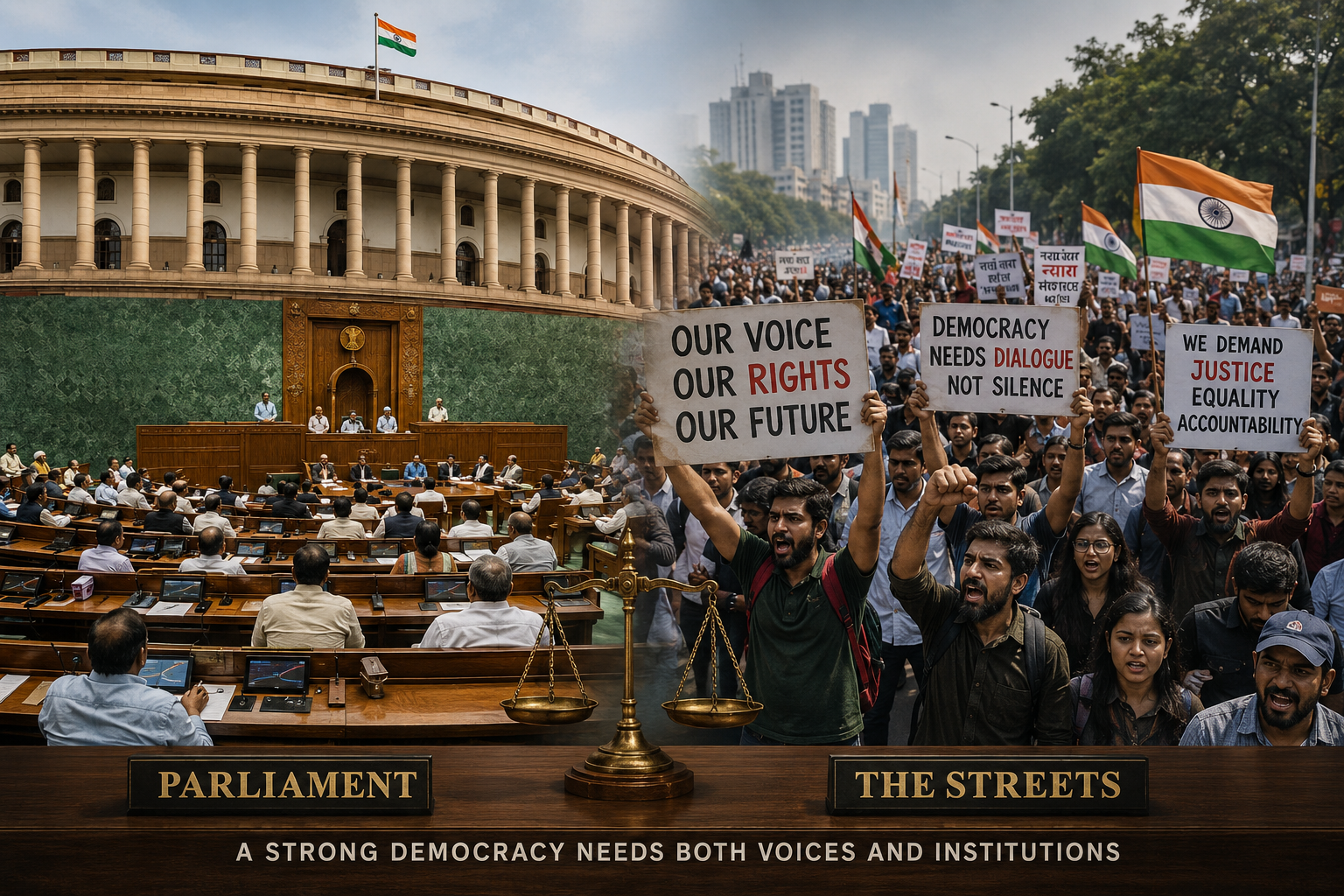
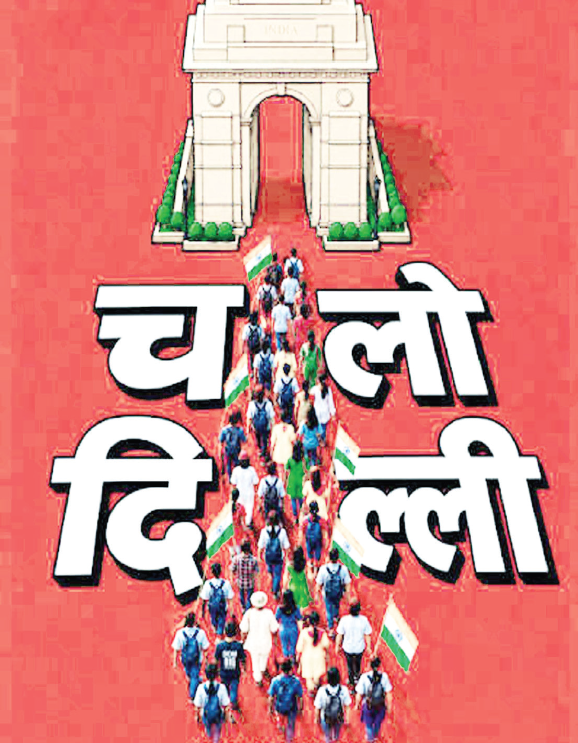
India's democracy has always rested on two complementary foundations: Parliament, where elected representatives debate, legislate and hold the executive accountable, and the streets, where citizens exercise their constitutional right to protest and remind governments that electoral mandates do not confer unlimited authority. Neither institution can function effectively without the other. Yet the growing tendency to resolve political disputes through prolonged street mobilisations rather than parliamentary deliberation has raised an important constitutional question: where should democratic conflicts ultimately be settled?
The answer is not as simple as choosing one over the other. Democracies require both institutional deliberation and public participation. However, when Parliament ceases to become the principal forum for resolving national issues, or when public protests evolve into substitutes for legislative processes, democratic governance begins to lose its balance.
The framers of the Constitution envisaged Parliament as the supreme legislative institution of the Republic. The Lok Sabha, directly elected by nearly 970 million registered voters, represents the will of the people, while the Rajya Sabha safeguards the interests of the states. Together, they are entrusted with making laws, approving taxation, scrutinising government policies, debating national issues and holding the executive accountable. Parliamentary committees examine legislation clause by clause, summon experts, analyse financial implications and recommend amendments before laws are enacted. Such institutional processes exist because policymaking in a country of more than 1.4 billion people demands careful scrutiny rather than emotional mobilisation.
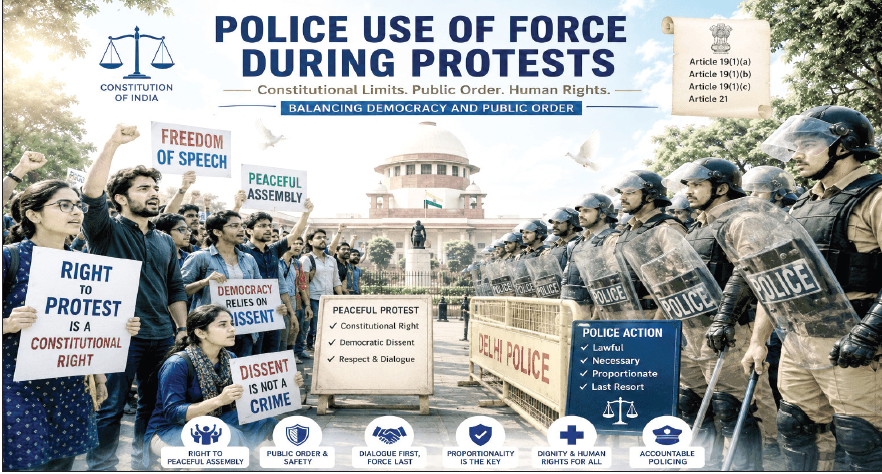
At the same time, the Constitution guarantees citizens the right to freedom of speech, peaceful assembly and association under Article 19. Public protests have therefore remained an integral part of India's democratic evolution. From Mahatma Gandhi's freedom movement and Jayaprakash Narayan's movement against the Emergency to the anti-corruption campaign of 2011, the Nirbhaya protests of 2012, the anti-CAA demonstrations, the farmers' agitation and the recent protests over examination irregularities, public mobilisation has often compelled governments to revisit policies and strengthen institutional accountability. Many landmark reforms owe their origins to public pressure rather than governmental initiative.
However, the character of public protest has changed significantly over the past decade. Digital media has transformed demonstrations from local events into nationwide campaigns within hours. Social media algorithms reward confrontation, outrage and symbolism far more than dialogue and compromise. Political parties increasingly recognise the electoral value of public mobilisation, making protests an extension of political strategy rather than solely instruments of civic participation. Consequently, movements that begin around specific policy concerns often become arenas for broader ideological and political contestation.
Simultaneously, Parliament itself has struggled to perform its constitutional role with maximum effectiveness. According to PRS Legislative Research, several parliamentary sessions during the past decade have witnessed repeated disruptions, resulting in substantial loss of productive working hours. Instead of sustained debate, sessions are frequently marked by adjournments, slogan-shouting and procedural deadlock. Parliamentary committees continue to perform valuable work, but their visibility is often overshadowed by political confrontation inside the House. When legislative institutions appear unable to address pressing public concerns, citizens naturally seek alternative avenues to make their voices heard.
Yet street protests, by their very nature, have inherent limitations. They are effective in highlighting grievances, attracting public attention and compelling governments to respond. They are far less effective in resolving complex policy questions involving competing constitutional, financial and administrative considerations. Issues such as taxation, defence procurement, trade agreements, environmental regulation, data protection, agricultural pricing or education reforms require expert consultation, fiscal analysis, legal drafting and institutional consensus. These cannot be adequately resolved through demonstrations, however large or emotionally charged they may be.
International experience reinforces this distinction. In the United Kingdom, large-scale demonstrations frequently accompany parliamentary debates on contentious legislation, but laws are ultimately shaped through committee scrutiny and legislative procedures. In the United States, movements such as the Civil Rights Movement and more recent campaigns have significantly influenced public opinion, yet policy changes continue to depend on congressional approval and judicial interpretation. France, known for its tradition of mass protests, still relies on parliamentary institutions to enact or amend legislation. Mature democracies recognise that while protests influence public discourse, legislatures remain the legitimate forums for final decision-making.
Overreliance on street mobilisation also carries long-term risks. Governments may become hesitant to undertake necessary but politically difficult reforms if every policy is expected to face immediate public resistance. Competing groups may conclude that larger demonstrations are more effective than institutional engagement, encouraging a politics of permanent agitation. Economic activity can also suffer. Extended protests affecting highways, ports, transport networks or commercial centres disrupt supply chains, discourage investment and impose significant costs on ordinary citizens. The World Bank and several international financial institutions have consistently emphasised that political stability and institutional predictability are essential for sustaining long-term economic growth and attracting investment.
At the same time, governments cannot dismiss public protests merely because they occur outside Parliament. Demonstrations often emerge when institutional mechanisms fail to address genuine grievances. Greater transparency in policymaking, wider public consultation before introducing major legislation, stronger parliamentary committee processes and timely communication can significantly reduce the likelihood of prolonged confrontations. Laws affecting farmers, students, workers or businesses are more likely to gain public acceptance when stakeholders are meaningfully consulted before decisions are finalised rather than after protests erupt.
The Opposition also carries a constitutional responsibility. Robust criticism of the government strengthens democracy, and opposition parties are fully entitled to mobilise public opinion. However, parliamentary engagement should remain their primary instrument of accountability. If every disagreement shifts immediately from Parliament to the streets, legislative institutions gradually lose their authority, weakening the very democratic framework that protects political dissent.
Equally important is the responsibility of protest movements themselves. Peaceful assembly enjoys constitutional protection, but violence, intimidation, damage to public property, disruption of essential services or harassment of journalists undermine the legitimacy of otherwise genuine causes. Public sympathy depends not only on the justice of demands but also on the discipline and conduct of those advancing them. History remembers successful democratic movements not because they generated the loudest slogans but because they maintained moral credibility, organisational discipline and clarity of purpose.
India does not face a choice between Parliament and public protest. Its democracy requires both to function effectively within their respective constitutional roles. The streets should continue to serve as the nation's conscience, highlighting grievances, mobilising opinion and reminding governments of public expectations. Parliament, however, must remain the institution where those grievances are debated, negotiated and converted into law. Public pressure may initiate reform, but constitutional legitimacy comes only through legislative deliberation.
Ultimately, the strength of a democracy lies not in the absence of protest nor in the uninterrupted functioning of Parliament alone. It lies in the ability of democratic institutions to transform public dissent into constitutional solutions. When citizens can protest freely, governments respond responsibly, and Parliament performs its deliberative role with seriousness and accountability, democracy becomes stronger. But when legislative debate gives way to perpetual confrontation on the streets, or when public movements seek to replace rather than influence constitutional institutions, both democracy and governance suffer.
India's future as the world's largest democracy will therefore depend not on choosing between Parliament and protest, but on restoring the delicate constitutional balance between the two. The streets can raise the nation's questions; only Parliament can provide answers that carry the force of law.






[[comment.comment_text]]