Navigating Peace in the Northeast: Lessons from the UNLF Peace Deal

 2 years, 10 months ago
EW News Desk
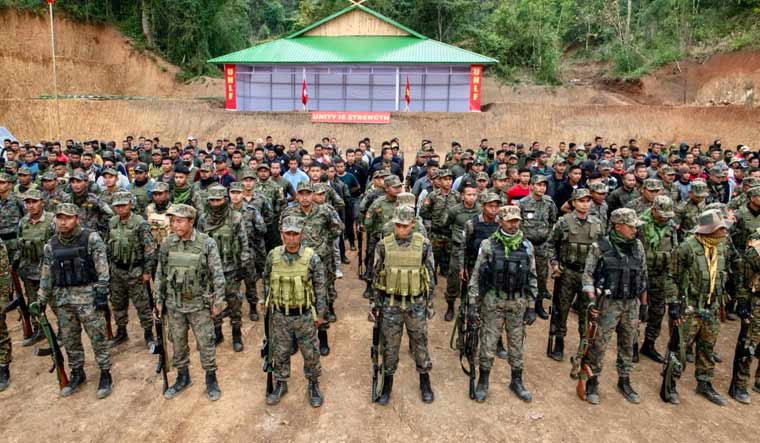
In stride towards fostering peace in the strife-torn Northeast, the recent peace deal signed by the Centre with the United National Liberation Front (UNLF) marks a commendable development. As the oldest insurgent group in the state, the UNLF has held substantial influence in Meitei society, making this agreement a crucial step in the ongoing efforts to quell ethnic violence in the region.
The peace deal with the UNLF is part of the broader peace-building strategy employed by the Centre in the Northeast since the late 1980s. Rather than perpetuating a war of attrition, the government has consistently pursued dialogue with militant groups, aiming for reconciliation and lasting peace. This approach has borne fruit in the past, with the end of insurgency in Mizoram in 1986 and the ceasefire agreement with the National Socialist Council of Nagaland (NSCN) Isak Swu-Muivah faction in 1997, laying the foundation for a fragile peace in Nagaland. The 2015 framework agreement has further solidified this peace, though a complete resolution to the insurgency remains elusive.
The success of this approach is evident in the multiple peace deals brokered with groups like ULFA, Bodo, and Dimasa in Assam. These agreements not only brought calm to the troubled state but also allowed the Centre to withdraw the Armed Forces (Special Powers) Act from significant parts of the region. The positive outcomes underscore the importance of dialogue and engagement in resolving complex conflicts.
However, the Meitei insurgency presents its own set of challenges, with the UNLF exhibiting internal divisions, the extent of which remains uncertain. The intricate nature of militancy in the Northeast demands careful negotiation, requiring the Centre to engage with various factional leaders to achieve a comprehensive and lasting peace.
It is noteworthy that Delhi's improved relations with Myanmar have played a role in pressuring insurgent groups in the region. This diplomatic success has created an environment conducive to peace talks and has the potential to significantly impact the trajectory of the insurgency.
Reconciliation is undeniably a long and arduous process, but it is imperative for both the government and civil society to actively work towards convincing those involved to bury the past and move forward. The experiences of Mizoram and Nagaland demonstrate that sustainable peace is achievable through persistent dialogue and engagement.
As the government takes commendable steps in resolving conflicts in the Northeast, it is essential to recognize that each insurgent group and region poses unique challenges. The success of the UNLF peace deal serves as a beacon of hope and a reminder that the path to peace requires unwavering commitment, understanding, and a genuine willingness to address the root causes of conflict.
In conclusion, the recent peace deal with the UNLF is a positive development, showcasing the effectiveness of diplomatic efforts in bringing an end to long-standing conflicts. It is a testament to the power of dialogue and engagement in building lasting peace, setting a precedent for future negotiations in the complex landscape of the Northeast.










[[comment.comment_text]]