From Promises to Paradoxes

 1 year, 3 months ago
In a nation where the weight of a promise often collapses under the burden of power, the latest cracks in India’s healthcare and education sectors do more than stir debate—they demand moral reckoning. A sitting legislator from Rajasthan stands arrested in a case involving expired medicines repackaged and pushed into the veins of the unsuspecting. Simultaneously, from Bihar to Uttarakhand, the country watches in dismay as medical colleges—allegedly devoid of proper infrastructure or academic seriousness—receive licenses through bribes, backdoors, and blessings from powerful hands. These aren’t isolated accidents. They are the architecture of opportunism.
As Shakespeare so hauntingly wrote:
"O Opportunity, thy guilt is great:
'Tis thou that execut'st the traitor's treason;
Thou set'st the wolf where he the lamb may get..."
The poem, once an abstract study in literature, now reads like the preamble to an FIR. It is opportunity—unchecked, unmoored—that allows lawmakers to become lawbreakers. It is opportunity, wrapped in party colors and shielded by political convenience, that enables the rich to buy universities and the connected to sell poison disguised as medicine.
What became of the Prime Minister’s resounding vow to make treatment “cheaper than ever”? What of the generic medicine revolution that was to level the playing field for the poor? When the very government that pledged to cleanse the system is implicated in its contamination, what remains of governance but headlines and hashtags? How does a ruling establishment explain away this contradiction—that its own members are involved in the very crimes it vowed to eradicate?
If health and education were once described as the “twin pillars of a welfare state,” then today’s reality resembles twin towers of corruption. And behind the smoke rises an unsettling truth: in India, the poorer citizen stands in queue for months for a college seat or a life-saving drug, while the powerful cut lines, distort systems, and then claim moral high ground by quoting reform. What is this, if not political treason against the very soul of democracy?
The leadership may speak of sabka saath and vikas in rally after rally—but when members of its own ranks appear in charge sheets and confession rooms, is it not time for those in power to ask themselves: Has “opportunity” become our deadliest sin? Or worse—has it become policy under another name?
When a Pill Becomes Poison
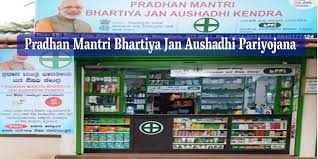
In 2014, the Prime Minister promised a revolution in Indian healthcare—affordable medicines, accessible hospitals, and a crackdown on corruption in the pharmaceutical industry. Flagship schemes like Jan Aushadhi Yojana were launched to provide generic medicines at 50–90% lower prices, with over 10,000 Jan Aushadhi Kendras reportedly established across the country. But what happens when the medicine meant to heal becomes a threat to life?
The recent conviction of a Bihar minister in a fake medicine supply case has thrown the healthcare promise into sharp disrepute. His company was found guilty of distributing substandard Ciprofloxacin tablets to government hospitals in Rajasthan—a drug commonly prescribed for infections. This is not an isolated incident; it’s a symptom of deep regulatory decay and criminal negligence.
According to the All India Organisation of Chemists and Druggists (AIOCD), counterfeit medicines have surged by 50% in retail markets since the COVID-19 pandemic. The Central Drugs Standard Control Organisation (CDSCO) flagged 63 batches of common drugs as substandard in just the first quarter of 2025. India now ranks as the fourth-largest market for counterfeit medicines globally, with WHO estimates suggesting 10–30% of drugs in developing countries are fake.
What’s even more alarming is the silent collapse of enforcement. The CDSCO remains woefully understaffed, and state drug controllers often act only after major tragedies occur. The CBI’s recent probe into the National Medical Commission revealed bribes paid to approve colleges with no real faculty or functioning campuses—turning medical education into a pipeline for quackery.
“If the medicine that’s supposed to heal you is fake, then the system isn’t broken—it’s complicit,” said Dr. Gagandeep Kang, virologist.
Ironically, a government that vowed to democratize healthcare through affordability is now presiding over a system where cheap medicine can literally cost your life. The Jan Aushadhi Kendras, meant to be symbols of trust, are increasingly seen as supply-starved outlets riddled with quality concerns.
The deeper malaise is that of priorities. Public health has become a talking point, not a working policy. The healthcare promises that once stirred public imagination have now receded into bureaucratic inertia and political shielding. When ministers indicted for health crimes continue in office, accountability becomes a joke, and trust becomes irreparable collateral.
Degrees for Donations: The Parallel Economy of Education
Education was always a flagship promise of the current government, with manifestos hailing it as the foundation of a ‘New India.’ The National Education Policy (NEP) 2020 was positioned as a landmark reform aimed at creating global standards in Indian institutions, bringing equity, and improving access. But far from a renaissance, we are witnessing the commodification of degrees and the collapse of credibility.
According to the University Grants Commission, 21 fake universities are currently operating in India—eight of them in Delhi alone. These institutions run without any accreditation, offering degrees that have no legal validity. They often operate under the patronage of politically connected businessmen and donors, using education as a front for financial profiteering.
The problem isn't new, but its political protection has grown. In the last 10 years, only 12 such universities have been shut down, despite repeated UGC warnings. Why? Because enforcement is toothless. States either delay action or turn a blind eye when the operators are politically influential.
Meanwhile, genuine students and scholars pay the price. Consider the Bihar State University Service Commission, which took five years to appoint Assistant Professors despite existing vacancies. In such an environment, fake degrees not only dilute academic standards but also devalue legitimate qualifications.
“This is not just about fake degrees—it’s about a fake meritocracy,” said Prof. Apoorvanand of Delhi University. “When political donors run universities, education becomes a business, not a right.”
Compare this to global benchmarks:
Finland funds all its universities publicly with strong regulation and oversight.
Germany offers free and transparent higher education, with no private profiteering.
India, by contrast, is caught in a spiral of privatization, politicization, and paralysis.
The NEP 2020, though visionary on paper, suffers from patchy implementation, unclear funding, and resistance from states. Its goals of digital transformation and mother-tongue-based instruction remain largely aspirational. Furthermore, the push for centralized exams like CUET has caused widespread confusion, leaving students anxious and universities unprepared.
Education was meant to be the engine of mobility. But in today’s India, it is increasingly a luxury for the rich, a scam for the unscrupulous, and a waiting game for the meritorious.
Sankalp vs. Silence
For a government that came to power on the strength of its promises, the silence on these systemic failures is deafening. Manifestos spoke of building AIIMS in every region, digitizing education, and eradicating lifestyle diseases. But today, we see rising infant mortality in rural districts, chronic stock-outs in health centres, and record delays in education recruitment.
Despite pledges to double medical seats, India still has 1 doctor for every 1,511 people, far below the WHO-recommended ratio of 1:1,000. Many private medical colleges are understaffed, overpriced, and poorly regulated, churning out graduates with inadequate training. Meanwhile, those aspiring to teach or serve in public health roles remain stuck in bureaucratic limbo.
Even in flagship health missions like Ayushman Bharat, reports suggest that many hospitals empanelled under the scheme exist only on paper, with fake patients billed to meet targets. Instead of rooting out these scams, the administration seems more invested in optics than outcomes.
“This government has turned every essential service into a slogan,” said Rahul Gandhi. “But slogans don’t save lives or build futures.”
This isn’t just opposition rhetoric. Even allies have raised eyebrows over the centralization of education policy and the opaque approval of universities. Meanwhile, the youth of India face the highest unemployment in decades, despite holding valid degrees.
When promises remain unfulfilled, they don’t just become disappointments—they become betrayals. When the state becomes complicit in fraud, it ceases to be a protector and becomes a perpetrator.
When the State Becomes the Scam
India don’t need more slogans. They need jobs, trusted degrees, and real medicines. They need a healthcare system where affordability doesn’t mean fake pills, and an education system where merit matters more than money.
When ministers remain in power despite criminal convictions, and when fake institutions are rewarded while real scholars wait years for employment, it signals a democratic decay. Accountability has become a casualty in a system where public trust is expendable and political shielding is the norm.
This crisis isn’t about one party alone. It’s about a rotting architecture of governance, where campaign promises are weaponized for elections and then quietly buried. Until there is systemic reform—backed by transparency, independent regulation, and citizen vigilance—every pledge will remain just another broken promise.
And every promise, a paradox. …




[[comment.comment_text]]