Ancestral Rights to Forests, Yet Justice Remains Elusive

 an hour ago
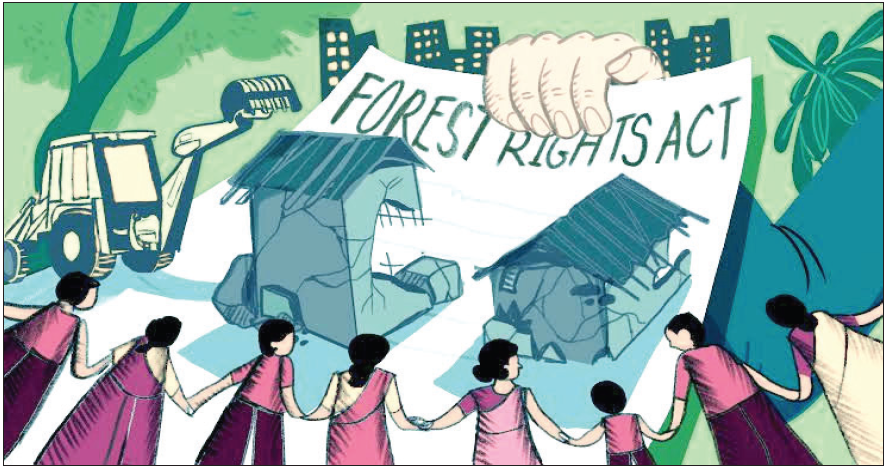
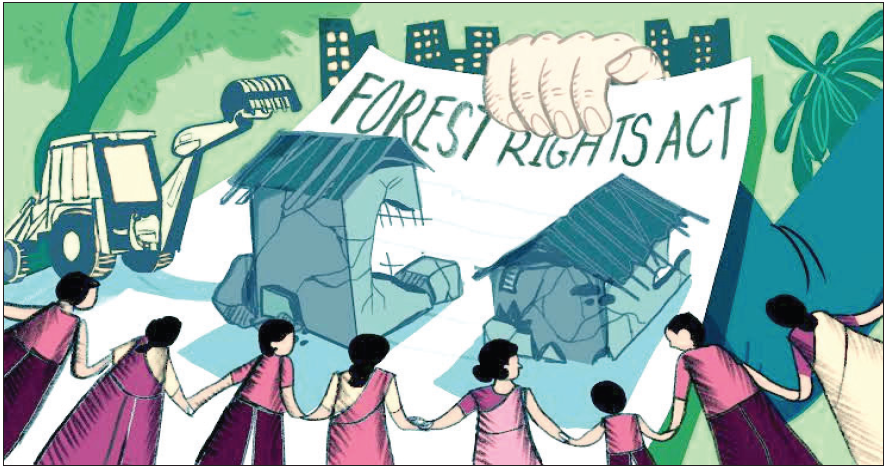
The communities that have lived in forests for generations, protected their ecosystems and built their cultures around them are still being asked to prove their rights over the land they have traditionally inhabited. This is a profound contradiction in a country where forests are celebrated as national assets, yet their traditional custodians struggle to secure legal recognition of their homes and livelihoods. Those who have protected forests for centuries remain vulnerable to being labelled encroachers. The Forest Rights Act, 2006, was enacted to correct this historical injustice. Nearly two decades later, a fundamental question persists: have forest-dwelling communities received their rightful entitlements, or does justice remain trapped in government files and unresolved claims?
The second regional review conference on the implementation of the Forest Rights Act, held in Kolkata on October 9, 2026, brought this question back into focus. Organised under the initiative of the Union Ministry of Tribal Affairs, the conference brought together officials from West Bengal, Assam, Tripura, Jharkhand, Odisha, Bihar, Madhya Pradesh and Chhattisgarh. Andhra Pradesh was invited to share its experience of digitising forest rights titles, incorporating them into official records and connecting beneficiaries with livelihood schemes.
The meeting followed the first regional review conference, held in Bengaluru in September. Its purpose was to identify obstacles to settling pending claims and develop practical measures to ensure that legally recognised rights translate into tangible benefits. Yet the success of such consultations cannot be measured by presentations or administrative commitments. It must be judged by whether they improve the lives of forest-dependent communities.
Official figures reveal the scale of the challenge.
According to information provided by the Ministry of Tribal Affairs to Parliament, India had received 5,401,561 forest rights claims as of June 30, 2026. Titles had been distributed against 2,542,359 claims, 1,813,232 claims had been rejected and 1,045,970 remained pending. These figures were based on monthly progress reports submitted by states and Union Territories.
The account of the Kolkata conference referred to the position as of August 31 in rounded terms: more than 5.4 million claims received, approximately 2.5 million titles issued, around 1.1 million claims pending and more than 1.8 million rejected. The June and August figures refer to different reporting dates and should not be treated as identical. Nevertheless, the larger picture is clear: millions of claims have been processed, but substantial questions remain about the fairness, completeness and practical implementation of the process.
A claim disposed of is not necessarily a citizen served. Approval may result in a title, but rejection can leave a family without recognition of rights exercised for generations. Were decisions lawful and transparent? Were applicants informed of the reasons for rejection? Did they receive a meaningful opportunity for appeal or review?
Administrative disposal rates alone cannot establish that historical injustice has been corrected. The Forest Rights Act recognises the rights of Scheduled Tribes and other traditional forest dwellers. It acknowledges that their customary relationship with forests was inadequately recognised under earlier governance arrangements. For too long, forest communities were frequently treated as encroachers rather than partners in conservation. The law sought to change this by recognising eligible individual and community rights.
Implementation, however, is complicated by inadequate documentation, conflicting forest and revenue records, difficult terrain and limited administrative support. Families in remote settlements may not possess conventional documents establishing longstanding occupation or customary use. Decisions based exclusively on paperwork, without adequately considering legally admissible evidence and local circumstances, risk defeating the law's purpose.
This does not mean that every claim should automatically be accepted. Eligibility must be verified and statutory requirements respected. But genuine claimants should not lose their rights simply because they lack documents that were never available to them. Rejections must be reasoned and transparent, with access to remedies provided under the law. Governments must also establish clear timelines and identify the authorities responsible for delays.
The debate often concentrates on individual titles, overlooking the collective relationship between villages and surrounding forests. Individual forest rights recognise eligible families' rights over forest land under the law. Community forest rights recognise customary rights exercised by communities, including, where applicable, access to and use of minor forest produce, grazing areas, water bodies and other traditional resources.
Community Forest Resource Rights, commonly known as CFR rights, are related but distinct. They can enable Gram Sabhas to protect, regenerate, conserve and manage forest resources traditionally used or protected by their communities. These categories should not be conflated: recognition of an individual title does not automatically establish collective rights over a village's customary forest resources.
According to information presented during the regional review process, 19,845 Community Forest Resource Rights had been recognised nationally as of June 30, 2026. This figure relates specifically to CFR rights, not to all categories of community forest rights. It nevertheless raises an important question: how many communities can exercise these rights meaningfully, and how many Gram Sabhas have the institutional support required to manage their forests?
Forest-dependent livelihoods are linked to minor forest produce, grazing, fuelwood, medicinal plants and water sources. Community rights can strengthen local livelihoods while allowing traditional knowledge to contribute to conservation. Gram Sabhas must not be reduced to bodies that merely prepare applications or certify documents. They need meaningful participation in decisions concerning forest management and resource use.
This is central to the land-rights movement associated with Gandhian activist P. V. Rajagopal, founder of Ekta Parishad. Rajagopal has consistently linked access to land and forests with the livelihood security of marginalised communities. In a 2007 interview on forest legislation, he argued that tribal claims must be settled if forests are to be protected. His position challenges the assumption that restricting the rights of forest dwellers is necessarily the best way to conserve forests.
Rajagopal has also drawn attention to the institutional bias that can arise when sections of the forest bureaucracy view Adivasis primarily as agents of forest destruction. His broader approach places land, water, forests and livelihood resources within a framework of social justice, community participation and non-violent democratic action.
The implication for the Forest Rights Act is clear: conservation cannot be sustainable if people whose lives are inseparable from forests remain insecure about their rights.
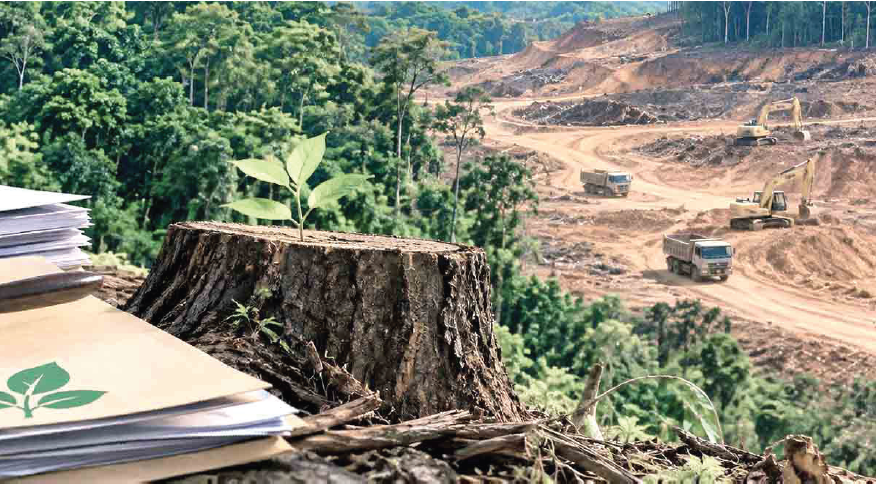
Recognising community rights does not mean disregarding ecological protection. Nor should conservation become a pretext for excluding traditional inhabitants from decisions affecting their lives. The objective must be to combine ecological responsibility with secure rights, accountable community governance and sustainable livelihoods. Communities must be recognised not merely as beneficiaries of government schemes, but as participants with knowledge, responsibilities and a legitimate stake in the future of forests.
The Kolkata conference's emphasis on digitising titles and incorporating them into official records is therefore important. Issuing a title is only the beginning. The recognised right must be reflected in relevant records, and the family concerned must be able to use it in practice. Inconsistent entries across forest and revenue departments can create difficulties even after a claim has been approved.
Digitisation can improve record-keeping, transparency and monitoring. But technology cannot correct an erroneous decision merely by reproducing it electronically. Claimants need clear information about the status of their applications, the reasons for decisions and the procedures available to correct mistakes.
Local assistance must also be available to people who lack internet access or digital literacy.
Bihar presents a particularly important case for scrutiny. According to the Ministry of Tribal Affairs' parliamentary information covering June 30, 2026, the state had received 4,696 forest rights claims.
Of these, 191 had resulted in titles, 4,496 had been rejected and nine remained pending. Significantly, no community forest rights claim was recorded among the claims reported for Bihar; all 191 titles issued were in the individual rights category.
The absence of recorded community claims warrants investigation. Did potentially eligible communities receive adequate information about the law? Were Gram Sabhas assisted in preparing applications and gathering evidence? Were villages dependent on customary forest resources identified? Were the forest, revenue and tribal welfare departments coordinating effectively?
The absence of claims cannot, by itself, establish that no eligible communities exist. It may instead point to gaps in awareness, identification, application support or administration. Bihar needs a district-level assessment alongside a transparent review of the 4,496 rejected claims. Authorities should establish why applications failed, whether applicants were informed of the reasons and whether prescribed avenues for review were accessible.
National reporting must similarly distinguish individual forest rights, community forest rights and Community Forest Resource Rights. States should regularly publish category-wise information on claims received, titles issued, rejections, pending cases and the incorporation of recognised rights into official records. Such reporting would help identify administrative bottlenecks and hold responsible authorities accountable. Time-bound decisions and accessible review mechanisms are essential if the process is to command public confidence.
The Kolkata conference will matter only if its priorities lead to timely decisions on pending claims, fair scrutiny of rejections, effective recognition of community rights and genuine participation by Gram Sabhas in forest governance. Implementation must move beyond counting applications towards assessing whether recognised rights are secure and usable.
Ultimately, the Forest Rights Act is not merely an administrative exercise. It is a democratic commitment to communities whose traditional relationship with forests was historically overlooked. If those who protect forests continue to struggle for recognition, the credibility of conservation policies and development promises will remain in question.
The right to forests is not a government favour; it is a right recognised by law. Keeping that right indefinitely out of reach prolongs the very injustice the legislation was intended to remedy. The purpose of the Act is not simply to distribute titles, but to enable communities with generations of experience and knowledge to protect their livelihoods, live with dignity and participate in decisions about their future. Legal recognition is the beginning. Ensuring that justice reaches the ground is the real test.
The author, a senior journalist of Bihar, is a known commentator on governance, development, and diversity issues.)








[[comment.comment_text]]