The Eternal Echoes of Muharram: A Tapestry of Grief, Sacrifice, and Literary Brilliance

 1 year, 3 months ago
The month of Muharram, particularly the day of Ashura, holds a profound place in Islamic culture, especially within Shia communities. It marks the martyrdom of Imam Hussein, the grandson of Prophet Muhammad, in the tragic Battle of Karbala in 680 CE.
This one event, steeped in themes of sacrifice, justice, and resistance against tyranny, has inspired a rich body of literature and artistic expression that continues to resonate across centuries. From elegiac poetry to prose narratives, the commemoration of Muharram has woven a vibrant tapestry of cultural and literary heritage, particularly in Urdu literature, where poets like Mir Anis and Mirza Dabeer have immortalized the tragedy of Karbala. This article explores the profound impact of Muharram on Islamic literature, delving into its poetic forms, cultural significance, and enduring legacy.
The Heartbeat of Muharram: Elegiac Poetry
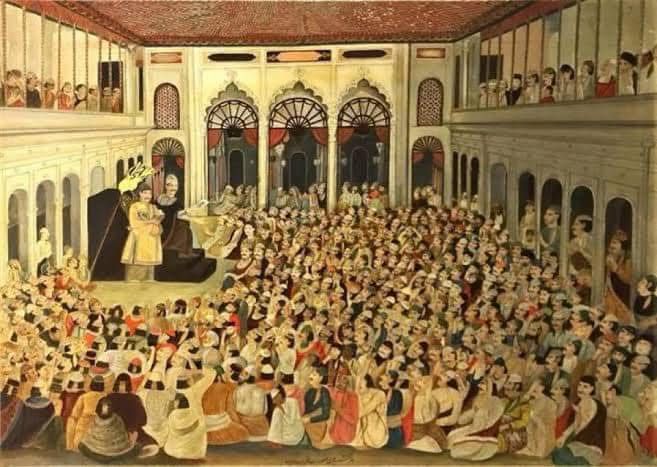
Muharram is synonymous with mourning, and its literary expressions are most vividly captured in elegiac poetry. Forms such as marsiya, noha, rubai, musaddas, soz, and salam serve as conduits for collective grief and reverence for Imam Hussein and his companions. These poetic forms, recited during mourning gatherings known as majalis or processions, are not mere words but vessels of emotion, history, and spirituality.
The marsiya, derived from the Arabic word risa (lamentation), is the cornerstone of Muharram’s literary tradition. A poem of mourning, it recounts the tragic events of Karbala, where Imam Hussein and his small band of supporters faced the overwhelming forces of Yazid’s army. Structured in six-line units with an AA, AA, BB rhyme scheme, the marsiya follows a sequence that vividly paints the prelude to the battle, the bravery of its heroes, and the sorrow of their martyrdom. As Mir Anis, one of the greatest marsiya poets, wrote in one of his evocative pieces:
“The desert weeps, the skies lament, for Hussein’s blood was spent, In Karbala, where truth stood firm, though hearts and hopes were rent.”
This couplet encapsulates the emotional weight of the marsiya, blending vivid imagery with themes of sacrifice and resistance.
Similarly, nohas—shorter, more lyrical elegies—are recited with rhythmic and melodic fervor during Muharram processions. They express raw grief and allegiance to Imam Hussein. For instance, the popular noha “Ameer-i-lashkar-i-Husain” by Maulana Hasan Imdad, first recited in 1973, captures the anguish of Karbala’s aftermath, resonating deeply with mourners.
Likewise, soz (lamentation poems) and salam (verses of peace) add layers of devotion and reflection, with sozkhwani—the art of reciting soz—being a cherished tradition in places like Lucknow, India.
Masters of Marsiya: Mir Anis and Mirza Dabeer
The marsiya reached its zenith in the 19th century through the works of Mir Anis (1800–1874) and Mirza Salamat Ali Dabeer (1803–1875), two titans of Urdu literature whose rivalry is legendary yet marked by mutual respect. Their marsiyas are not just poems but epic narratives that transport listeners to the plains of Karbala, evoking tears and awe.
Mir Anis, celebrated for his lyrical beauty and emotional depth, crafted marsiyas that painted vivid scenes of Karbala’s tragedy. His verses, rich with imagery, captured the courage of Imam Hussein and the sorrow of his family. In one of his famous marsiyas, Anis describes the moment of martyrdom:
“The sword descends, the heavens cry, as Hussein’s soul ascends on high, His sacrifice, a beacon bright, for justice shines through darkest night.”
Anis’s ability to blend poetic finesse with spiritual resonance made his marsiyas a staple of Muharram gatherings. Beyond marsiyas, Anis also enriched the rubai, a four-line poem, by infusing it with Karbala’s moral and tragic themes, expanding its scope to reflect both personal and universal struggles.
Mirza Dabeer, Anis’s contemporary, was equally masterful. His marsiyas, such as “Jab Mehfil-e-Yazid Mein Dakhil Haram Hue,” depict the harrowing aftermath of Karbala, where the survivors faced Yazid’s court. Another poignant work, set to Raag Tilak Kamod, portrays Bano’s grief over her son Ali Akbar’s lifeless body, a scene that pierces the heart of listeners.
Dabeer’s marsiyas are noted for their narrative clarity and emotional intensity, making them integral to majalis recitations. As scholar Dr. Syed Taqi Abedi notes, “Dabeer’s marsiyas are like a mirror reflecting the soul of Karbala—grief, dignity, and defiance in every line.”
The Musaddas: A Broader Canvas
While the marsiya focuses on Karbala’s tragedy, the musaddas—a six-line stanza form with an AAAA BB rhyme scheme—extends its themes to broader social and spiritual reflections. Popularized by poets like Anis and Dabeer, the musaddas gained prominence in the 19th century. A landmark work in this form is Altaf Hussain Hali’s Musaddas-e-Hali (also known as Musaddas-e Madd-o-Jazr-e Islam), which transcends the elegiac to address the decline of the Muslim community and the need for reform. Hali’s work, though not directly tied to Karbala, draws on Muharram’s spirit of introspection, urging Muslims to reflect on their values and unity. As Hali writes:
“Awake, O nation, from your slumber deep, The tides of time have secrets we must keep.”
This musaddas remains a cornerstone of Urdu literature, illustrating how Muharram’s themes of sacrifice and justice inspire broader societal commentary.
Prose Narratives: Retelling Karbala
Beyond poetry, Muharram has also inspired prose narratives that retell the events of Karbala through historical accounts and fictionalized stories. These works explore themes of justice, martyrdom, and resistance, offering readers a deeper understanding of Imam Hussein’s stand against oppression. For instance, historical texts like Maqtal al-Husayn provide detailed accounts of the battle, while modern prose works in Urdu and Persian weave Karbala’s lessons into contemporary contexts. These narratives, often read during majalis, reinforce the timeless relevance of Hussein’s sacrifice, as noted by historian Dr. Ali Raza: “Karbala’s story, whether in poetry or prose, is a call to stand against tyranny, no matter the odds.”
Cultural and Spiritual Significance
The literary output of Muharram extends beyond aesthetics to embody a profound cultural and spiritual significance. In Shia communities, particularly in regions like India, Pakistan, and Iran, the recitation of marsiyas, nohas, and soz during majalis is an act of piety and communal bonding. These gatherings foster a sense of unity and shared purpose, as mourners reflect on Imam Hussein’s sacrifice and its implications for justice and faith.
The greeting of salam during Muharram takes on a deeper meaning, symbolizing peace, respect, and solidarity. It is both a tribute to the martyrs of Karbala and a call for unity among Muslims. As Maulana Syed Zafar Abbas, a prominent Shia scholar, explains, “Saying salam in Muharram is not just a greeting; it is a pledge to uphold the values of Karbala—peace in the face of oppression, unity in the face of division.”
A Global Legacy
The commemoration of Muharram has produced a vast and diverse body of literature in Persian, Arabic, Urdu, and regional Indian languages, enriching the cultural fabric of communities worldwide. From the intricate marsiyas of Lucknow to the soulful nohas of Karachi, these works transcend borders, uniting Muslims in shared grief and reverence. The legacy of poets like Mir Anis, Mirza Dabeer, and Altaf Hussain Hali continues to inspire contemporary writers and artists, ensuring that the story of Karbala remains a living tradition.
In conclusion, Muharram is more than a period of mourning; it is a celebration of resilience, faith, and literary excellence. Through marsiyas, nohas, musaddas, and prose, the tragedy of Karbala has been immortalized, offering lessons in courage and justice that resonate across generations. As the desert sands of Karbala continue to echo in the verses of poets and the hearts of believers, Muharram remains a testament to the enduring power of literature to heal, inspire, and unite.
(Mr. Naqvi is a former member of the history faculty at St. Xavier’s College, Mumbai.)


[[comment.comment_text]]