The Gathering Storm over Delhi’s Sky: A Capital Encaged on the Eve of a Democratic Reckoning

 an hour ago
As protests over voter deletion and Election Commission autonomy reach a boiling point, New Delhi transforms into a fortified garrison town ahead of the October 10 mass mobilization.
An eerie, suffocating silence has enveloped the national capital. Visually, New Delhi resembles less the vibrant political heart of the world’s largest democracy and more a fortified garrison town. Multi-layered iron barricades, concrete boulders, concertina wire, and deep anti-riot trenches have severed major traffic arteries. The sky over Delhi hangs heavy, mirroring the political tempest that has been building across the length and breadth of India over the past week.
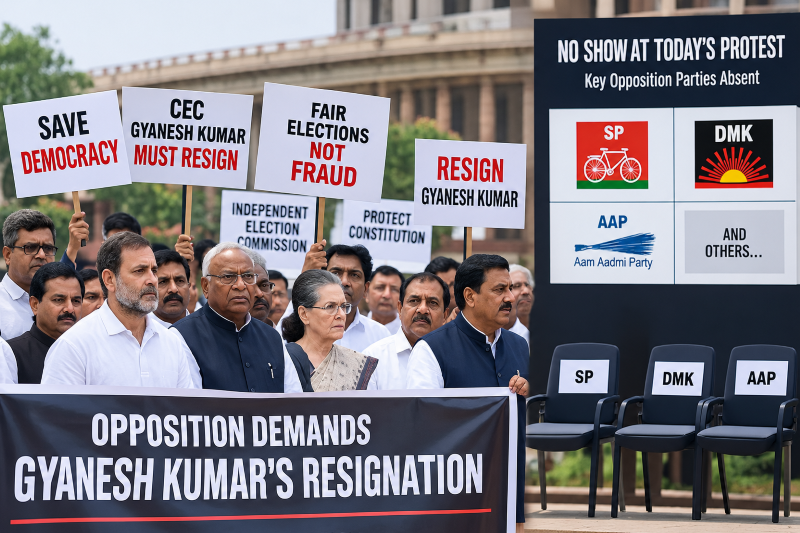
Ever since October 2, 2026, the country has been rocked by relentless, widespread protests demanding the immediate resignation of Chief Election Commissioner (CEC) Gyanesh Kumar. At the core of this mass public fury is the demand for the complete scrapping of the highly controversial Special Intensive Revision (SIR) of electoral rolls—an exercise critics allege has systematically disenfranchised millions of eligible voters—alongside a non-negotiable demand for a return to physical paper ballots.
Now, all eyes are fixed on October 10, 2026. The "Dilli Chalo" call issued by the Cockroach Janta Party (CJP) alongside a broad array of civil society groups, including the All India Students' Association (AISA) and other Left organizations, has set the stage for an unprecedented mass mobilization. Concurrently, the Indian National Congress (INC) and its affiliates—the Indian Youth Congress (IYC) and National Students' Union of India (NSUI)—spearheaded by Leader of the Opposition (LoP) Rahul Gandhi, alongside top leaders of the INDIA bloc, have sustained a high-voltage agitation. As the clock ticks down, the nation watches with bated breath, caught between the determination of citizens to reclaim their voting rights and an iron-fisted state apparatus preparing for a massive crackdown.
The Genesis of Discontent: SIR Rollout and Form 6 Controversies
The current political firestorm stems from the implementation of the Special Intensive Revision (SIR). Intended as a periodic mechanism to purge duplicate or invalid entries from voter databases, independent watchdogs and digital media outlets have highlighted severe structural anomalies in its execution.
Reports indicate that the rushed, opaque rollout of the SIR has resulted in voter roll deletions on an unprecedented scale, with opposition leaders alleging that over 130 million citizens have been abruptly stripped of their franchise. Booth Level Officers (BLOs) have reportedly deleted voters categorized as "absent" without following standard verification protocols or issuing prior notices, disproportionately impacting migrant workers, students, and marginalized communities.
Compounding this trust deficit are aggressive structural changes made to Form 6—the mandatory application for new voter registration. Critics contend these procedural shifts have added layers of bureaucratic friction, severely obstructing genuine citizens from enrolling while leaving the system vulnerable to algorithmic errors or manipulation.
A flurry of writ petitions has flooded the Supreme Court and various High Courts, challenging the constitutional validity of the SIR, the unilateral modifications to Form 6, and the overall functioning of the Election Commission of India (ECI). Petitioners argue that the core foundation of free and fair elections has been compromised, turning an administrative tool into a mechanism of exclusion.
Institutional Fractures: Scrutiny Mounts Over ECI Neutrality
The crisis is no longer confined to street demonstrations; it has triggered a profound institutional breakdown. Former Election Commissioners—including S.Y. Quraishi, Ashok Lavasa, and O.P. Rawat—have expressed grave concern regarding the poll body's eroding credibility. Through analytical commentaries, these former custodians of the democratic seal have pointed out that public faith in the ECI's absolute neutrality has hit an all-time low.
More critically, the Supreme Court has taken note of internal fractures within the ECI. Petitions currently under judicial scrutiny reveal that major administrative and technological decisions, including the rollout of the contested SIR, were pushed through by CEC Gyanesh Kumar without the formal concurrence or recorded minutes of the two sitting Election Commissioners, Sukhbir Singh Sandhu and Vivek Joshi. Reportedly, at least 14 explicit internal objections were filed by the two commissioners between late 2025 and August 2026, all of which were bypassed by the CEC.
This perceived centralisation within an independent constitutional body has drawn sharp rebukes from the judiciary. Former Supreme Court judge Rohinton F. Nariman publicly warned against the systemic danger of the Election Commission functioning as an executive rubber stamp. More recently, sitting Supreme Court judge Justice Ujwal Bhuyan emphasized during a key hearing that the right to peaceful assembly and protest is a fundamental pillar of the Constitution, expressing serious concern over the preemptive lockdown of the capital.
A Week of Resistance: Detentions, Clashes, and Political Defiance
The past week has witnessed a sharp escalation in the state's response to dissent. From Mumbai to Kolkata and Bengaluru to New Delhi, citizens have taken to the streets. In Delhi, the police administration has maintained an unyielding stance, denying permission for demonstrations, sit-ins, or marches at designated protest sites, including the ECI headquarters and the historic Jantar Mantar.
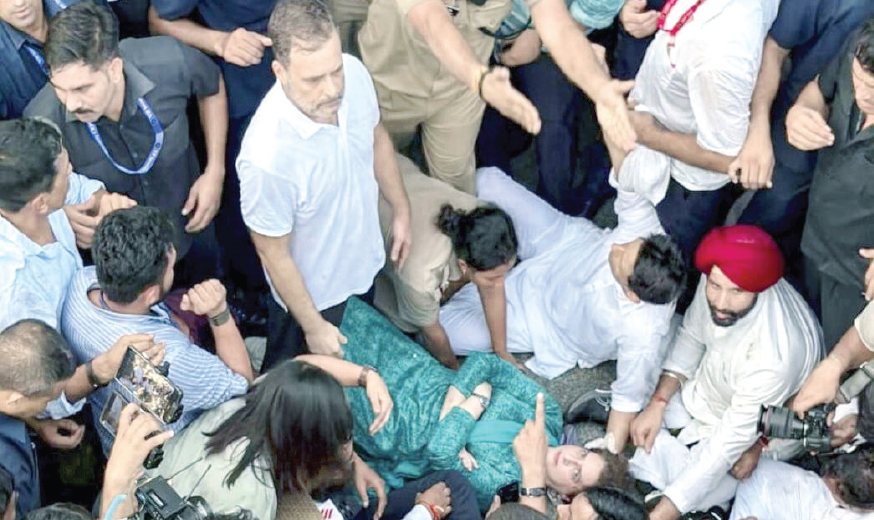
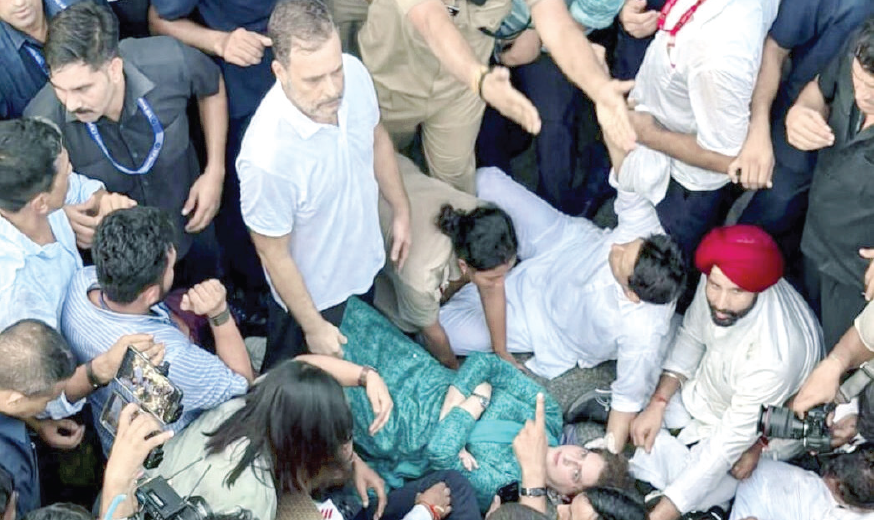
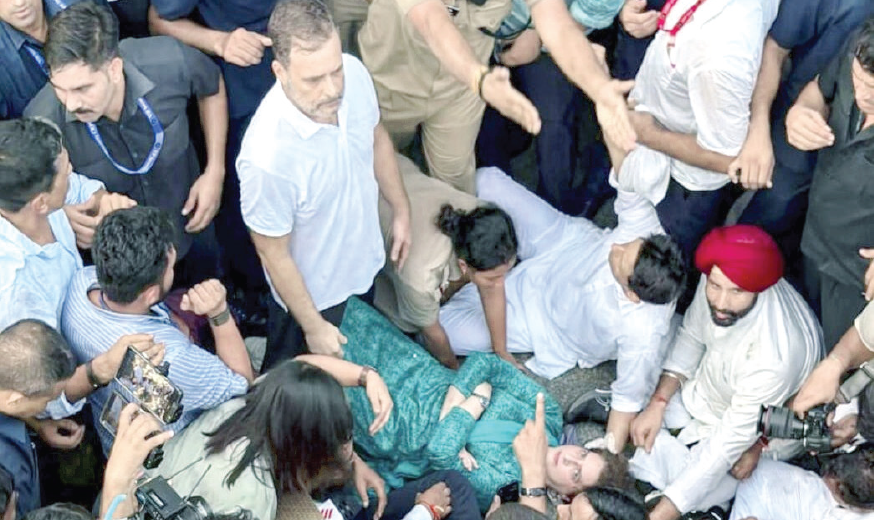
Despite these bans, opposition parties have refused to retreat. The Indian National Congress, flanked by youth cadres from the IYC and NSUI, has mounted daily, high-profile demonstrations. Ground reports documented LoP Rahul Gandhi standing atop police barricades, raising the national flag before being detained by security forces.
Prominent leaders across the INDIA bloc, including Mallikarjun Kharge and Priyanka Gandhi Vadra, have led satyagrahas at Raj Ghat, characterizing the ECI's actions as institutionalized voter theft. The crackdown has led to widespread detentions of opposition lawmakers, student leaders, and civil society activists. Allegations of high-handed arrests and the aggressive handling of female activists by security forces have further inflamed public sentiment, turning localized protests into a broader civil rights movement.
The movement remains anchored by four core demands:
The immediate resignation of CEC Gyanesh Kumar over perceived bias and procedural bypasses.
The total scrapping of the SIR exercise to rectify alleged mass voter disenfranchisement.
The complete rollback of Form 6 modifications to remove enrollment hurdles.A definitive return to physical paper ballots to restore trust in the electoral process.
'Dilli Chalo' Mobilization: Gen Z and Left Coalitions Unify
What distinguishes the impending October 10 mobilization is its grassroots, youth-led character. The Cockroach Janta Party (CJP), founded by young activists and co-convened by independent media figures, has successfully mobilized India's Gen-Z demographic. Calling the current electoral framework a "broken system," the CJP has forged a coalition with Left-backed student organizations, including AISA, the Students' Federation of India (SFI), the All India Students' Federation (AISF), and the Aam Aadmi Party's student wing, ASAP.
At a press conference at the Press Club of India, youth leaders issued a resounding "Dilli Chalo" call, urging citizens nationwide to travel to the capital by train and air while preparing for a prolonged street demonstration. Independent commentators, public figures, and cultural personalities have publicly backed the CJP's "People’s Tribunal," further expanding the movement's reach. Youth organizers have stated they will remain on the streets of New Delhi until structural ECI reforms are instituted.
Capital as Garrison: Fears of Crackdowns and Violent Escalation
In anticipation of the October 10 surge, the Delhi Police and central security agencies have transformed the capital into a fortress. Massive deployments of police and heavily armed paramilitary personnel line key entry points—Singhu, Tikri, and Ghazipur. Authorities are closely monitoring inter-state bus and train travel, reviewing university accommodation logs, and coordinating with academic administrations to preempt large gatherings.
Ground reports indicate preventative crackdowns are already underway across several states. CJP organizers and regional coordinators have reportedly been detained in Rajasthan, Maharashtra, Uttar Pradesh, and West Bengal to obstruct travel to Delhi.
Beyond official enforcement, concerns are rising over potential counter-mobilizations and vigilante clashes. Reports suggest that right-wing groups, including the Bajrang Dal and affiliated organizations, are organizing counter-demonstrations within the city. Intelligence inputs and independent observers caution that the physical convergence of opposing political groups within a heavily militarized urban space creates significant risks of localized clashes, heightening public anxiety across New Delhi.
On the Eve of the Democratic Reckoning
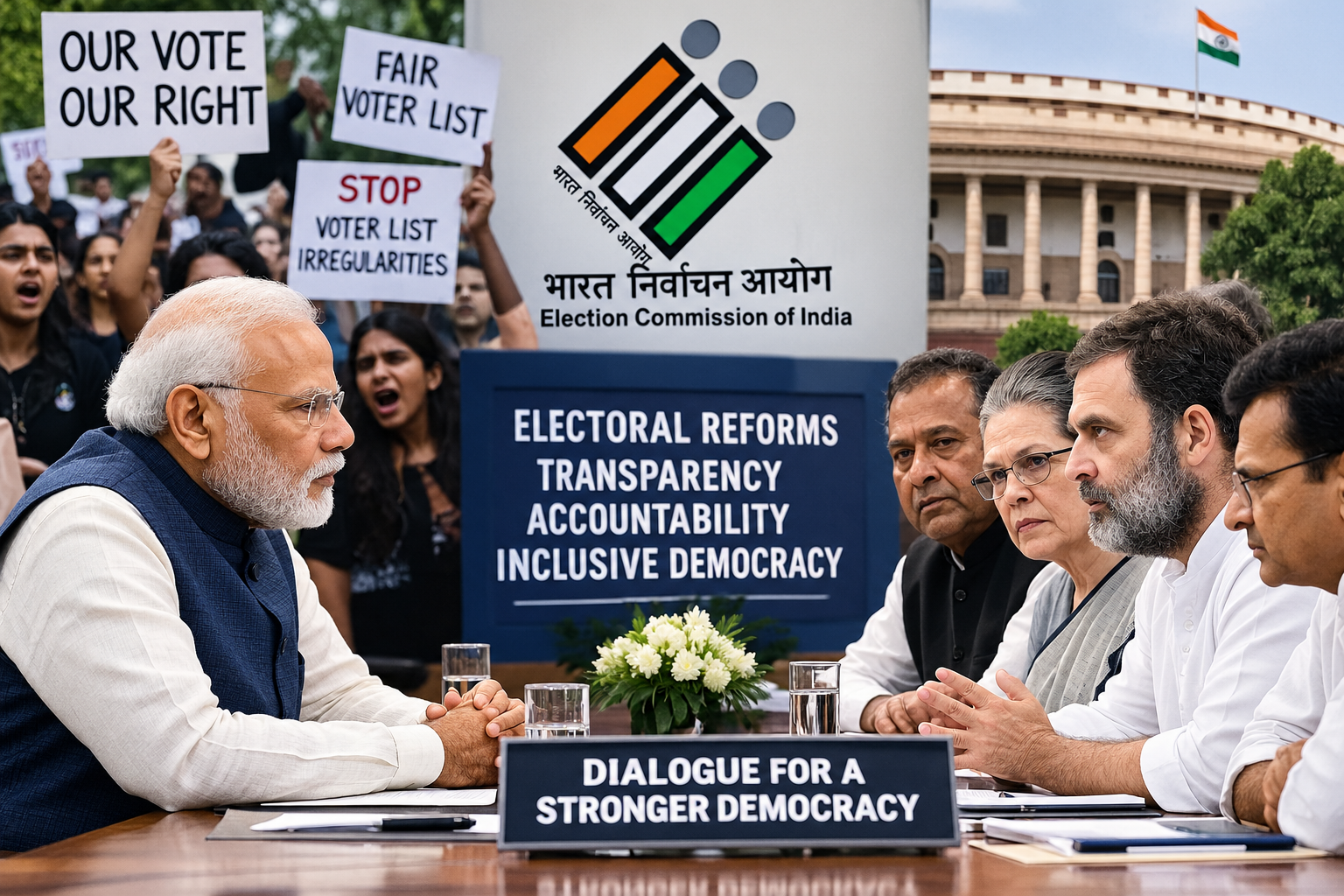
As evening sets over New Delhi on the eve of October 10, political tensions remain acute. INDIA bloc leaders have requested an urgent late-evening meeting with President Droupadi Murmu to present a formal memorandum on electoral integrity. Conversely, ruling party leaders and the BJP have dismissed the agitation as an attempt by opposition groups to disrupt constitutional institutions through chaotic means.
On 10 October 2026, the streets of New Delhi stand as the focal point of a major political confrontation. Whether the day unfolds as a peaceful demonstration of civic engagement or a confrontation marked by state intervention and street disruptions remains to be seen. The unfolding events in the capital are set to significantly influence the broader discourse on Indian electoral democracy.
(The author is a former member of the history faculty at St. Xavier’s College, Mumbai.)

[[comment.comment_text]]