Cacophony over Bihar’s Caste Census

 3 years ago
Dr. Mahendra Dubey
Caste is the DNA of Hindu society. While country’s majority Hindu community has been traditionally stratified into various castes and sub-castes, there has been no accurate data for decades about their exact population. As part of the government’s decades-old affirmative action, marginalised communities have been categorised as backward, extremely backward, scheduled caste and scheduled tribe.
Beginning 1871, India’s British rulers continued to conduct caste census until 1931; a tradition that was broken in 1941 as Britain was too heavily engaged in the World War II. The findings of a nationwide census based on people’s social and economic conditions in 2011 were never made public. The lack of latest data meant affirmative action was insufficient and required a reappraisal.
The latest Bihar caste census shows that while historically dominant upper castes comprise 16 percent, its marginalised castes make up for a staggering 84 percent of state’s total Hindu population that include 20 percent of dalits, traditionally untouchable caste groups constitutionally recognised as Scheduled Castes. Among the rest 64 percent of OBCs (Other Backward Classes), 36 percent are categorised as Extremely Backwards compared to 28 percent of better off sections.
Debate on Caste Quota
The Bihar census has triggered a big debate between the protagonists of caste quotas and those who advocate benefits of governmental deliveries to all the marginalised and needy sections of the society irrespective of their caste affiliation. The first group advocates stretching the job quota and other associated benefits according to their number, and share in total population. It has been better described in a slogan of eighties: “Jiski jitni sankhya bhaari, uski utni bhagidari” (share in jobs proportionate to share in population). Now, their grouse would be to increase the quota to 64 percent instead of the current 50 percent in all the government jobs and educational opportunities.
Against this backdrop, Bihar’s move to make caste census data public holds immense potential to fuel up political campaigns across the country to revisit government’s affirmative action policies. India has emerged as the fifth largest economy in the world but the gap between rich and poor is huge. Oxfam India in its annual 2023 survey reports that 60 percent of the country’s wealth is held by the richest five percent of citizens.
It has been well known that marginalised castes have been largely disadvantaged and suffered from lack of opportunities. Though untouchability was abolished the day India became a Republic on 26 January 1950, most of the members of scheduled castes still suffer discrimination and in certain respects even stigmatisation.
The Bihar data, while reiterating this, offer a glimpse into the massive scale of the problem. It goes a step towards reaffirming that while state population is overwhelmingly shared by marginalised castes, they remain deprived and discriminated against.
Caste in Politics
India’s opposition parties, part of a coalition called I.N.D.I.A., have been pushing for a similar caste census to be carried out across the country. After a decade of electoral marginalisation, the opposition parties are now trying to challenge BJP’s politics of Hindutva (the political philosophy of Hinduness), highlighting the rising inequality and corporate control of resources.
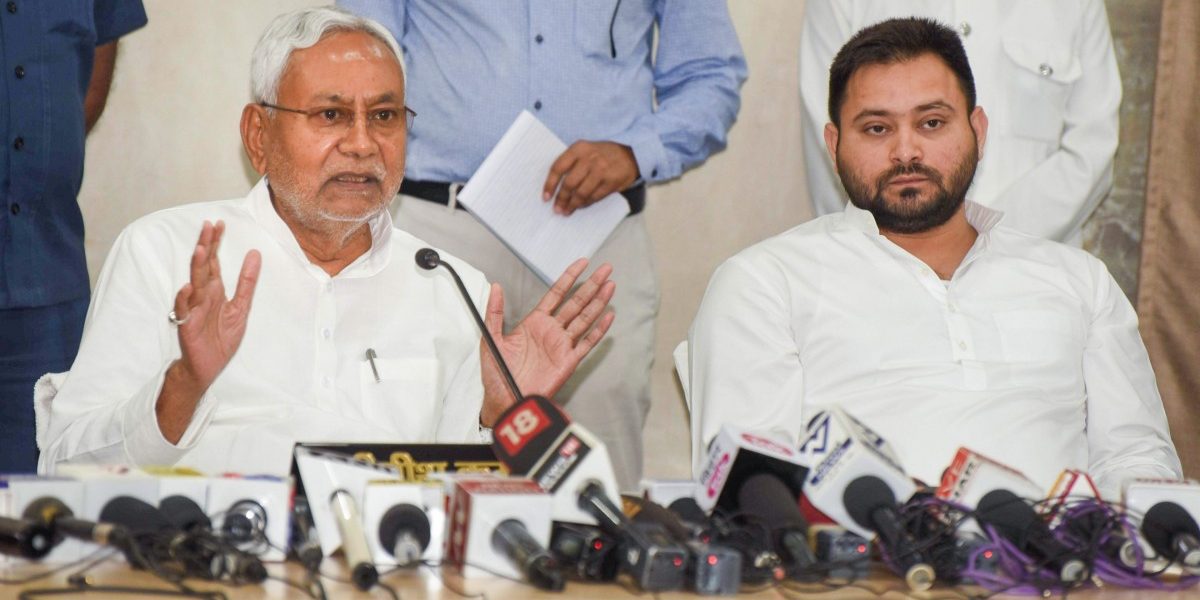
Opposition leaders Rahul Gandhi, Lalu Yadav, Nitish Kumar, Akhilesh Yadav et al have been repeatedly insisting on representation of marginalised communities in getting their due rights as per their share in the population.
After having been criticised for failing to present an alternative vision for the country, the opposition parties seemed to have found their game-changing plank, in taking on Prime Minister Modi and his BJP through this issue.
By championing the cause of backward classes, the opposition alliance hopes to woo them, broaden its popular base, and defeat the dominant BJP, which has won two comfortable majorities since 2014.
Significantly, the ruling party has been trying to blur caste lines by consolidating support for a unified Hindu identity as part of its Hindutva agenda, which has polarised voters along religious and ethnic lines. It has also been criticised for its dog-whistle politics against Muslims who form about 15.5 percent of country’s 1.4 billion people.
The new caste-based movements, therefore, threaten to derail these attempts, experts think that a national caste census can create a new caste consciousness among the various marginalised castes and can threaten the BJP’s majoritarian politics. If caste becomes the central issue, it will heavily deter ruling party’s efforts to unite Hindus to perpetuate its hold on political power.
All Eyes on 2024 Polls
Well aware of it’s consequences, not only the ruling party has been carefully drafting backward classes’ leaders in the centre and state governments and party units, the RSS Sar Sanghchalak Mohan Bhagwat also supported the idea of reservation in contrast to his 2015 statement when he had opposed it in principle. Besides, during over nine years of its political dominance, Modi’s BJP has sought to create a “coalition of extremes” by placating dominant upper castes and marginalised Dalits and Tribals into its electoral support base.
Prime Minister Modi, himself belonging to a “backward caste” community, has reiterated time and again his caste identity in public meetings to draw in support. However, an opposition campaign to push for greater rights for India’s marginalised castes could see BJP’s support base cracking.
Although Congress party governments under Prime Minister Nehru and his daughter Indira Gandhi had set up commissions to enquire into the social and economic status of backward castes, it was Prime Minister VP Singh who decided to implement the Mandal Commission report in April 1990, leading to fierce protests from the upper caste youth. Singh’s move was largely guided by the consideration to co-opt a sizeable population of backward castes into Janata Dal’s electoral constituency. Consequently, BJP’s attempts to come to power through a religiously-charged Hindutva campaign to build a Ram temple in Ayodhya, was undercut by the Mandal movement which demanded greater opportunities and affirmative action for OBCs. The subsequent Mandal movement denied the BJP to capture power for at least eight years. That is why, while most other parties, including some of the BJP’s allies, have pushed for a national caste census, the BJP has remained shy of embracing the idea.
Experts on political sociology of affirmative action believe that a data-driven conversation around caste will enable a rightful distribution of resources and opportunities to those who need it the most. While political parties, mainly the regional ones, will try to make best use of it electorally, the discourse will see more welfare programmes and massive budgetary allocations for the backward classes by the federal dispensation.
It is too early to tell how the issue will pan out, but either way, caste identities will be “one of the major poles” in the 2024 general elections. The findings from Bihar, we accept it or not, have the potential to upend the country’s politics, with demands being made for a similar nationwide census, opening the doors for a revamp of the country’s affirmative action plans.
( The writer, a social anthropologist, holds a Ph.D degree from capital’s Jawaharlal Nehru University. )




[[comment.comment_text]]