Lifeline in Crisis

 1 year, 4 months ago
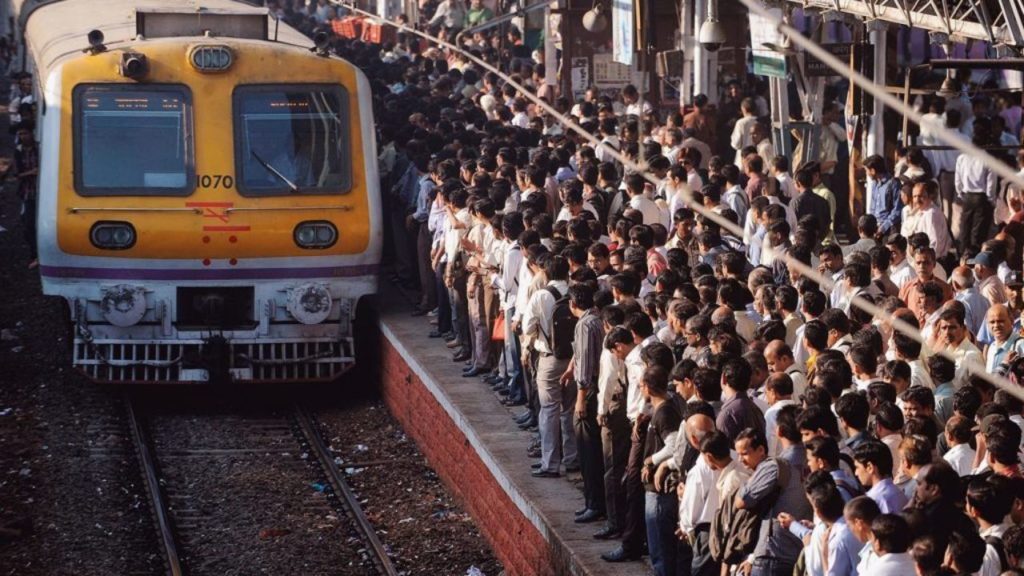
One hundred and seventy-two years ago, India’s first suburban train ran between Bori Bunder and Thane, laying the foundation for what would become the nerve center of Mumbai’s public transport system. Today, the city’s suburban rail network is still hailed as its “lifeline.” But on June 10, that lifeline failed again—tragically. Four commuters lost their lives near Mumbra when a Central Railway train, packed well beyond capacity, became yet another site of death on Mumbai’s perilous tracks.
Officials called it an “incident,” not an “accident”—a linguistic choice that sidesteps inquiry procedures and accountability. But for millions of Mumbaikars who risk their lives daily on overcrowded platforms and inside jam-packed compartments, it was no incident. It was an all-too-familiar tragedy, the outcome of chronic policy neglect, poor planning, and the city’s growing inability to sustain its own workforce.
Mumbai’s suburban rail system is one of the most densely used in the world. On the Central Railway line alone, 1,810 services run every day, carrying over four million passengers. Add to that hundreds of daily ticketless commuters, and the numbers become staggering. Trains built to carry 2,500 people regularly transport nearly twice that number—leading to what transport experts describe as “super-dense crush loads.”
This level of overcrowding isn’t just inconvenient—it’s dangerous. Every day, commuters are forced to cling to doors, stand in aisles without room to move, or hang precariously from footboards. Falls, collisions, and stampedes are common. In 2023 alone, over 2,500 people died on Mumbai’s railway tracks—many while boarding or alighting from overcrowded trains.
Mumbai’s urban geography has changed drastically in the past two decades. With real estate prices in the island city becoming unaffordable even for the middle class, more and more people have been pushed to the fringes of the Mumbai Metropolitan Region (MMR). Suburban towns such as Badlapur, Titwala, Karjat, Kalyan, and Diva have seen population explosions because they offer relatively affordable housing. But these areas remain poorly connected to the rest of the city.
The metro rail, which promises to revolutionize urban commuting, is years away from reaching these outer suburbs. There are no major arterial roads that allow for smooth road travel, and the BEST bus network—once one of the largest and most reliable in Asia—has drastically shrunk. The bus fleet, which stood at 4,700 a decade ago, is now down to just 2,800. Crucially, most of these buses do not service the rapidly growing outlying suburbs, leaving residents with no alternative but to rely solely on the suburban trains. In short, people are being pushed farther out—and then abandoned there.
While the number of commuters has grown exponentially, the supporting infrastructure has remained virtually static. Many stations on the Central Railway still have just two platforms, despite handling tens of thousands of passengers every day. There are no effective crowd control systems, minimal safety signage, and few emergency response mechanisms. The design of the stations—narrow stairways, limited exits, and poorly placed footbridges—only worsens the chaos.
Technological upgrades like automatic doors on air-conditioned trains are welcome but insufficient. These solutions reach only a tiny fraction of daily riders and do little to alleviate systemic overload. Worse, they risk creating a two-tier system—one for those who can afford comfort, and another for the vast majority who must endure daily risk and exhaustion.
Ironically, some of the very projects meant to modernize Mumbai have contributed to its current crisis. The redevelopment of mill lands in Parel and the commercial gentrification of the Bandra-Kurla Complex have erased large pockets of working-class housing, forcing thousands to relocate to distant suburbs. These residents, once able to walk or cycle to work, now spend up to four hours a day commuting in punishing conditions.
The state’s massive infrastructure push under the Devendra Fadnavis-led government—new expressways, metro lines, and coastal roads—has been largely concentrated in the island city and the already well-served western suburbs. The working-class population in the eastern corridor, however, continues to live with inadequate transport links and minimal investment.
Even in terms of resource allocation, the disparity is stark. Station upgrades, signal systems, and new train sets are focused on premium routes. Little attention is paid to the routes that carry the highest volume of low-income passengers. The result is a commuter caste system—divided not just by class, but by geography.
The answer is not just more trains. Mumbai needs an integrated, multimodal public transport strategy that recognizes where people actually live and work. That means rapidly expanding the metro to outer suburbs, restoring and enlarging the BEST bus fleet, and rethinking urban development to allow for affordable housing closer to job centers.
In the short term, platforms must be widened, emergency facilities must be improved, and station layouts redesigned to reduce choke points. Commuter safety must become a policy priority, not an afterthought addressed only after a death.
Longer-term solutions require breaking with decades of inertia. Land-use policies must be aligned with transport planning. New housing projects must be linked to connectivity guarantees. And most crucially, the voices of commuters—the working class that powers Mumbai—must be central to how the city plans its future.
Mumbai’s lifeline is fraying. The tragic deaths at Mumbra are not anomalies—they are warnings. As the city expands and its people are pushed farther to its edges, the very system meant to connect them is coming undone. It is no longer enough to call the suburban railway a miracle of urban mobility. Without urgent reform and investment, it will soon become a cautionary tale of what happens when a city grows but fails to carry its people along.







[[comment.comment_text]]