Nana Patekar: The Interconnection Between Cinema, Politics and Society
 2 hours ago
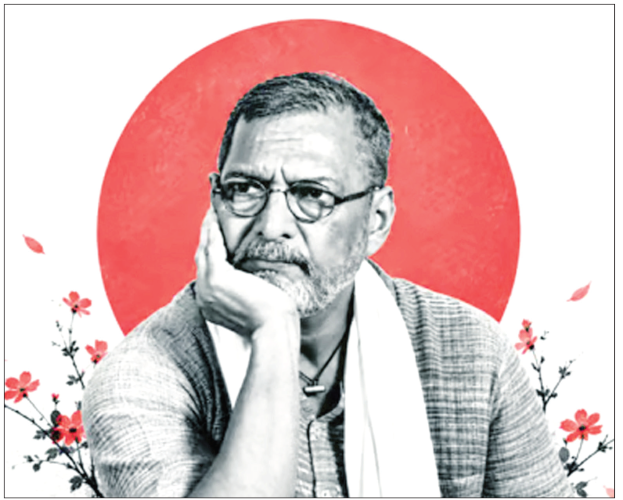
In Indian cinema, there are actors whose identities are shaped not merely by their performances but also by the social questions they bring to the forefront through their films. Nana Patekar is an important figure in this tradition. His films repeatedly explore issues such as corruption, crime, violence, social inequality, injustice, discrimination and the anxieties of ordinary citizens. Although it would be inappropriate to classify his entire filmography exclusively as political cinema, many of his influential performances can certainly be examined through the relationship between Indian society and politics.
To understand the political dimensions of Nana Patekar’s cinema, it is important first to distinguish between the political or social roles an actor portrays and the actor’s personal political beliefs. An actor’s private convictions and the ideological world of a film may be quite different. Therefore, rather than treating Patekar’s films as evidence of his personal political commitments, it is more appropriate to view them as artistic expressions of the social tensions with which Indian democracy continues to grapple.
The fundamental purpose of politics is not merely to acquire or exercise power. Its real significance lies in the relationship between the state, society and citizens. When the state becomes detached from accountability, institutions weaken and citizens lose faith in the system, political dissatisfaction can develop into wider social tensions. Many of Nana Patekar’s performances bring these tensions vividly to the screen.
One of his early notable films, Ankur, can be viewed in this context. The film brings into focus the frustration of young people struggling with unemployment, social insecurity and a lack of opportunities. Nana’s character does not necessarily represent a particular political ideology; rather, it reflects the social discontent that emerges when individuals feel that the system is failing to create opportunities for them. Here, politics is not expressed through electoral speeches or parliamentary debates but through the everyday difficulties of ordinary people. This distinction is significant: political unrest often takes root in society long before it becomes visible in Parliament.
In Pratighaat, the themes of justice, crime and resistance emerge more explicitly. Through characters struggling against criminality, the film raises a fundamental question: how should individuals respond when the institutions responsible for delivering justice appear ineffective? Should the demand for justice remain within the boundaries of the law, or can disillusioned citizens justify taking resistance into their own hands? This question remains relevant today. A strong democracy must ensure that citizens do not have to depend on violence or mob justice to obtain what the law promises them.
In Parinda, Nana Patekar’s portrayal of Anna brings the complexities of criminal networks, violence and power relations to the forefront. Crime is presented not merely as an individual moral failing but as something shaped by social circumstances, power structures and an atmosphere of fear. However, such portrayals must not be interpreted as defining the collective character of any particular community or social group. The film’s deeper concern is the relationship between individuals and violent systems of power. The same caution is necessary in political analysis: associating criminality with a particular community can deepen social divisions rather than illuminate the structural causes of crime.
In Krantiveer, Patekar’s character, Pratap Narayan Tilak, offers a powerful representation of corruption, criminality, social tension and public dissatisfaction with political institutions. He confronts the establishment and gives voice to the anger simmering within society. Yet the film also raises an important political question: can anger alone transform a system? Democratic change requires strong institutions, the rule of law and accountability. It is therefore necessary to distinguish between anger directed against an unjust system and the pursuit of democratic reform. Krantiveer offers an opportunity to understand this tension.
Nana Patekar’s Prahaar can also be examined through this broader perspective. His portrayal of Major Chauhan raises questions about discipline, duty and the relationship between the individual and the state. Politics is not overtly visible here, but the relationship between the state, citizens and civic responsibility remains central to the narrative. Balancing individual rights with institutional discipline is one of the enduring challenges of a democratic system.
In Yashwant, the tensions surrounding the police, crime and corruption become particularly evident. The protagonist’s position as a police officer exposes the pressures and moral dilemmas that exist within institutions responsible for enforcing the law. The question is not simply who commits a crime, but also how those entrusted with fighting crime should themselves be held accountable. When citizens lose faith in law-enforcement institutions, the foundations of democratic governance are weakened.
Ab Tak Chhappan assumes particular importance in this context. Patekar plays Sadhu Agashe, a police officer known for his uncompromising action against criminals. The film explores the complicated boundary between the coercive power of the state and the control of crime. It raises a serious political question: should the state’s power be unlimited in the name of maintaining law and order? The democratic answer is clear. The state may exercise considerable authority, but it cannot place itself above the law or escape accountability.
In Raajneeti, Patekar’s character, Brij Gopal, enters the more overtly political world of elections, political strategy, family interests, ambition and struggles for power. Politics is no longer merely a means of public service; it becomes an arena of strategic calculations and competing interests. The film’s significance lies in its depiction of politics as a complex contest for power rather than an idealised exercise in public service. It invites viewers to ask whether power is merely a means to an end or has itself become the ultimate objective. This question is equally relevant to understanding political polarisation in contemporary India.
Political polarisation becomes a serious social problem when differences of opinion gradually turn into markers of social identity. Disagreements cease to be differences in political thought and become defining distinctions between groups. Society begins to divide into “us” and “them”. Under such circumstances, criticism may be interpreted as opposition, opposition as hostility, and hostility as a threat to the nation or society. This transformation can undermine democratic debate and mutual respect.
Nana Patekar’s characters are useful in examining these concerns because they frequently represent individuals who question authority, confront injustice or challenge the limits of power. His cinema encourages us to consider whether a citizen’s role in a democracy is confined to voting or whether asking difficult questions is also an essential democratic right.
A distinctive feature of Patekar’s acting is that his characters are rarely idealised heroes delivering polished speeches about justice. They often display anger, vulnerability, contradictions, moral conflicts and human limitations. This makes them appear more credible. They challenge the system from within their own circumstances, while their struggles also reveal how difficult it can be to function ethically within an imperfect system.
Violence is another important theme in his films. Rather than treating it simply as an individual inclination, several of these narratives connect violence with social conditions and institutional failures. This does not amount to endorsing violence. On the contrary, its costs and wider social consequences often become central to the story. That is why these films are more productively understood as works that stimulate political awareness rather than merely provoke political anger.
Another distinction is essential when discussing the political dimensions of Nana Patekar’s cinema: an actor’s fictional roles should not automatically be equated with his personal political ideology. Public statements have their own contexts, while cinematic characters belong to the worlds created by filmmakers and writers. Instead of drawing definitive conclusions about his party loyalties or ideological commitments from his filmography, it is more meaningful to analyse the questions that emerge from his performances.
The central question running through his cinema may be expressed simply: what should the relationship between the individual and the state look like? Is the state more important than its citizens? Does the law apply only to the powerless? Should corruption be accepted as an unavoidable feature of public life? Can institutions fighting crime themselves cross the limits imposed by law? And should political differences turn into social hostility?
These questions have acquired greater significance in an age when information travels rapidly and political polarisation can influence social relationships almost instantly. In such an environment, the role of art extends beyond entertainment. Cinema becomes a medium through which society can examine its tensions, prejudices, institutional shortcomings and competing aspirations.
Viewed from this perspective, the most important legacy of Nana Patekar’s cinema does not lie in any single political ideology. It lies in a tradition of questioning—demanding accountability from the state, transparency from institutions and independent judgement from citizens. His films repeatedly remind us that democracy requires more than the formal machinery of elections. It also depends on the willingness of citizens to question authority and the ability of institutions to respond responsibly.
Ultimately, Nana Patekar’s performances do not offer simplistic messages in support of or opposition to any political party. They raise more difficult questions. Power is necessary in a democracy, but it must not become arbitrary. The law is indispensable, but no individual or institution can claim exemption from it. Political disagreements are natural, but social hostility weakens democracy.
The political relevance of Nana Patekar’s cinema lies precisely in these tensions. His characters remind us that politics cannot be understood without examining the social discontent from which it emerges, and democracy cannot be strengthened without placing human dignity at its centre.
To view Nana Patekar merely as a popular actor would therefore be to overlook the wider social significance of his cinema. The real strength of his performances lies in the questions that remain with audiences long after the film ends: For whom does the state exist? Who has the right to justice? And, ultimately, who should possess the greatest authority in a democracy?
The answer may be that the strength of the state matters, but its accountability matters even more. A democracy is measured not simply by how powerful its institutions are, but by how responsibly they exercise that power.
(Author is a Professor at the Department of Hindi, Aryabhatta College, University of Delhi.)


[[comment.comment_text]]