The Last Breath of a Plural Pakistan
 2 hours ago
The emergency in Khyber Pakhtunkhwa is not a security measure. It is a warning the world cannot afford to ignore.
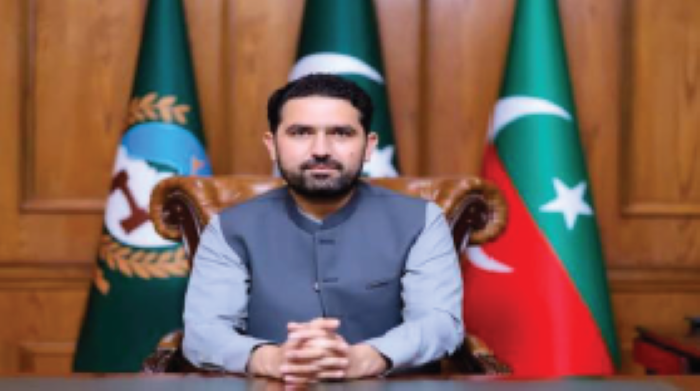
When a chief minister is led away by police, the message is meant for every voter who put him there. On 11 October 2026, the elected government of Khyber Pakhtunkhwa (KP) was suspended, the province was placed under emergency and governor's rule, and Chief Minister Sohail Afridi was taken into police custody. The party that won the province, Imran Khan's Pakistan Tehreek-e-Insaf (PTI), had already seen its founder, a former prime minister, locked in prison. Now its provincial government has followed him. The federal government cites escalating militancy and failing governance. The PTI calls it a political coup in constitutional clothing.
I have spent years writing about Kashmir and about how force is dressed up as necessity. I know how often the vocabulary of security and stability arrives just before a people are told their voice is no longer required. This article is opinion, and it is angry. It speaks for the Pashtun farmer who queued to vote, the schoolteacher in Peshawar, the mother in Quetta holding a photograph of a son who never came home. They believed a ballot meant something.
A Province Punished for Its Vote
Khyber Pakhtunkhwa is home to tens of millions and sits on the front line of militant violence that has killed police, soldiers and civilians in numbers that deserve the world's grief. The security crisis is grave, and the PTI administration should be held to account like any other. But accountability is delivered by courts and voters, not by a federal order signed overnight. When an elected government is removed in the name of the people's security, the first question is not whether militancy is real. It is who benefits. Consider the sequence. A province keeps returning one party against the establishment's wishes. Its founder is jailed. Then its chief minister is arrested and its government dissolved. Citizens are told, in effect, that their ballots were provisional: valid only until the centre decides otherwise. That is not federalism. It is tutelage. Defenders say extraordinary times demand extraordinary powers, as every authoritarian has said. But an emergency must be justified with evidence, proportionality and open scrutiny. So far the public has been offered assertions, and assertions are not evidence.
The Men Who Own the Moment
Three names dominate this story: Field Marshal Asim Munir, Prime Minister Shehbaz Sharif and President Asif Ali Zardari. I judge only what they have done and what they have chosen to enable. Start with the man at the centre. Munir leads an army that has long treated civilian politics as a subsidiary of its own interests. In November 2025 the 27th Amendment elevated his office to Chief of Defence Forces and, according to widespread reporting, granted lifetime immunity to both the army chief and the president. When the army chief and the head of state are placed beyond ordinary legal consequence, and that army then shapes the fate of an elected provincial government, citizens are entitled to ask who is actually governing. Sharif and Zardari lead parties that once claimed the mantle of civilian supremacy.
The Bhutto legacy Zardari inherited was built on sacrifice: Zulfikar Ali Bhutto was hanged and Benazir Bhutto was killed for the principle that the people, not the barracks, should rule. That these two now preside over, or lend their signatures to, the removal of an elected government is not only a betrayal of their opponents. It is a betrayal of their own history. A government that survives by the army's favour does not govern; it administers decisions made elsewhere, and the establishment has discarded nearly every civilian partner it ever used. My charge is not that these men are uniquely wicked. It is that they have chosen their own tenure over the Constitution they swore to protect, and the cost is paid by people who never had a say.
A Constitution Turned Against Itself
Articles 232 and 234 exist for genuine emergencies and for the failure of constitutional machinery. They are safeguards, not weapons. Used as a political instrument, they let a government cancel an electoral result it dislikes while keeping every outward form of legality. This is authoritarianism that needs no tanks in the streets. It keeps the parliament, the courts and the flag, and hollows each out until a vote becomes a ceremony. The 27th Amendment also created a new Federal Constitutional Court, and many lawyers now ask who will guard the guardians. If courts cannot freely review emergency measures, the emergency is not a constitutional act. It is a political one.
The Same Logic, from Peshawar to Quetta to Rawalakot
What is happening in KP cannot be separated from Balochistan. The Human Rights Commission of Pakistan's 2025 fact-finding report, Balochistan's Crisis of Trust, called enforced disappearances the province's most urgent and widespread human rights concern, citing police data on 192 unresolved cases. A state that disappears citizens without consequence soon learns it can displace their governments. The same logic has reached Rawalakot, in Pakistan-administered Kashmir. In July 2026, protesters clashed there with law enforcement and several casualties were reported. The Joint Awami Action Committee, which had spent weeks protesting over reserved legislative seats, has since been proscribed, and a communications blackout has hidden what happened. The Human Rights Commission of Pakistan and Amnesty International have demanded an independent investigation. Then came the words of Pakistan's Defence Minister, Khawaja Asif. As reported in late July, he said: “I put the protesters of Azad Kashmir in the same category as India and consider them also as enemies like India.” Ruling out dialogue, he added: “We count them in the same rows of enemies as we see India.
These people are also enemies of Pakistan.” These are Kashmiris under Pakistani control, whom Islamabad has long called brothers, placed by a senior minister in the same row as the adversary. Citizens demanding their rights are not enemies, and no government that calls them so can claim to speak for them. It exposes how those in power see the people they rule: as subjects to be managed, not citizens to be heard. Pakistan cannot champion the self-determination of Kashmiris across the Line of Control while branding its own Kashmiris enemies and denying its provinces self-government. A state that praises the right to choose in one place and suppresses it in another forfeits its moral credibility. I hold every government to the same standard.
The Last Breath of Pluralism
On 11 August 1947, Muhammad Ali Jinnah told Pakistan's Constituent Assembly that religion had nothing to do with the business of the State. That civic ideal, equal citizenship, remains the oldest answer to both theocracy and the garrison. Today that ideal is carried not by those in power but by lawyers, journalists, students, minorities, and Pashtun, Baloch and Kashmiri activists. Pluralism dies in increments: a suspended assembly, a closed newspaper, a missing activist, an arrested chief minister, an unanswered mother. I call it the last breath not because I am certain the patient will die, but because breath is all that is left to hold on to, and the world is looking elsewhere.
What the World Must Do
The world can treat this as a distant provincial quarrel, or recognise how constitutional democracy dies in our century: legally, quietly and with the applause of those who call it stability. Three things matter most. Refuse the false choice between stability and rights. Western and Gulf capitals have long preferred a predictable general to an unpredictable democracy. But a state whose citizens cannot peacefully change their rulers is not stable. It is merely postponed. Demand specifics. Publish the proclamation. Show the evidence of constitutional failure. Let courts review it and parliament debate it. Let independent observers speak to journalists, to displaced citizens, and to Chief Minister Afridi himself. Tie cooperation to conduct. Security partnerships and financial support are choices, not entitlements, and should carry conditions: independent investigations of disappearances and of the killings in Rawalakot, respect for provincial mandates, and civilian oversight of the armed forces. Pakistan's democrats cannot win alone, but they can lose in silence.
Democracy Must Not Exist on Permission
The generals will say they protect the state, and the ministers will say they defend order. Pakistanis have heard it all before, and they remember where such promises led. A democracy that exists on permission is not a democracy. It is a loan, and the lender can call it in whenever a vote proves inconvenient. The people of Khyber Pakhtunkhwa did not borrow their mandate. They earned it, in queues and under threat, and no proclamation can make it disappear. This is a wake-up call to the world's thinkers, writers, lawyers and teachers, because the only force that can still make power ashamed is attention. From Peshawar to Quetta to Rawalakot the pattern is the same: security invoked, scrutiny denied, mandates overridden. Those who rule Pakistan can still choose differently, by restoring the province's mandate, releasing its chief minister, opening the emergency to independent review, and placing the army under civilian authority. If they will not, the rest of us must say plainly that this was a choice, and that history will remember who made it.
Sources
"Pakistan imposes emergency rule in province governed by Imran Khan's party," Al Jazeera, 11 October 2026. https://www.aljazeera.com/news/2026/10/11/pakistan-imposes-emergency-rule-in-khyber-pakhtunkhwa
"HRCP, Amnesty call for 'prompt, independent' probe into Rawalakot unrest," Dawn, 29 July 2026. https://www.dawn.com/news/2019279
"Pak defence minister Khawaja Asif says PoK protesters 'enemies like India'," The Week, 28 July 2026. https://www.theweek.in/news/world/2026/07/28/pakistan-defence-minister-pok-protest-remarks-india.html
"Pakistan grants lifetime immunity to president, current army chief," Al Arabiya English, 13 November 2025.
(Author, a Kashmiri sociologist, is a writer, -researcher, and columnist. His research Interests Include Kashmir Affairs, South Asian Politics, Human Rights, and Public Policy issues.)







[[comment.comment_text]]