A Much-Needed Trilateral: Trump, Putin and Xi Jinping Meet at Shenzhen
 46 minutes ago
For Xi Jinping, the meeting was an opportunity to project China as a central force in promoting international stability, open trade and investment. This position also contrasted with Washington’s increasingly unpredictable trade policies and its approach of imposing tariffs and restrictions.
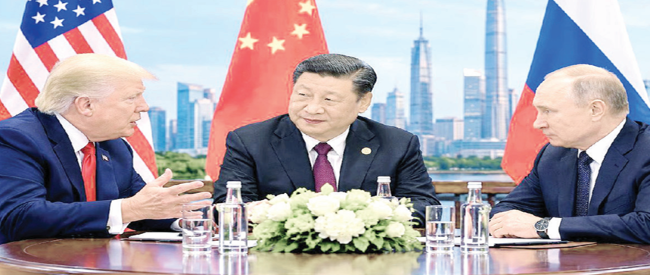
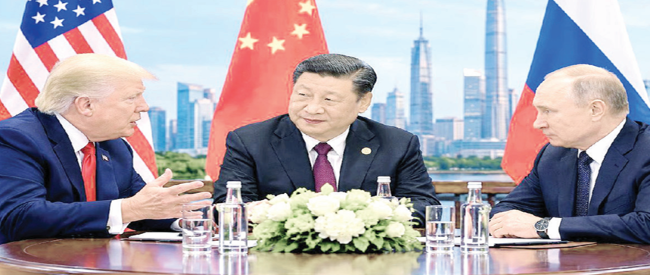
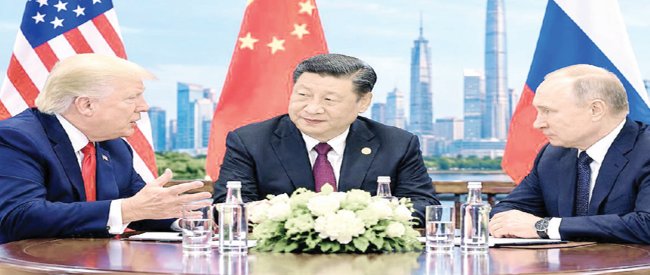
A trilateral meeting involving US President Donald Trump, Russian President Vladimir Putin and Chinese President Xi Jinping was held on November 19 on the sidelines of the Asia-Pacific Economic Cooperation (APEC) gathering in Shenzhen, China’s leading technology and industrial hub in Guangdong province.
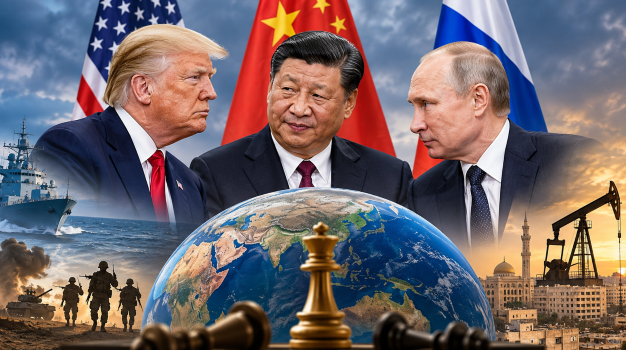
The meeting was significant not merely because it brought together three of the world’s most powerful leaders, but also because it offered an opportunity to address some of the most pressing challenges confronting the international community. The discussions were expected to cover the wars in Ukraine and Iran, nuclear proliferation, global security and the emerging threats associated with artificial intelligence.
For Xi Jinping, the meeting was an opportunity to project China as a central force in promoting international stability, open trade and investment. This position also contrasted with Washington’s increasingly unpredictable trade policies and its approach of imposing tariffs and restrictions. Putin emphasised the shared responsibility of the three countries in maintaining international peace and security, while Trump, in his characteristic style, declared that the leaders were going to make history.
Expectations were understandably high. However, the meeting reportedly lasted barely 90 minutes. Trump had already held separate interactions with Xi and Putin before the trilateral engagement, including a luncheon meeting with the Chinese President. Xi’s personal gesture of receiving Trump at the airport was also seen as an expression of diplomatic reciprocity.
Despite the limited duration, the gathering carried considerable symbolic importance.
Manila: A Diplomatic Success for Trump
Trump’s visit to the region also provided him with an opportunity to engage with other important partners. His participation in the Quad meeting involving India, Japan and Australia in Manila was particularly significant. The four countries exchanged views on regional security and their concerns regarding China’s growing influence in the Indo-Pacific.
Beijing, on the other hand, has consistently viewed the Quad as an arrangement that could encourage strategic confrontation rather than regional cooperation.
Trump’s interactions with the Canadian Prime Minister and the conclusion of trade agreements with the Philippines and Thailand added to the diplomatic achievements of his regional visit. Thus, while the Shenzhen meeting attracted considerable international attention, the Manila engagements also offered Washington an opportunity to strengthen its regional partnerships.
China at the Centre of the Global Stage?
The seating arrangement at the Shenzhen meeting attracted attention. Xi Jinping occupied the central position at the round table, with Trump and Putin seated on either side. Some observers interpreted this arrangement as a deliberate diplomatic statement, symbolising China’s growing influence and its ambition to occupy the centre of an evolving international order.
Whether intentional or not, the arrangement reinforced the perception that Beijing was seeking to position itself as an indispensable interlocutor in global affairs.
For Xi, bringing the American and Russian Presidents together was itself a diplomatic achievement. It enabled China to demonstrate that it could facilitate dialogue between two powers whose relations have been strained by geopolitical rivalry and international conflicts.
Opening Remarks: Peace, Security and Cooperation
In his opening remarks, Xi Jinping underlined that constructive engagement among the three countries was not merely desirable but essential. He stressed the importance of positive interaction in addressing common international challenges.
Trump maintained that the three leaders were uniquely positioned to tackle some of the world’s most difficult problems, particularly the reduction of nuclear arsenals. Putin, meanwhile, emphasised international peace and security and called for an end to hostilities, sanctions, tariffs and export restrictions.
One of the central concerns reportedly discussed was the catastrophic possibility of nuclear conflict. The principle that a nuclear war cannot be won and must never be fought remains an essential foundation for international security.
The discussions also touched upon the conflicts in Ukraine and Iran and the future of nuclear arms control, particularly in the context of the impending expiration of the US-Russia nuclear arms control framework in February 2026.
These issues assume added significance at a time when established mechanisms of strategic restraint are under considerable pressure.
The Joint Statement: Ambition Without a Breakthrough
The joint statement emerging from the meeting reportedly avoided several contentious questions, particularly the continuing wars in Ukraine and Iran. This was a notable omission, especially from Moscow’s perspective, given Putin’s interest in securing greater international attention to the conflict in Ukraine and the Western sanctions imposed on Russia.
The discussions nevertheless appeared to identify certain broad areas of possible cooperation:
Promoting reforms in the United Nations and strengthening its effectiveness.
Expanding petroleum supplies and ensuring greater stability in energy markets.
Raising concerns about the exercise of authority by international judicial institutions and related bodies.
Reducing the risks of nuclear confrontation and strengthening strategic stability.
These broad understandings may be welcome, but they fall considerably short of a comprehensive framework for resolving the conflicts and rivalries that divide the three countries.
The absence of concrete commitments raises questions about how far the meeting can translate diplomatic symbolism into practical results.
An Assessment: Historic Symbolism, Limited Substance
The Shenzhen meeting may not have produced any dramatic breakthrough, but Xi Jinping deserves credit for bringing together two leaders whose countries have frequently found themselves on opposing sides of major international disputes.
The historical comparison that immediately comes to mind is the Yalta Conference of February 1945, when the leaders of the United States, Britain and the Soviet Union met in Crimea to discuss the post-war international order. That conference, attended by Franklin D. Roosevelt, Winston Churchill and Joseph Stalin, was instrumental in shaping the emerging world order and the arrangements that eventually led to the establishment of the United Nations.
The Shenzhen meeting was obviously different in character and circumstances. Nevertheless, the presence of three major powers, all permanent members of the UN Security Council, gave it considerable historical and geopolitical significance.
It also offered Putin an opportunity to regain international diplomatic visibility. Having maintained a relatively low profile at several important international gatherings in recent years, his participation alongside Trump and Xi helped reinforce Russia’s continuing importance in global strategic calculations.
International media and several commentators described the meeting as historic and potentially groundbreaking. Others, however, considered it hastily arranged and questioned its ability to deliver meaningful results. Concerns were also expressed in European capitals and Washington about the implications of closer coordination among the three powers.
The truth probably lies somewhere between these competing assessments. The meeting was important as an exercise in diplomacy, but its success will ultimately depend on whether the leaders demonstrate the political will to act on the issues discussed.
The Nuclear Question Cannot Be Ignored
One of the most important subjects requiring sustained attention is nuclear proliferation. Trump may continue to express concerns about Iran’s nuclear capabilities, but the issue cannot be viewed exclusively through the prism of Tehran. Russia and China, too, have strategic concerns about the possible expansion of nuclear capabilities in other regions, including Germany, Poland, Japan and South Korea.
The broader principle must be that nuclear weapons should not become instruments of political pressure or regional competition. Selective opposition to proliferation, depending on the country concerned, would only undermine the credibility of global non-proliferation efforts.
The three leaders, given their countries’ nuclear capabilities and permanent membership of the UN Security Council, have an exceptional responsibility to prevent a renewed arms race.
The Road Ahead
Another trilateral meeting involving these three permanent members of the Security Council may not take place in the immediate future. Yet the issues raised at Shenzhen cannot be allowed to disappear from the international agenda.
There is also a larger institutional question. The United Nations, despite its historic achievements, has increasingly struggled to respond effectively to major international conflicts. Its inability to prevent wars or secure consensus among powerful member states has raised serious questions about its relevance and effectiveness.
However, the answer cannot be to bypass the United Nations altogether. Rather, the priority should be to reform and strengthen the organisation, making it more representative, responsive and capable of addressing contemporary challenges.
It is equally important that Britain and France, the other two permanent members of the Security Council, are not marginalised in any emerging framework for global peace and security. An arrangement dominated by only three powers cannot substitute for a genuinely multilateral international order.
As one expert aptly observed, one meeting cannot produce dramatic breakthroughs. Indeed, signs of continuing friction in US-China relations remained visible despite Trump’s public praise of Xi Jinping.
The forthcoming G20 summit, scheduled for December 14–15 in Miami, may provide another opportunity for Trump and Xi to meet, provided the Chinese President attends. Putin’s participation, however, remains uncertain. Consequently, it is difficult to predict whether the important questions raised at Shenzhen will receive further attention.
Ultimately, the significance of the Shenzhen meeting must be judged not by the seating arrangement, the ceremonial gestures or the statements made before the cameras, but by the willingness of the three leaders to translate their words into action.
As founding members of the United Nations and permanent members of its Security Council, the United States, Russia and China bear an extraordinary responsibility for safeguarding international peace.
The question is unavoidable: If three of the world’s most powerful nations cannot work together to prevent wars, contain nuclear dangers and uphold international stability, who else can?
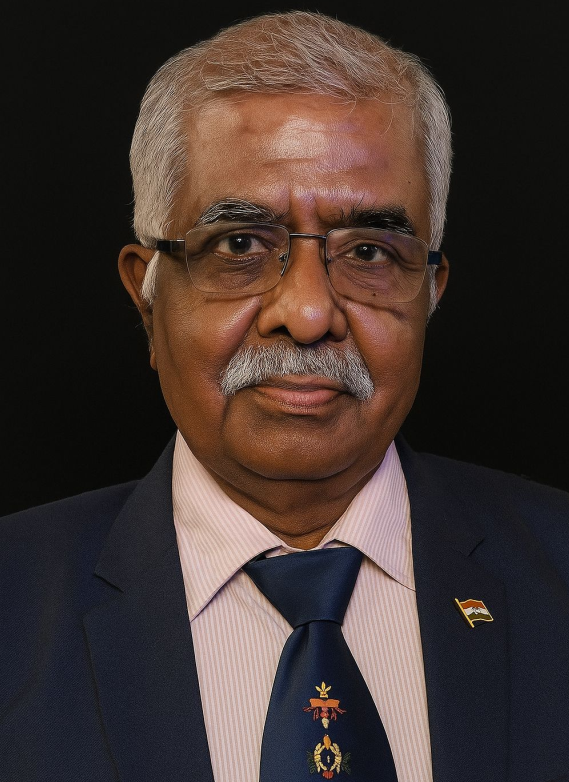
(Author is a former Chief Secretary in the Sikkim state govt. An extensively traveled member of bureaucracy, he also served in several key positions in the Government of India.)




[[comment.comment_text]]