Walking the Diplomatic Tightrope: Pragmatism Meets Principle

 an hour ago
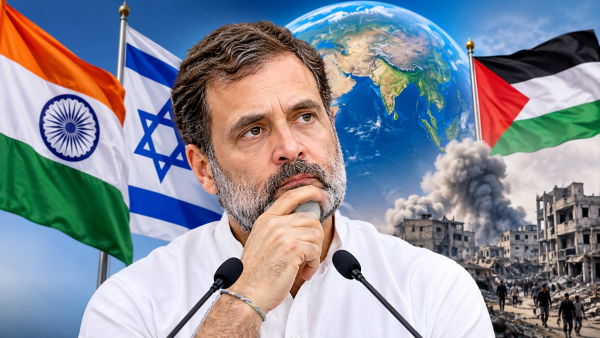
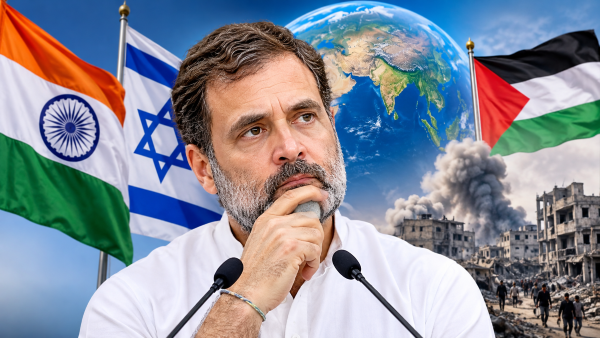
Leader of the Opposition Rahul Gandhi’s recent remarks at the University of Chicago, later amplified via his official social media handles, have sparked a spirited debate across India’s political and diplomatic spectrum. By asserting that India’s foreign policy must be anchored strictly in national interest—supporting robust defence and strategic ties with Israel while simultaneously refusing to remain silent on the humanitarian crisis in Gaza—Gandhi has attempted to articulate a nuanced middle ground. His formulation, which explicitly condemns both the October 7 terror attacks and the subsequent Israeli military campaign in Gaza under the maxim that "one wrong cannot justify another," reflects an effort to balance realpolitik with India’s traditional normative commitments.
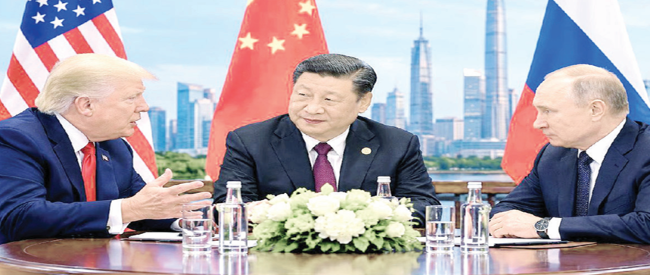
At the heart of Gandhi’s statement is an appeal to strategic autonomy, a cornerstone of Indian statecraft across successive administrations. By emphasizing that a nation of 1.5 billion people should not allow external powers—whether Israel, the United States, Russia, or China—to dictate its global posture, he taps into a broad consensus within New Delhi’s foreign policy establishment. Supporters of this view note that acknowledging the value of Israeli defence technology alongside vocal advocacy for Palestinian rights aligns closely with India’s long-standing "de-hyphenation" policy. Historically, since establishing full diplomatic ties with Israel in 1992 under a Congress government while championing a two-state solution, India has sought to separate its bilateral security partnerships from its broader geopolitical principles. However, the remarks have drawn sharp scrutiny from both sides of the ideological divide, illustrating the inherent friction in trying to satisfy competing domestic and international audiences.
Progressive commentators and sections of the Congress party’s own support base have criticized the endorsement of continued arms trade with Israel, arguing that maintaining military cooperation undermines moral solidarity with Palestinians and contrasts with sharper critiques voiced by other opposition leaders. Conversely, political critics from the ruling establishment and conservative analysts have characterized the statement as a belated pivot, pointing out that the Congress party had previously faced criticism for omitting explicit mentions of Hamas in its initial 2023 statements and for accusing the government of abandoning the Palestinian cause.
Beyond immediate political point-scoring, the debate underscores a deeper structural challenge for any Indian leadership navigating a fractured multipolar world. As India expands its economic footprint and security partnerships, the space for purely ideological foreign policy has narrowed, compelling leaders across party lines to prioritize defence preparedness, energy security, and diaspora welfare. Yet, as Gandhi’s reference to India’s demographic weight suggests, aspirational global leadership also carries the expectation of a distinct moral voice. Balancing material self-interest with ethical consistency is rarely seamless, often leaving policymakers vulnerable to charges of contradiction from purists on either end.
Rahul Gandhi’s intervention brings the tension between pragmatism and principle back to the centre of public discourse on Indian diplomacy. Whether viewed as a mature recalibration toward bipartisan consensus on national security or an uneasy attempt to straddle conflicting political constituencies, the statement highlights that India’s global role cannot be reduced to binary choices. As conflicts in West Asia and great-power rivalries continue to test New Delhi’s agility, the true measure of India’s foreign policy will lie in its ability to safeguard its strategic imperatives without forfeiting its credibility as an independent, principled actor on the world stage.








[[comment.comment_text]]