National Security or Political Survival? Netanyahu’s Dangerous Iran Gambit

 29 minutes ago
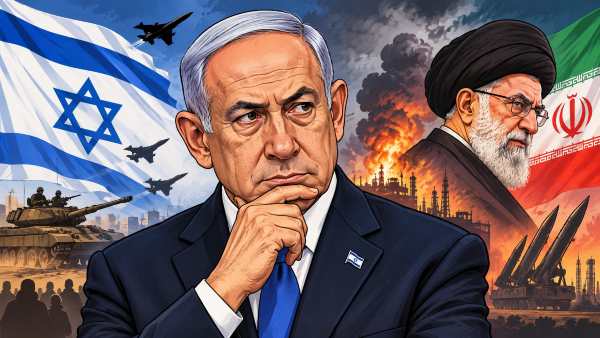
A nation’s decision to go to war should be anchored in clear strategic necessity, transparent public justification, and the consensus of its security establishment. Yet Prime Minister Benjamin Netanyahu’s aggressive lobbying of Washington for an immediate strike on Iran fails every one of those tests. Serving only in a caretaker capacity after his coalition suffered a decisive electoral defeat on October 27, Mr. Netanyahu has offered Israelis no coherent explanation for why an attack is urgent today, what realistic objectives it would achieve, or how a regional conflagration could be prevented. When a leader pushes for military escalation without leveling with his own citizens, skepticism is not merely justified—it is a democratic imperative.
That skepticism is shared by the very security officials charged with defending Israel. While Israeli military and intelligence leaders acknowledge the long-term threat posed by Iran’s nuclear ambitions, ballistic missiles, and chemical weapons research, senior commanders see no immediate trigger requiring Israel to act alone or risk squandering the window for a coordinated U.S.-Israeli operation. Even the military chief of staff pushed back against pre-election strike proposals due to the inability to justify their timing to the public. When a prime minister’s sense of urgency outpaces that of his own generals, the timing is clearly dictated by a political calendar rather than a military one.
The political incentives behind Mr. Netanyahu’s push are scarcely hidden. With opposition leader Gadi Eisenkot facing a December 6 deadline to assemble a governing coalition, a sudden war with Iran would manufacture the exact kind of national emergency needed to derail his rivals and force a unity government. After explicitly ruling out such a coalition during his campaign, Mr. Netanyahu has spent weeks campaigning for a unity cabinet—insisting, naturally, that he must lead it as head of the largest single party. By selectively briefing Mr. Eisenkot’s allies, such as Naftali Bennett and Avigdor Liberman, he is actively sowing division within the opposition bloc in hopes of either clinging to power or forcing a new election on more favorable terms.
Even more alarming than the domestic political manipulation is the catastrophic cost of the military plans reportedly back on the table. Proposals to target Iran’s oil production, export infrastructure, and critical civilian utilities—aimed at precipitating regime change—would inflict severe humanitarian suffering on 93 million people and cross clear red lines under international law. Moreover, the illusion that such a strike could be cleanly contained ignores recent history. Iran has already demonstrated its willingness to retaliate against Gulf energy facilities, airports, and Israeli cities, and has explicitly vowed to target regional water desalination plants and civilian infrastructure if attacked again.
Israel faces real and evolving threats from Tehran, and confronting them requires sober strategy, ironclad alliances, and leaders whose motives are beyond reproach. A lame-duck prime minister cannot be permitted to gamble with regional stability and international law as a tactic to overturn the verdict of Israeli voters. Until a legitimate government with a clear mandate is in place, Israel’s security establishment and its American allies must ensure that decisions of war and peace are driven by genuine national defense, not one man’s desperate bid for political survival.







[[comment.comment_text]]