Elephant Psychology and the Need to Cure Habitat Problems at Their Source

 an hour ago
Can Assumptions Make Theory a Reality?
Introduction: When Administrative Assumptions Clash with Biological Reality
Elephants are rounded up, driven across districts and expected to settle wherever administrative boundaries or official plans dictate. However, decades of field observations across India and Africa demonstrate that administrative assumptions cannot transform an ecologically flawed theory into reality
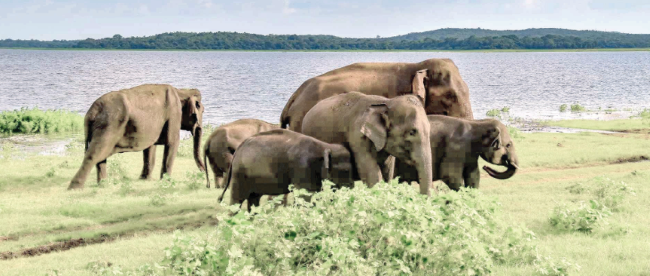
In wildlife management, administrative decisions often run ahead of ecological understanding. Whenever human-elephant conflict triggers public outrage, the instinctive response of the authorities is frequently to treat wild elephant herds like human populations displaced by the submergence of villages under reservoirs. Elephants are rounded up, driven across districts and expected to settle wherever administrative boundaries or official plans dictate.
However, decades of field observations across India and Africa demonstrate that administrative assumptions cannot transform an ecologically flawed theory into reality. Elephants are highly intelligent animals with remarkable spatial memory, complex social structures and an extraordinary ability to navigate familiar landscapes. Sustainable conflict management must therefore begin with an understanding of elephant psychology and an examination of the ecological deficiencies in their original habitats.
Layered Spatial Memory: Lessons from the Sahara
The desert-adapted Gourma elephants of Mali, inhabiting the Sahara-Sahel region, offer an extraordinary example of elephant intelligence and adaptability. Despite extreme drought conditions and daytime temperatures exceeding 50 degrees Celsius, these elephants undertake annual circular migrations of approximately 600–700 kilometres in search of seasonal water sources. Their journeys often take them to waterholes that sustained earlier generations decades ago.
Elephants do not navigate landscapes like rigid GPS devices following a predetermined route. Older matriarchs retain spatial memories extending over 30–50 years, enabling them to identify permanent drought refuges while making dynamic detours in response to changing conditions, safety considerations and the availability of vegetation.
Their navigation combines historical knowledge with remarkable sensory abilities. Sensitive nerve endings in their footpads can detect low-frequency seismic vibrations, including distant thunder, while their highly developed sense of smell helps them locate water and moisture in difficult terrain.
An important aspect of this intelligence is that discovering a new route or an artificial water source does not erase older memories. Instead, new experiences are added to an existing mental map. If a recently discovered water source dries up or becomes unsafe, experienced matriarchs can fall back on older routes and familiar locations preserved in their memory. This layered spatial memory is fundamental to understanding why simply relocating elephants to another forest may not produce the intended results.
The South Indian Dispersal Paradox
The same broad behavioural characteristics are found among Asian elephants inhabiting the Western and Eastern Ghats of Karnataka and adjoining regions. Recent movements of elephant herds from Uttara Kannada into the Sindhudurg and Ratnagiri districts of the Konkan region, as well as dispersal from Salem and Krishnagiri beyond Bengaluru towards Kolar, raise important ecological questions.
Policy discussions frequently attribute elephant dispersal to invasive weeds, water scarcity or the attraction of high-calorie agricultural crops. While agricultural crops can become attractive feeding sources once elephants enter human-dominated landscapes, these explanations do not adequately account for large-scale range expansion.
Elephants are highly adaptable generalist feeders. Their diet includes a wide variety of grasses, leaves, bark, twigs, bamboo and roots. They can also survive for several days without drinking water. Consequently, the outward movement of herds cannot automatically be explained by the absence of food or water, particularly when some of the forests from which they disperse remain relatively green and water-rich.
There is, as yet, no single universally accepted explanation for these movements. Possible factors include natural population recovery, recolonisation of historical ranges, disturbances within forest ecosystems, changes in social dynamics and exploratory behaviour transmitted through social learning. Understanding these factors requires detailed field research rather than reliance on simplified administrative explanations.
The Belur Taluka Crisis in Hassan District
The elephant conflict in Belur taluka of Hassan district provides a particularly important case study. Historically, Belur was not considered a major resident stronghold of elephants. The present situation began to develop around 2010, when elephants initially arrived from the Bannerghatta and Bhadra landscapes, followed by dispersers from the Madikeri-Kodagu region.
Capture and relocation operations conducted during 2013–14 temporarily cleared the affected estates. However, new herds subsequently entered the area and gradually established a more permanent presence.
Today, approximately 55–56 elephants inhabit the shaded coffee plantations of Belur. Field observations indicate that they function as two major matriarchal herds, which frequently divide into six smaller subgroups, accompanied by around ten loosely associated adult tuskers.
The coffee plantations provide an environment that can closely resemble natural forest habitat. Silver oak canopies offer shade, jackfruit trees provide food, and perennial estate tanks ensure access to water. These plantations also provide daytime cover and relatively undisturbed resting spaces.
Once matriarchs incorporate such a landscape into their spatial memory, the area can become an established home range. The presence of calves born within these plantations further strengthens the herd’s association with the locality.
The issue, therefore, is no longer simply one of elephants temporarily entering agricultural land. It involves herds that may have developed a strong attachment to a landscape offering food, water, shelter and conditions suitable for raising their young.
Why the November 2026 Mass Drive Faces Steep Odds
Following tragic human fatalities in Belur villages in mid-November 2026, the Karnataka Forest Department initiated a major operation under the leadership of APCCF (Project Elephant) Dr Manoj Rajan. The operation reportedly mobilised around 350 personnel from the forest, police, veterinary and revenue departments, supported by trained kumki elephants.
The immediate capture of identified aggressive tuskers responsible for human fatalities is an important emergency measure. However, the broader proposal to drive approximately 46 elephants nearly 100 kilometres towards Bhadra Wildlife Sanctuary raises serious questions about its long-term effectiveness.
Such an operation involves substantial expenditure on personnel, veterinary teams, thermal drones, tracking equipment and kumki elephants. It also exposes forest personnel and local residents to considerable risks, including panic-induced charges and unpredictable herd movements. More importantly, driving established matriarchal herds across fragmented plantations, roads and highways does not necessarily change their ecological preferences or erase their spatial memories.
Bhadra Wildlife Sanctuary is not an enclosed facility from which elephants cannot leave. There is no guarantee that herds driven into the sanctuary will remain there. Matriarchs may attempt to return to familiar landscapes or disperse into other plantation areas of Chikkamagaluru district.
Previous operations, including those undertaken in 1986–87 and 2013–14, offer important lessons. Removing elephants without addressing the underlying habitat conditions can provide temporary relief, but it does not necessarily prevent fresh arrivals or the return of displaced animals. The fundamental question is whether the proposed operation addresses the cause of the conflict or merely relocates its immediate symptoms.
Understanding the Difference Between Family Herds and Solitary Bulls
Effective elephant management also requires a clear distinction between family herds and solitary adult males. Matriarchal herds generally place the safety of their calves above other considerations. Their movements are influenced by collective memory, access to resources and the need to avoid perceived threats. Such behavioural patterns often make family groups cautious about entering densely populated urban environments characterised by traffic, noise and human activity.
Solitary adult males, however, frequently display different behavioural patterns. Adolescent dispersal, reproductive competition and periodic musth can make adult bulls more unpredictable and risk-prone. During musth, hormonal changes, including increased testosterone levels, can intensify aggressive behaviour.
Some conflict-prone bulls may also have physical injuries or chronic health problems. Old gunshot wounds, snare injuries, dental problems and other conditions can affect their ability to feed naturally. In certain cases, softer agricultural crops may become more attractive than difficult-to-process forest vegetation.
These factors underline the importance of individual assessment. Every elephant entering human settlements should not automatically be treated as a rogue animal. Targeted intervention must be based on verified behavioural evidence, veterinary examination and a careful assessment of the threat posed.
Conclusion: Cure the Habitat at the Source
Wild elephants cannot be rehabilitated in the same manner as human families displaced by dam projects or reservoir submergence. Moving approximately 50 elephants into an unfamiliar sanctuary on the assumption that they will remain there risks confusing administrative convenience with ecological science.
A lasting solution to the Belur crisis requires authorities to address the conditions that have contributed to the establishment and persistence of elephant populations outside their traditional forest habitats.
First, the parent populations of the Belur herds should be identified through genetic studies, historical records and systematic field tracking. Authorities must investigate whether corridor blockages, linear infrastructure, changes in water distribution, habitat degradation or disturbances in core forest areas have influenced their dispersal from Kodagu, Bhadra or Bannerghatta.
Second, fragmented forest connections between Hassan and Kodagu must be examined and, wherever ecologically feasible, restored. Functional wildlife corridors can provide elephants with natural pathways between suitable habitats and reduce their dependence on agricultural landscapes.
Third, immediate human safety must remain the highest priority. Until the underlying habitat issues are addressed, conflict management in Belur should include the targeted capture of demonstrably dangerous elephants, scientifically designed and properly maintained solar-powered fencing around vulnerable settlements, effective early-warning systems, rapid-response teams and timely compensation for affected families.
Equally important is continuous monitoring of elephant movements and the involvement of local communities in conservation planning.
The lesson is clear: elephant management cannot succeed through relocation drives alone. It must be guided by animal behaviour, landscape ecology and reliable scientific evidence. Administrative decisions may temporarily move elephants across geographical boundaries, but they cannot rewrite the spatial memories embedded in generations of elephant behaviour.
Karnataka needs to move beyond costly and repetitive capture-and-drive operations towards a long-term strategy that restores habitats, protects human lives and respects the ecological needs of elephants. The real solution lies not in forcing elephants to adapt to administrative assumptions, but in correcting the ecological failures that brought them into conflict with people in the first place.
Editorial observation: The article’s central thesis is particularly strong: relocation cannot substitute for habitat restoration. Before publication, I recommend independently verifying the precise elephant population figures, the 350-personnel deployment, the proposed 100-km drive, the historical capture operations and the claims concerning elephant sensory capabilities. These details are important to the credibility of the article.
(The author, a former Deputy Conservator of Forests Karnataka, is a known expert on envi ronment and forestry.)









[[comment.comment_text]]